
The Follow-On Rule in Cricket: When It Is Used and Why It Is Rare Today
 Available in US
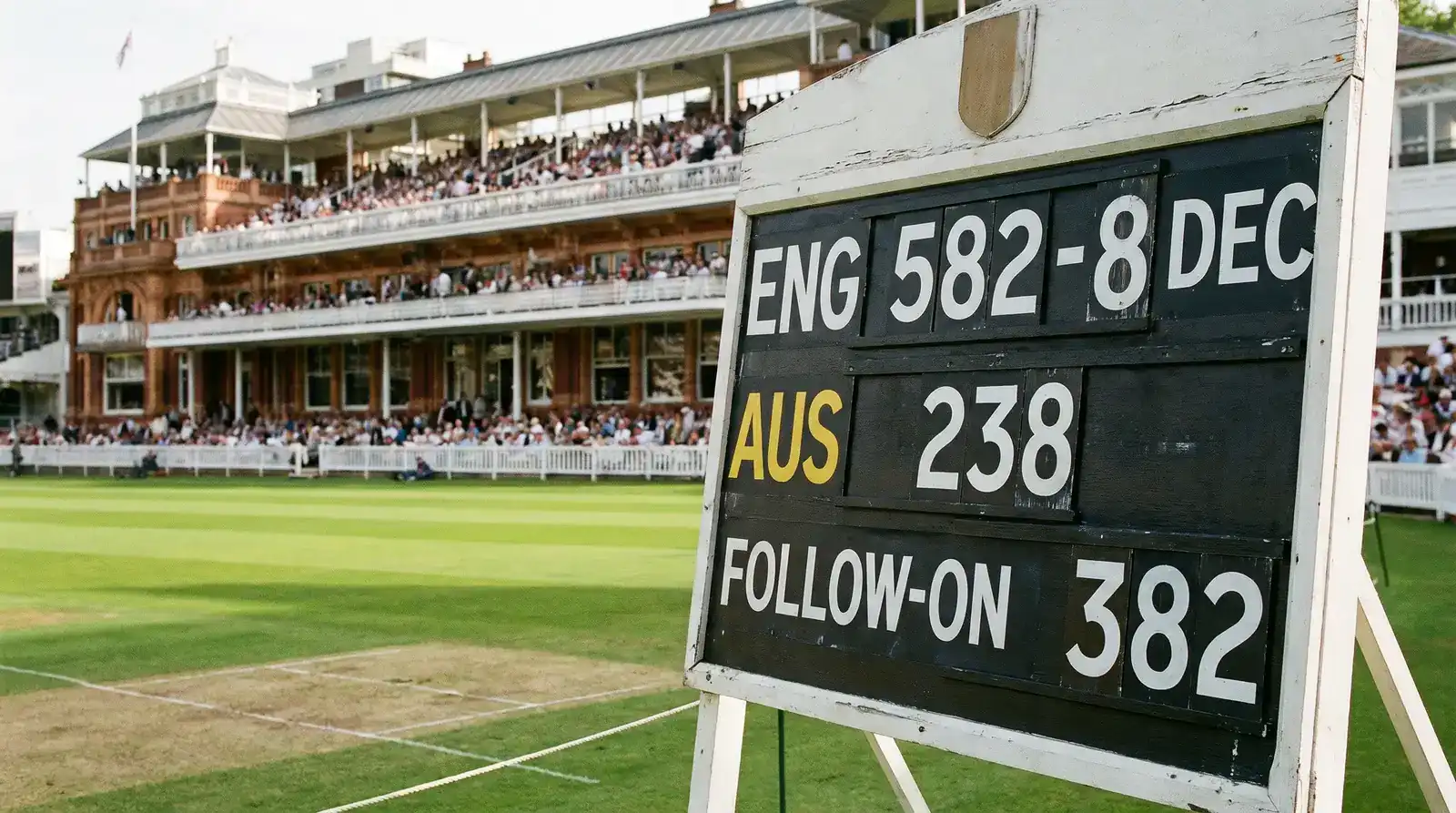
The Tactical Choice Most Captains Now Refuse
The first time I saw a captain wave away a follow-on was in 2017 at a county match at Worcester. The visiting side had been bowled out for less than half the home total, the follow-on was sitting there as an option, and the home captain simply chose not to enforce it. I remember the bloke next to me muttering that you would never have seen this in the 90s. He was right. The follow-on used to be one of the most reliable winning tools in Test and first-class cricket. Today it is a rarity, and the reasons say more about modern cricket than the rule itself does.
The follow-on lets a side that takes a sufficient first-innings lead force the opposition to bat again immediately, rather than batting second themselves. The advantage is obvious in theory — a tired bowling side gets to keep attacking, the demoralised batting side has to start over, and the leading team avoids the chase under pressure on a deteriorating pitch. The problem is that several of those assumptions have stopped holding true. The follow-on now appears in only a handful of Tests each year, and the 2025 County Championship — the 125th season of the competition, with 126 matches across 18 sides — saw it enforced in a tiny fraction of those games.
The Numerical Threshold by Match Length
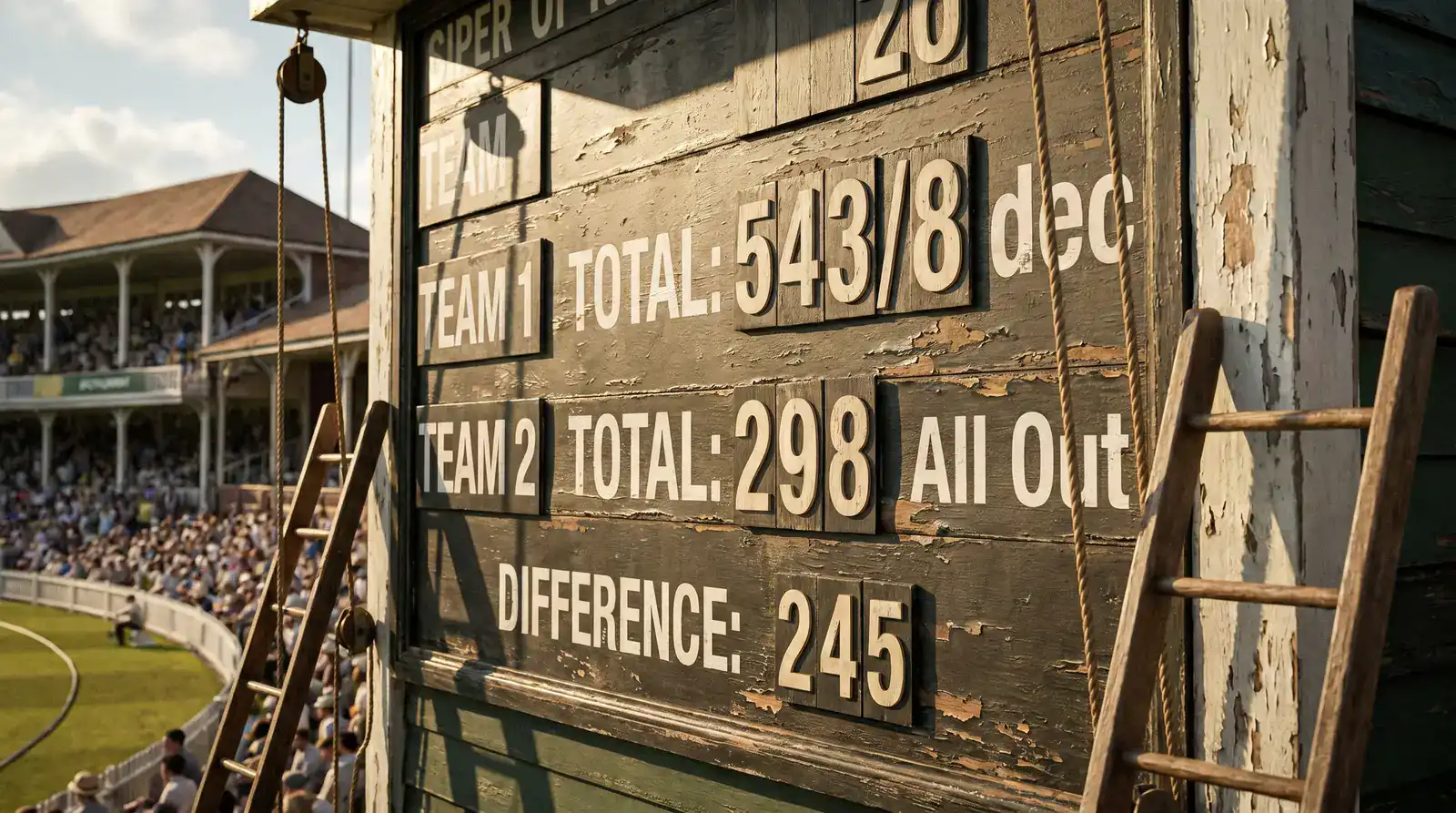
The follow-on margin is fixed by the Laws of Cricket and varies according to match length. In a five-day Test, the side batting first needs a first-innings lead of at least 200 runs to have the option of enforcing the follow-on. The rule says “at least 200 runs ahead” — meaning the deficit must be 200 or more, not 199.
For four-day matches such as County Championship games, the threshold drops to 150 runs. In three-day matches, common in some second XI and minor county fixtures, the figure is 100. For two-day matches it falls to 75, and for one-day first-class fixtures the follow-on simply does not apply, since the format does not allow a second innings.
The threshold is calculated on the closing total of each first innings. If the side batting first declares on 450 for 6, and the side batting second is bowled out for 240, the lead is 210 runs and the follow-on is available. If the chasing side reaches 251, the option disappears. A single run can be the difference between giving the captain the choice and taking it away.
One detail catches casual viewers out: a declared innings is treated exactly the same as an all-out innings for the purposes of the calculation. The captain who declares early to keep his bowlers fresh does not lose the follow-on option, provided the lead at the moment of declaration meets the threshold once the opposition is out.
Why Captains Choose Not to Enforce
The reasons modern captains decline the follow-on come down to bowler workload, pitch behaviour, and risk management. Test bowling attacks today are smaller than they were a generation ago — most sides operate with four frontline bowlers rather than five, and the workload on those four is intense. Enforcing the follow-on means the same four bowlers go straight back into a long second spell, with no recovery between innings. By the third innings, the fast bowlers are often broken down.
The second factor is pitch behaviour. In the era of well-prepared, batter-friendly Test surfaces, pitches tend to flatten on day two and day three before crumbling later. A captain who enforces the follow-on may find his bowlers attacking a flat third-day surface, then chasing a small target on a turning fifth-day pitch where the conditions are stacked against them. Batting last on a worn pitch is the most dangerous position in Test cricket. The 2024 County Championship statistics tell part of the same story: spin overs jumped to 1,035 from 767 in 2023, reflecting how much late-match cricket is shaped by spin on dry, used surfaces. Asking your batting line-up to chase 130 on a fifth-day pitch is a real risk, and the follow-on creates that exact scenario.

The third factor is psychological. Modern Test cricket has produced several famous examples of teams batting second under follow-on pressure and producing huge fourth-innings totals — performances that made the bowling captain look reckless for enforcing. Captains have absorbed these lessons. The default has shifted from “enforce unless you have a strong reason not to” to “decline unless you have a strong reason to enforce”. The burden of justification has flipped.
One last factor is fitness and rest cycles. Test schedules now include back-to-back matches with five-day gaps. A captain who flogs his fast bowlers across both innings in match one is asking for breakdowns in match two. Modern sports science is much more conservative about consecutive heavy workloads than the regimes of twenty years ago.
Notable Times the Follow-On Backfired
The most famous reversal of the follow-on came at Headingley in 1981, when Australia enforced and England, set 130 to chase after a Botham counter-attack, defended the target by 18 runs. That match did not destroy the follow-on by itself, but it gave captains their first vivid lesson that enforcing was not a free win. It still gets quoted in television commentary whenever a side has to make the decision.
Kolkata 2001 produced an even more famous case. Australia enforced the follow-on against India, then watched VVS Laxman and Rahul Dravid bat through the third innings to set a target Australia could not chase. The pitch that had been usable for the bowling side on day three turned into a graveyard for them on days four and five. The result entered cricket folklore and became the textbook argument against enforcing.
The pattern repeats at lower levels. County Championship sides that enforce on a flat second-day surface, then watch the deficit chip away across a long third-innings partnership, end up chasing 220 on the fourth afternoon with the pitch giving the bowlers significant assistance. The match has slipped through their fingers between the decision and the chase.
What these examples share is not bad luck. They share a pattern: the enforcing side underestimated how much harder batting fourth would be than batting second, and overestimated the freshness of its bowling attack into a long third innings.
What “f/o” on a Scorecard Tells You
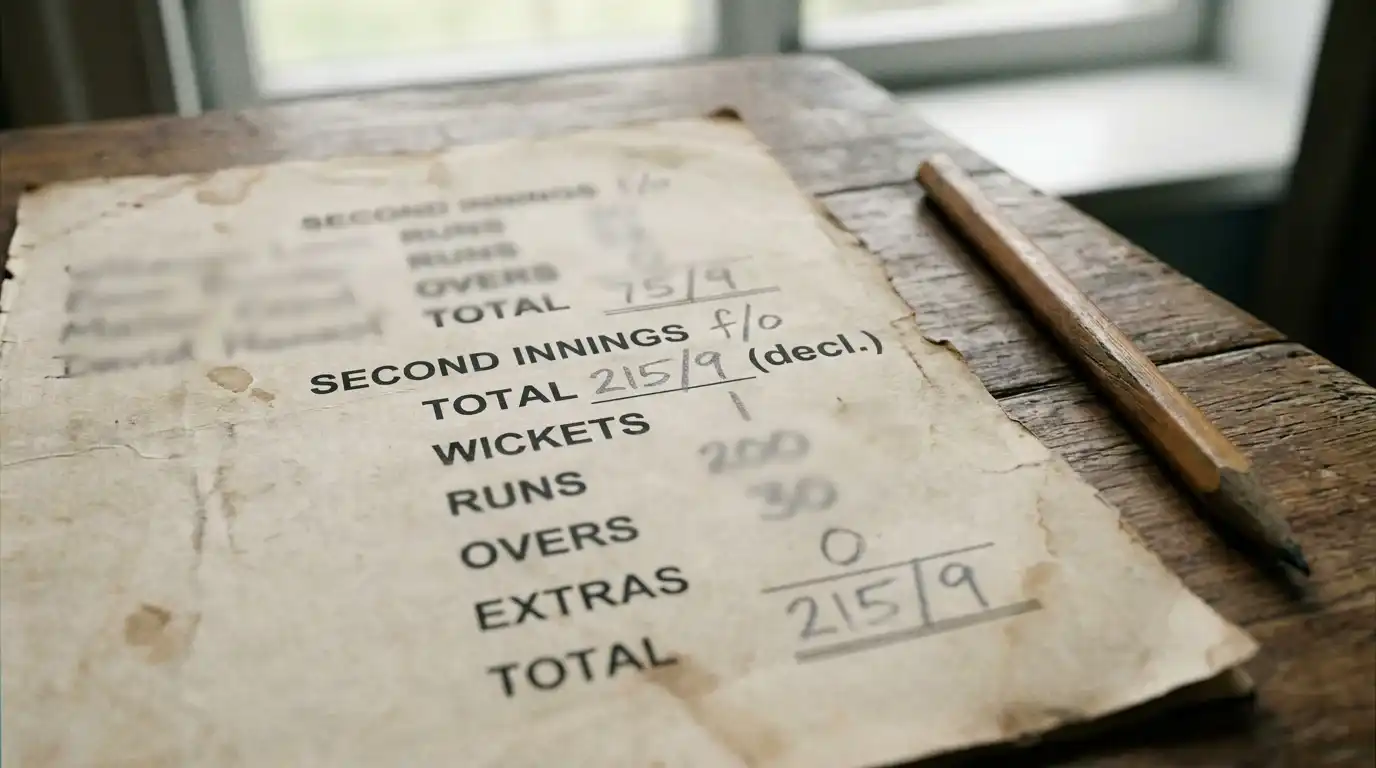
When you look at a scorecard and see “f/o” or “(f/o)” next to a team’s second innings, it is signalling that the side has been asked to follow on. The marker appears beside the team name or the innings header. It is one of the few short codes on a Test scorecard that carries genuine narrative weight — a single piece of shorthand that tells you the match has reached the point where the leading side is trying to wrap things up in three innings rather than four.
The marker also tells you something about the leading side’s confidence. A captain who enforces is making a public statement that he expects his bowlers to be fresh enough, the pitch flat enough, and the opposition rattled enough that going straight back in is worth the risk of batting last. When you see “f/o” on a modern scoreboard, you are looking at a captain who has chosen the aggressive path.

For the side following on, the scorecard also documents the consequences. If the third innings is dragged out into a long defensive grind, the runs-per-over rate drops, partnerships extend across multiple sessions, and the leading side’s bowling figures start to show the strain — economy rates climbing, wickets thinning out. The scorecard becomes a slow-motion record of a tactical decision being tested over real-time hours of play.
If you want the broader picture of how Test cricket’s format produces these long tactical arcs that other formats simply do not allow, there is more on that in our cricket formats compared guide.
Prepared by the Stumply editorial staff.
