
The UK Cricket Season Calendar: From County Championship to The Hundred
 Available in US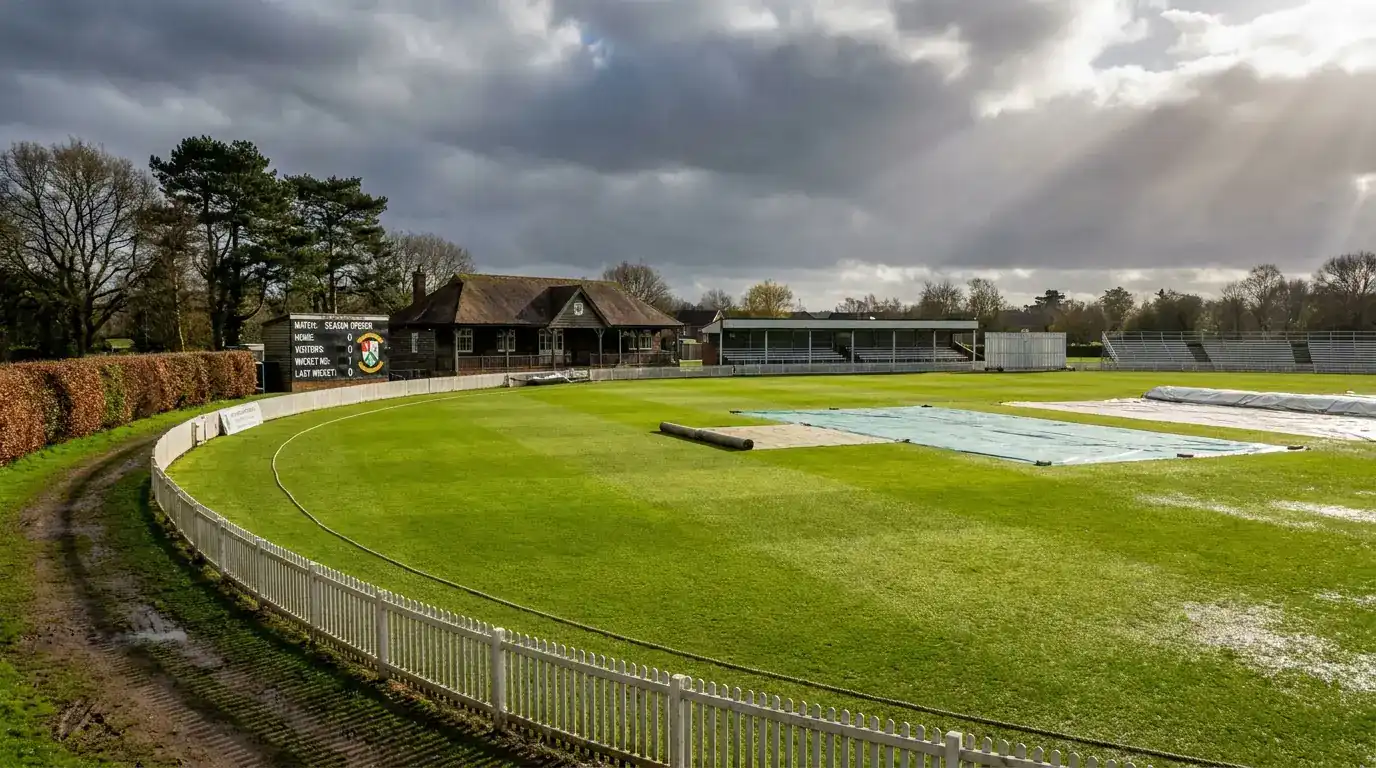
Mapping Six Months of UK Cricket onto a Single Calendar
The first cricket season I tried to follow ball by ball was 2017, and within three weeks I’d given up on a paper diary and moved to a colour-coded spreadsheet that’s still on my hard drive nine years later. The reason: the UK cricket calendar is denser than people realise from the outside. Four major competitions running simultaneously, men’s and women’s strands overlapping, international fixtures interleaved with domestic ones, and a tail of franchise tournaments that bleed into the autumn.
From April to September the UK cricket calendar runs almost continuously. The County Championship opens the season in mid-April, runs through May and June in blocks separated by the white-ball formats, returns for a late-September push, and finishes in the third week of September. The Royal London / Metro Bank One-Day Cup squeezes into July and August. The T20 Blast runs from late May to early September, with the group stage compressed into Friday nights through early July and the knockouts in late August. The Hundred occupies an August window. The men’s and women’s internationals stage themselves around these blocks in Test, ODI and T20 series of varying length.
The ECB’s overall attendance figures are now substantial. In 2024 the board reported total attendance of 2.84 million across all formats — the best showing for a non-Ashes, non-India year on record. That figure is the cumulative result of how the calendar interlocks: each competition has its own audience, and the calendar is designed so that any given week of the summer has at least one significant fixture available to watch.
“Cricket was always going to face a difficult challenge to compete for engagement in 2024,” the ECB observed in its 2024/25 annual accounts. “While England Men hosted West Indies and Sri Lanka in a non-Ashes year, a blockbuster sporting summer saw both the Paris Olympics and the men’s football Euros taking place in the same time zone. Despite this, attendance of 2.84m represented our best ever attendance for a non-Ashes or India year.”
This guide walks the calendar block by block, explains how the four domestic competitions fit together, where the international fixtures sit on top, and what happens to UK cricket when the September stumps come up for the last time. The mapping is dense but learnable, and once you have it, you’ll know what to watch every week of the summer.
The Shape of an English Summer: April to September
The English cricket season runs from the first week of April to the third week of September. Six months, roughly 25 weeks, and the arc of the calendar is defined by what the weather allows as much as by competition scheduling.
April is opening month. The County Championship begins in the second week, with the first round of fixtures across both divisions of 18 counties. The pitches are damp, the air is cold, and the cricket is heavily favoured to seam bowlers exploiting moist conditions. Scores tend to be lower in April Championship rounds; bowling averages drop and batting averages rise as the month wears on into May.
May continues the Championship through its first major block, with three or four rounds of fixtures spaced across the month. The white-ball cricket then begins to assert itself. The T20 Blast launches in the last week of May, with Friday-night fixtures becoming the regular rhythm of the early-summer cricket calendar.
June is the densest month of the season. The Championship is in mid-flow. The Blast is in full swing on Friday evenings. England’s first home international series — typically a three-Test series followed by an ODI / T20 white-ball series — runs through June into early July. The international fixtures occupy weekends, and the domestic competitions slot around them.
July is when The Hundred preparations begin and the Blast group stage peaks. The Royal London / Metro Bank One-Day Cup also fits its block here, running in parallel with the international and domestic schedule.
August is The Hundred’s window. The competition runs from early August to early September in a four-week block, with men’s and women’s matches concurrent. The County Championship pauses for the Hundred period and resumes in September.
September is finals month. The Hundred concludes with men’s and women’s finals in early September. The T20 Blast Finals Day is the second weekend. The County Championship returns for its closing rounds, with promotion, relegation and the title decided in the final fortnight. The Metro Bank One-Day Cup concludes around the same time.
The season closes with the men’s and women’s England squads departing for the autumn international tours, which take the cricket calendar overseas for the rest of the year. The domestic calendar is then dormant until the following April — about six months of off-season for UK county cricket.
The shape of the season is therefore four-format weave: red-ball Championship cricket forms the backbone, white-ball T20 Blast provides the weekly evening fixture, the One-Day Cup occupies its July slot, The Hundred concentrates in August, and international fixtures lay across the top of all of them. Every week of the summer has something. The reason UK total cricket attendance has been climbing is that the calendar is now densely populated rather than relying on any single competition to carry the season.
The County Championship Window
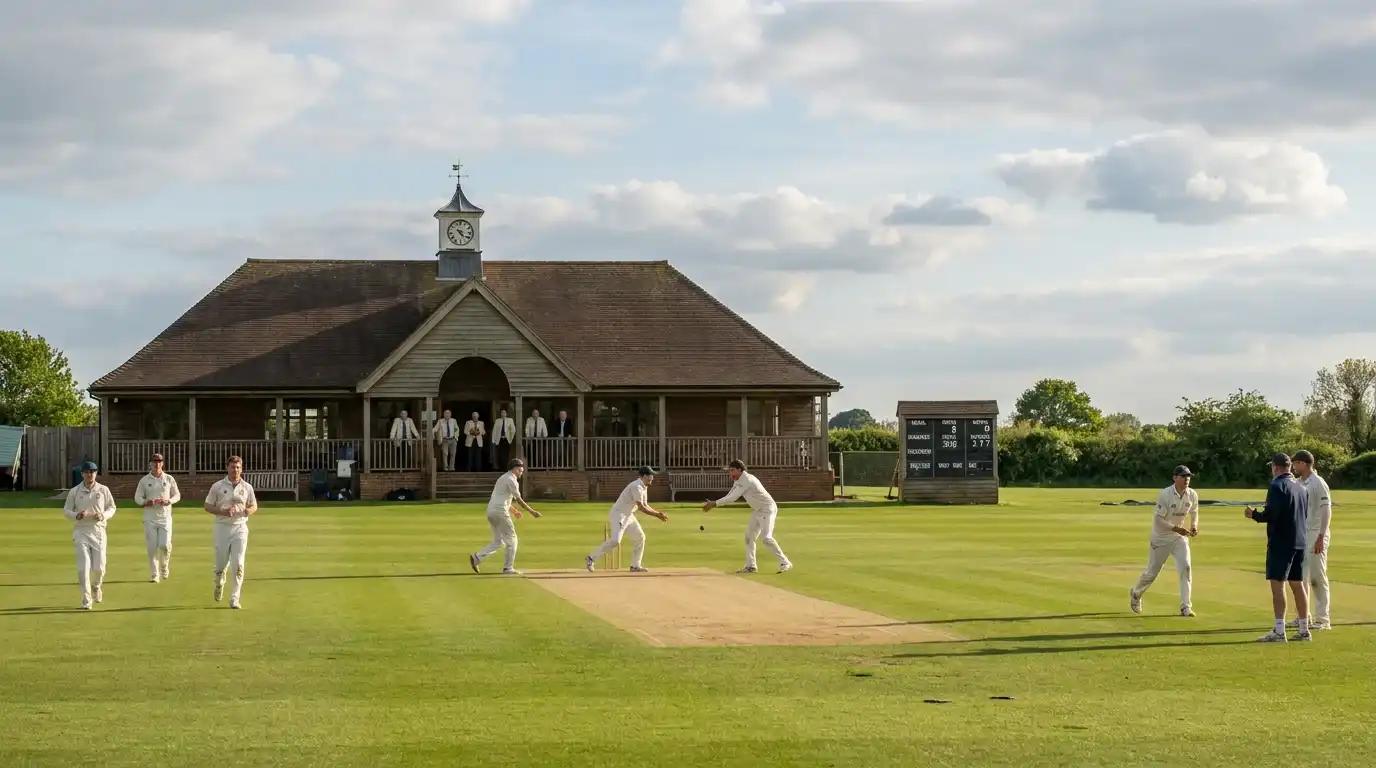
The County Championship is the spine of the English cricket summer and the oldest competition in the calendar. The 2025 season was the 125th in the competition’s history, running across 18 counties in two divisions with 126 matches total. Nottinghamshire took the title — their seventh — beating off challenges from Surrey, Somerset and a hard-pushing Essex.
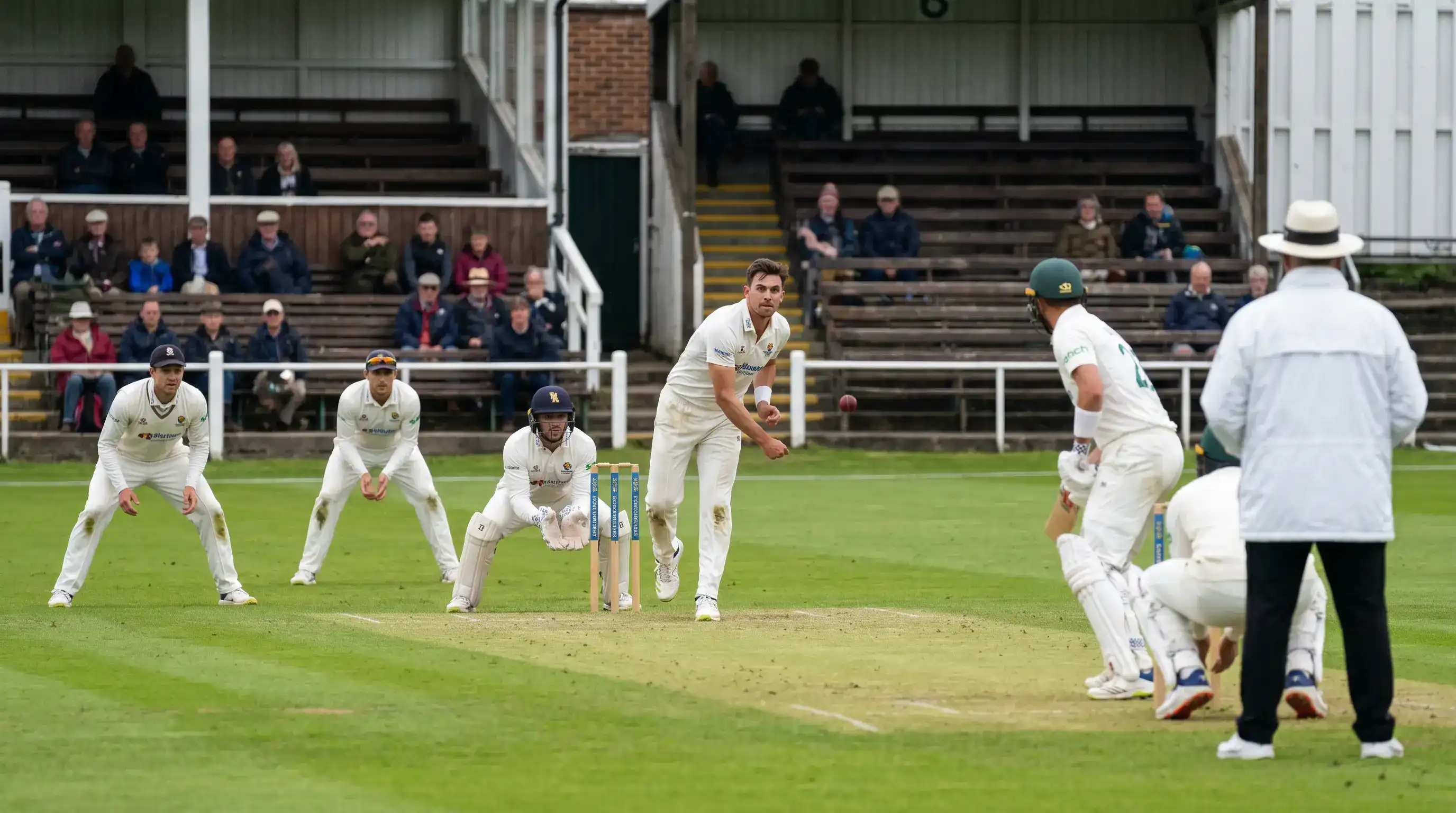
Match format is four-day red-ball cricket, two innings per side, with declarations and follow-on available. The competition runs in blocks separated by the white-ball schedule. A typical season layout: opening block in April through mid-May, second block in late May and early June (when the T20 Blast is running on Friday nights), third block in late June and July (around the international fixtures), pause for The Hundred in August, and closing block in September.
Division One contains the top eight counties; Division Two contains the remaining ten. Promotion and relegation between divisions happens at the end of each season, with two counties promoted and two relegated. The competition uses a points system with bonus points awarded for batting and bowling performance in addition to result points — a structure that rewards aggressive cricket even when matches end in draws.
The 2024 season saw a striking statistical shift. Spin bowlers delivered 1,035.4 overs in Division One, up from 767.3 the previous year. The increase reflected slower, drier pitch conditions and a strategic shift in how counties were configuring their bowling attacks. That sort of multi-year trend is invisible in any single match but visible across a full season’s worth of bowling cards.
“The game constantly debates the number of overseas players, the number in the Blast, the number in the County Championship,” Rob Andrew, the ECB’s managing director, observed in 2026. “It goes to the bigger value of the county game as well, in terms of helping grow the game.”
Following Championship cricket live remains harder than the white-ball formats. Sky carries selected matches with full broadcast coverage — typically those involving title-chasing teams or featuring England-bound players. Most matches are available via the ECB’s Match Centre streaming service through a free supporters’ account, but with reduced camera deployments and limited or no commentary. Ball-by-ball coverage on Cricbuzz, ESPNcricinfo and the ECB’s own scorecard widget is comprehensive across every Championship match.
The competition’s audience is loyal but small in absolute terms. County membership numbers across the 18 counties total in the tens of thousands, and Championship attendance varies from under 1,000 at quieter early-season fixtures to several thousand at marquee matches. The Championship’s role is as much about being there — supplying the player pipeline that feeds England’s Test side — as about commercial reach. The structural detail of divisions, points and promotion-relegation mechanics is its own subject, and one I’ll leave to a dedicated walkthrough.
The One-Day Cup Slot in the Calendar
The One-Day Cup — currently sponsored as the Metro Bank One-Day Cup, formerly the Royal London — is the calendar’s most awkwardly positioned competition. It runs in July and August, in parallel with The Hundred, which means many counties field development-heavy squads while their senior players are away in the franchise competition.
The 2025 edition ran across all 18 counties in two groups, with 77 matches in total. Worcestershire took their first title in the competition’s modern format. Nick Gubbins of Middlesex was the top run-scorer with 707 runs across the campaign — a figure that illustrates how a single dominant batter can shape a squad’s progression in a competition where overall depth is variable.
Match format is straight 50-over ODI rules. Each bowler limited to ten overs maximum, three-phase powerplay structure (overs 1-10, 11-40, 41-50), and single innings per team. Match days are 70 overs plus interval — about seven and a half hours total. Coverage is via Sky for selected matches and the ECB Match Centre for the broader fixture list.
The competition’s role in the player pipeline is significant. Younger county players get sustained match opportunity that they wouldn’t otherwise have, because the senior squad members are typically away at The Hundred. Several England white-ball players first established themselves in One-Day Cup performances before breaking into the international setup. The trade-off is that audience interest is lower than in either The Hundred or the T20 Blast — the competition is functionally a developmental tournament with a final at the end.
The structural debate around the One-Day Cup has been running for several years. Some commentators argue the competition should be played at a different point in the season, with full county squads, to restore its competitive credibility. The ECB has reviewed the calendar repeatedly and so far retained the current arrangement.
For UK viewers wanting to follow the competition, the available routes are the ECB Match Centre for live scoring across all matches, selected Sky coverage for marquee fixtures (typically those involving title-chasing counties or featuring well-known names not in The Hundred squads), and county-specific YouTube channels for the broader coverage. The competition lacks the broadcast investment that the T20 Blast and Hundred receive, which means the One-Day Cup feels lower-profile despite being a serious competition with a Lord’s final and a 125-year domestic tradition behind it.
The competition’s final is staged at a major venue — Trent Bridge, Edgbaston or Lord’s depending on year — and pulls a decent crowd despite the relative low profile of the regular-season fixtures.
T20 Blast: The Group Stage and Finals Day
Friday nights from late May to early July are T20 Blast territory in English cricket. The competition runs across all 18 counties, split into North and South groups, with group-stage fixtures spread across a 13-week window. Match start times are deliberately evening-friendly — 6.30pm or 7pm depending on venue — to catch the post-work audience.
The 2025 Blast champions were Somerset, beating Hampshire in the final on Finals Day. The competition’s attendance numbers are substantial: T20 Blast matches regularly draw 15,000-plus spectators at major county grounds, with the bigger venues like the Oval, Old Trafford and Edgbaston pulling significantly higher figures for marquee fixtures.
The group stage runs from late May to mid-July. Each county plays 14 matches — home and away against every county in their own group, plus three “cross-group” fixtures against counties from the other half of the table. That format produces a competition with enough fixtures to develop real form arcs and enough variation in opposition that every county faces a mix of strong and weaker sides.
The knockouts run in early August, with quarter-finals played at the home grounds of the top four teams in each group. Finals Day is held in early September at Edgbaston — the traditional home of the T20 Blast climax — and consists of three matches in a single day: two semi-finals in the morning and afternoon, then the final in the evening. The day routinely sells out, with crowds of 25,000-plus packing Edgbaston for the cricket-as-festival atmosphere.

Match format is straightforward T20: 20 overs per side, four-over bowling caps, six-over powerplay, no field-restriction phases beyond the powerplay. The same rules used in international T20 cricket.
Sky carries live coverage of selected Blast matches across the group stage and all the knockout fixtures. The BBC carries highlights packages. The ECB Match Centre carries live scoring for every match. The competition’s broadcast footprint is meaningfully larger than the One-Day Cup’s, reflecting the audience scale and the commercial appeal of evening T20 cricket.
The Blast’s role in the calendar is the steady weekly fixture that defines the early summer’s cricket rhythm. The Hundred grabs more attention in August; the County Championship grinds on in the background; the One-Day Cup serves a development role. But Friday nights from May to July belong to the Blast, and the competition has built a loyal audience of post-work cricket evenings that no other format quite replicates.
For UK viewers planning their cricket-watching across the summer, the T20 Blast offers the best mid-week, post-work cricket window. It’s the format with the broadest county-by-county supporter engagement, and the Finals Day at Edgbaston is one of the standout days in the English domestic cricket year.
The Hundred: A Compressed Summer Block
The Hundred occupies the most concentrated window in the cricket calendar. The competition runs for roughly four weeks in August, with eight teams playing a group stage and knockout that compresses into a tight schedule of matches concentrated at the major international grounds.
The 2025 edition sold 580,000 tickets across the competition. Total attendance across the competition’s first five years has now passed 2.5 million, with the family-and-younger-audience profile that the format was designed for. 41% of the 2025 audience were families. 30% were women. 23% of tickets sold were junior tickets. No other UK cricket competition matches that demographic mix.
Match scheduling is concentrated. Group-stage fixtures are typically played in the evening across consecutive days at the eight host venues: Lord’s, the Oval, Edgbaston, Trent Bridge, Old Trafford, Headingley, the Rose Bowl in Hampshire, and Sophia Gardens in Cardiff. Men’s and women’s matches usually run as double-headers on the same day at the same ground — the women’s match in the early evening, the men’s match in prime time. That double-header structure means a ticket buyer sees two games for one entrance fee, which has been one of the most consequential features of the competition’s audience development.
The 2025 women’s final at Lord’s drew 22,542 spectators — a record for a standalone women’s cricket match at the venue. The men’s final has typically drawn 25,000-plus across each of the competition’s five seasons.

The format itself — 100 balls per innings, five-ball sets, change of ends every ten balls, 20-ball bowling caps — is unique to The Hundred and is covered in detail in the cricket formats compared guide. The mechanical novelty of the format was deliberate from launch, designed to give the competition its own identity rather than just being another T20 league.
Sky carries the bulk of live broadcasts, with the BBC carrying a defined slice of free-to-air matches each season — typically the women’s matches and selected men’s fixtures including Finals Day. Total BBC online viewership for the 2025 Hundred reached 2.2 million, up from 1.6 million in 2024. Sky’s average audience for the group stage was up 38% in 2025 against 2024. The competition’s broadcast metrics have been on a sustained upward curve since launch.
The total video viewership across all platforms for The Hundred over its five seasons now exceeds one billion video plays. That figure indicates the scale of the short-form content ecosystem the competition has built around the live broadcast.
The competition’s future is now financially secured by the franchise investment round that valued the eight teams at a combined £975 million. Each franchise sold a majority stake to private investors, with the proceeds returning to the ECB and to recreational cricket development.
The International Calendar Overlaid on Domestic Cricket
The international calendar sits across the domestic one like a second story on the same building. England’s men’s and women’s senior squads play home international fixtures throughout the summer, with each series occupying a defined window that the domestic competitions schedule around.
A typical men’s international summer involves two Test series — one in early-to-mid summer against one touring side, another in late summer against a second — interleaved with ODI and T20I series of varying length. The format depends on the tour, with five-Test Ashes series in Ashes years and shorter Test series in non-Ashes years. 2024 saw England host West Indies and Sri Lanka in a non-Ashes year, with the total summer attendance of 2.84 million representing the highest figure for any non-Ashes, non-India year on record.
The Ashes is the international fixture that pulls cricket out of its niche. The 2023 home Ashes series drew a peak men’s final TV audience of 2.12 million on Sky — the highest figure since cricket’s move to pay-TV in 2005 — and total tuned-in viewers across the series reached 17.8 million. The men’s TV audience for that series was up 44% against the previous home Ashes in 2019. The women’s audience for the 2023 Women’s Ashes showed a 288% rise in attendance against the comparable 2019 series.
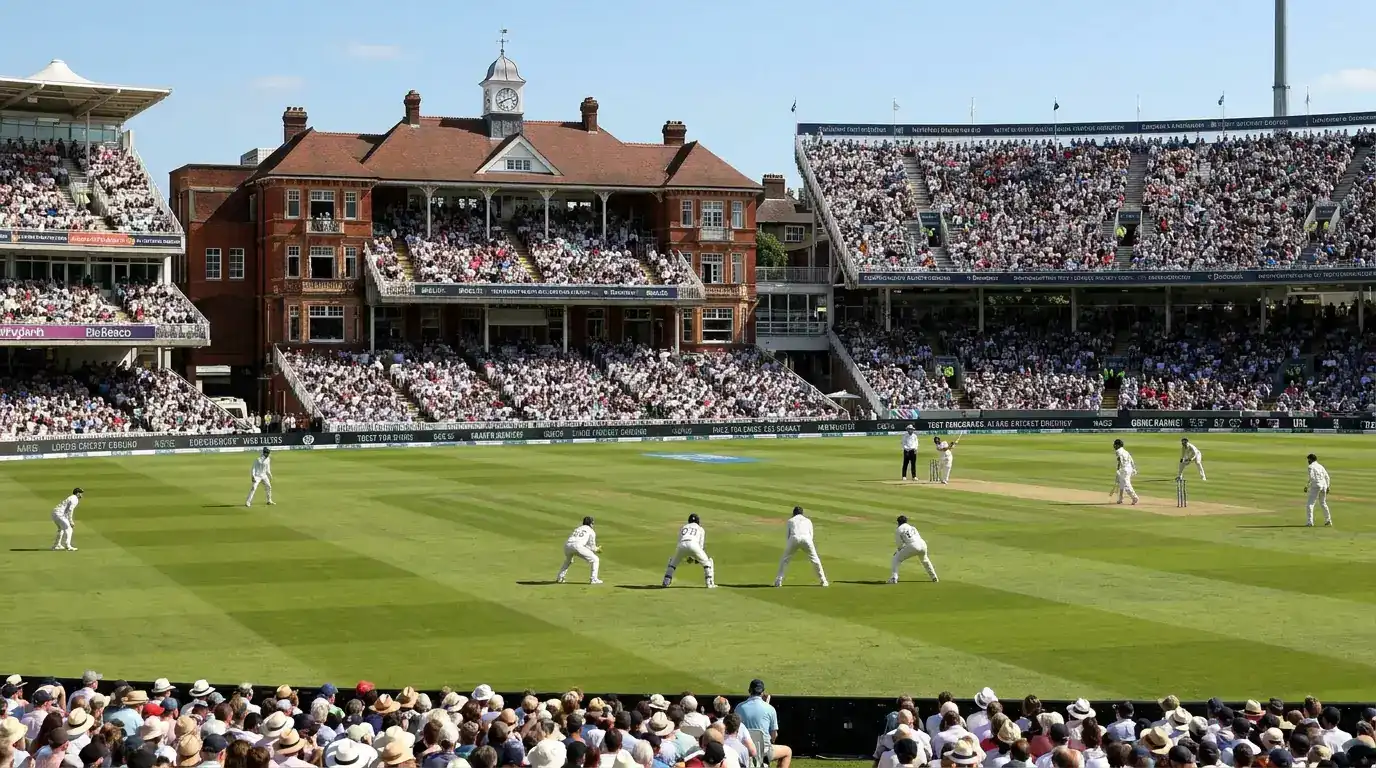
The international fixtures slot into the domestic calendar with deliberate scheduling. Test matches typically run Thursday to Monday (a five-day window), and the County Championship pauses during these weeks. ODIs and T20Is are scheduled at weekends, with the T20 Blast carrying on around them on Friday evenings. The Hundred has its own protected August window — international fixtures are scheduled either side of it, not within it.
That scheduling discipline matters because the calendar has to support both the international and the domestic financial models. The international fixtures are where the biggest TV rights money is generated. The domestic competitions provide the player pipeline and the year-round audience engagement. Sacrificing either side of that balance would damage the overall economics, which is why the ECB’s calendar planning is one of the most intricately negotiated documents in British sport.
For UK viewers, the international fixtures are the most predictably available matches each summer. Sky carries every home Test, ODI and T20I. The BBC carries highlights. The Hundred and the T20 Blast offer entertainment cricket in their own windows, but the international fixtures are the ones where the season’s narrative is defined — Ashes years particularly so, when the domestic narrative recedes and the international story takes over for the duration of the series.
The men’s autumn international tours — typically a Test series and a white-ball component in October-November — close the year’s cricket calendar from the UK side. Those overseas tours are covered separately, since they fall outside the home season’s calendar window.
The Women’s Season Inside the Same Calendar
The women’s domestic cricket season runs in the same April-to-September window as the men’s calendar, with its own competition structure and a growing audience footprint. The 2025 Women’s Hundred final at Lord’s pulled 22,542 spectators — the standout single attendance figure of the women’s cricket year. Total women’s audience across the 2025 Hundred reached 349,000+ across the competition.
The women’s domestic competition layer includes the Women’s T20 Blast (a regional T20 competition), the Women’s One-Day Cup, and the Women’s Hundred. International fixtures are scheduled around these competitions in the same way as the men’s calendar — Test and white-ball series interleaved with domestic windows.
The 2023 Women’s Ashes was the breakout series for women’s cricket attendance in the UK, with a 288% rise in attendance against the 2019 series. The TV figures grew correspondingly. That series transformed the audience expectations for women’s home international cricket, and the 2025 season has built on that momentum with sustained attendance growth across the women’s domestic competitions.
Match scheduling for the Women’s Hundred is concurrent with the men’s competition. The two tournaments share grounds, broadcast slots and many of their commercial partners. The double-header format — women’s match followed by men’s match on the same day at the same venue — has been the structural innovation that grew the women’s audience fastest, because ticket buyers attending a men’s fixture get the women’s match included.
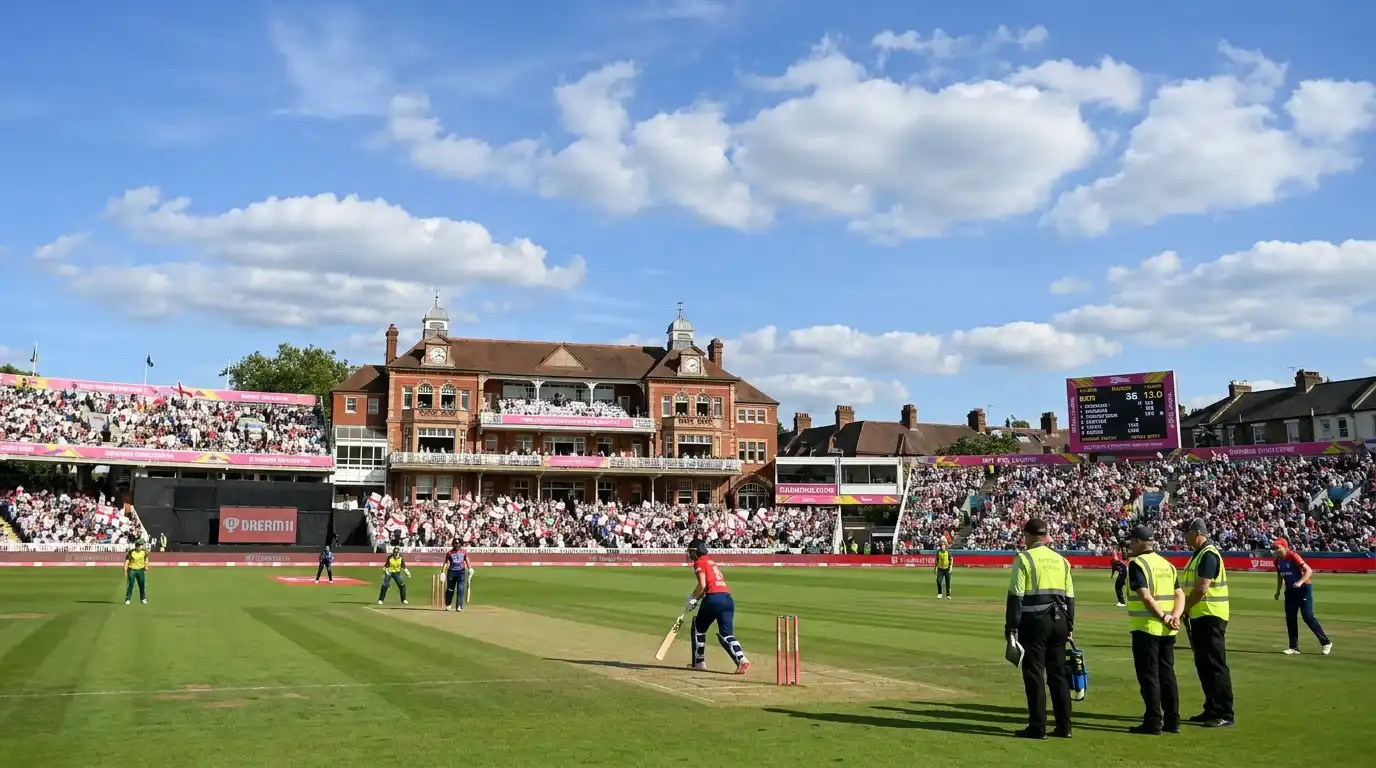
The Women’s T20 Blast runs in regional competition format, with teams aligned to county cricket boards rather than to the eight Hundred franchises. The competition produces some of the most competitive domestic women’s cricket of the summer, with knockout rounds in late August leading to a final around the same period as the Hundred climax.
The Women’s One-Day Cup runs in its own window, with shorter overall season length than the men’s equivalent. The competition has been used to grow the depth of England’s women’s white-ball squad and to provide match opportunities for emerging players outside the franchise structure.
Coverage of women’s domestic cricket has expanded substantially in the past five years. Sky carries broadcasts of the Women’s Hundred and selected women’s internationals. The BBC carries highlights and selected live matches. The ECB’s own digital channels carry expanded women’s content year-round, supported by the growth of the women’s audience and the demographic pull that the Women’s Hundred specifically has demonstrated.
The underlying grassroots story is also relevant. Women’s teams in England and Wales grew by 18% in 2025 versus 2024, and girls’ teams grew by 13% in the same year. That growth in the participation base feeds directly into the audience curve for the women’s professional game — many of the new Hundred ticket buyers are children and families connected to grassroots clubs where women’s and girls’ cricket has expanded.
What Happens When the UK Season Ends
UK cricket grounds go quiet by the third week of September. The County Championship has concluded, the Hundred has wrapped, the international squads have packed for the autumn tours, and the calendar’s six-month off-season begins.
The off-season isn’t actually empty. England’s men’s and women’s squads play overseas tours through October, November and December, and selected players appear in the various franchise tournaments that run during the winter months. The Big Bash League in Australia runs from December into January. The Pakistan Super League runs in February-March. The Caribbean Premier League runs September-October. The South African franchise leagues run November-February. England players regularly appear in several of these competitions, with the IPL season then bridging into the following English summer in April-May.
For UK viewers, the overseas tours and franchise leagues fill the gap left by the dormant domestic calendar. England’s away Ashes — when it falls in Australia, every four years — is the most-watched winter cricket. The 2025-26 tour drew significant TV audiences despite the time-zone difficulty. The total UK tuned-in audience figure for the 2023 home Ashes hit 17.8 million; an away series produces a lower but still meaningful figure because the broadcast happens in the UK overnight.
Domestic grounds run no first-class matches between September and April. County academies operate indoor net sessions through the winter. Players go to franchise leagues to maintain match fitness. The grounds themselves carry out maintenance — square repairs, drainage upgrades, pavilion refurbishments — that can’t happen during the season.
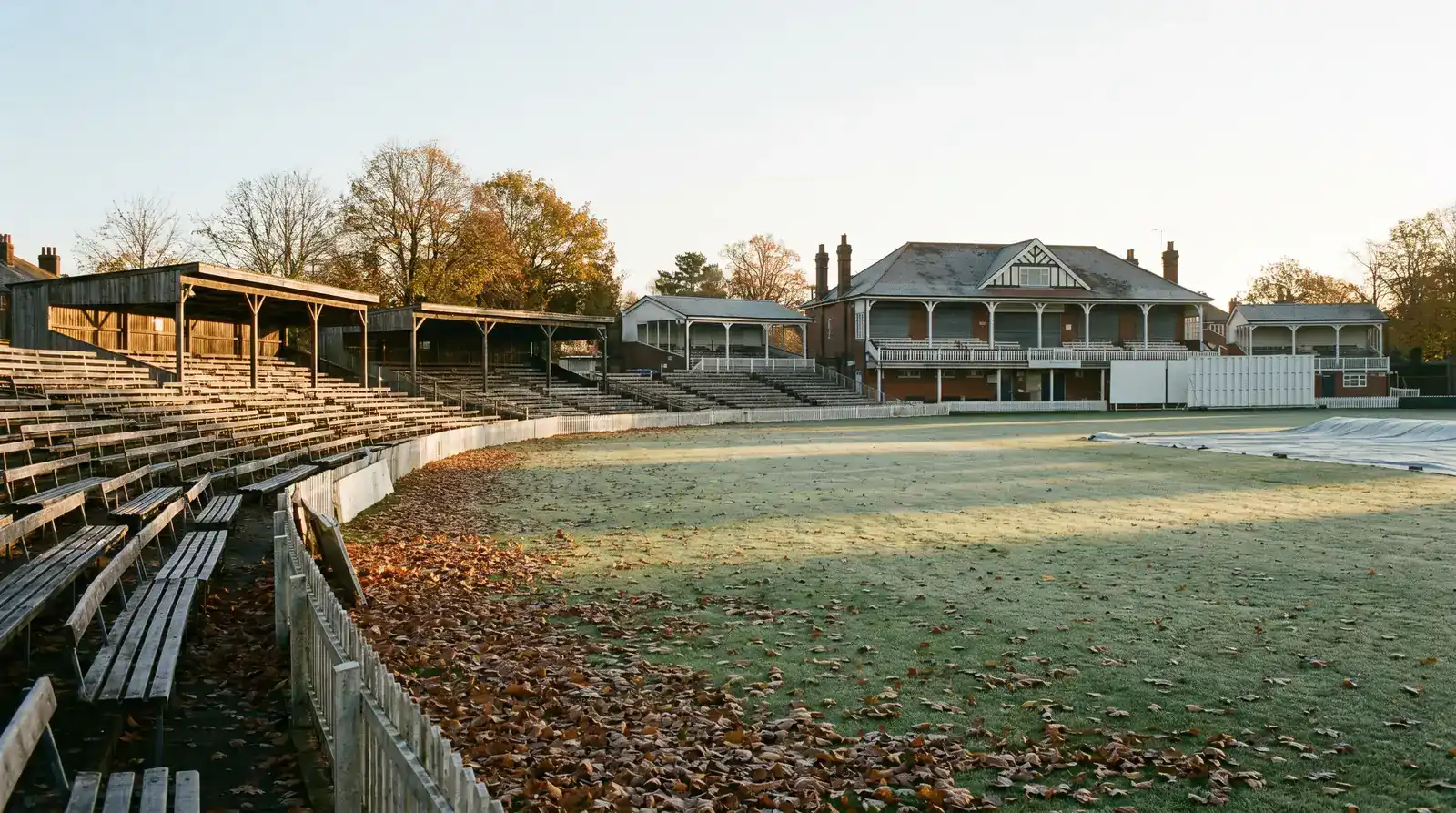
The exception is grassroots cricket. Indoor leagues operate at sports halls across the country through the winter months, and several formats of “indoor cricket” — five-a-side, six-a-side — keep the recreational game alive in the off-season. The ECB’s grassroots participation programmes (All Stars Cricket for children aged 5-8, Dynamos Cricket for ages 8-11) typically run through the summer but feed into year-round club activity that includes winter indoor play. The 2025 figures showed 106,000 participants in those programmes, including 32,000 girls — a figure that has been climbing year on year as the grassroots structure expands.
The winter gap also gives the calendar planners their planning window. Domestic fixture lists for the following summer are typically finalised in November-December. The international schedule is published earlier — the ICC’s Future Tours Programme commits England’s series years ahead — but the detailed county fixture mapping happens in the off-season.
By the time April opens the season again, the grounds have been re-rolled, the squads have returned from their winter franchise commitments, and the cycle restarts. Six months of cricket compressed into a calendar that has barely a free weekend, and six months of off-season that the UK domestic game spends repairing itself for the next round.
Season Calendar Confusions Resolved
Written by the editors at Stumply.
