
UK Cricket TV Audience: What the Ratings Behind Big Series Look Like
 Available in US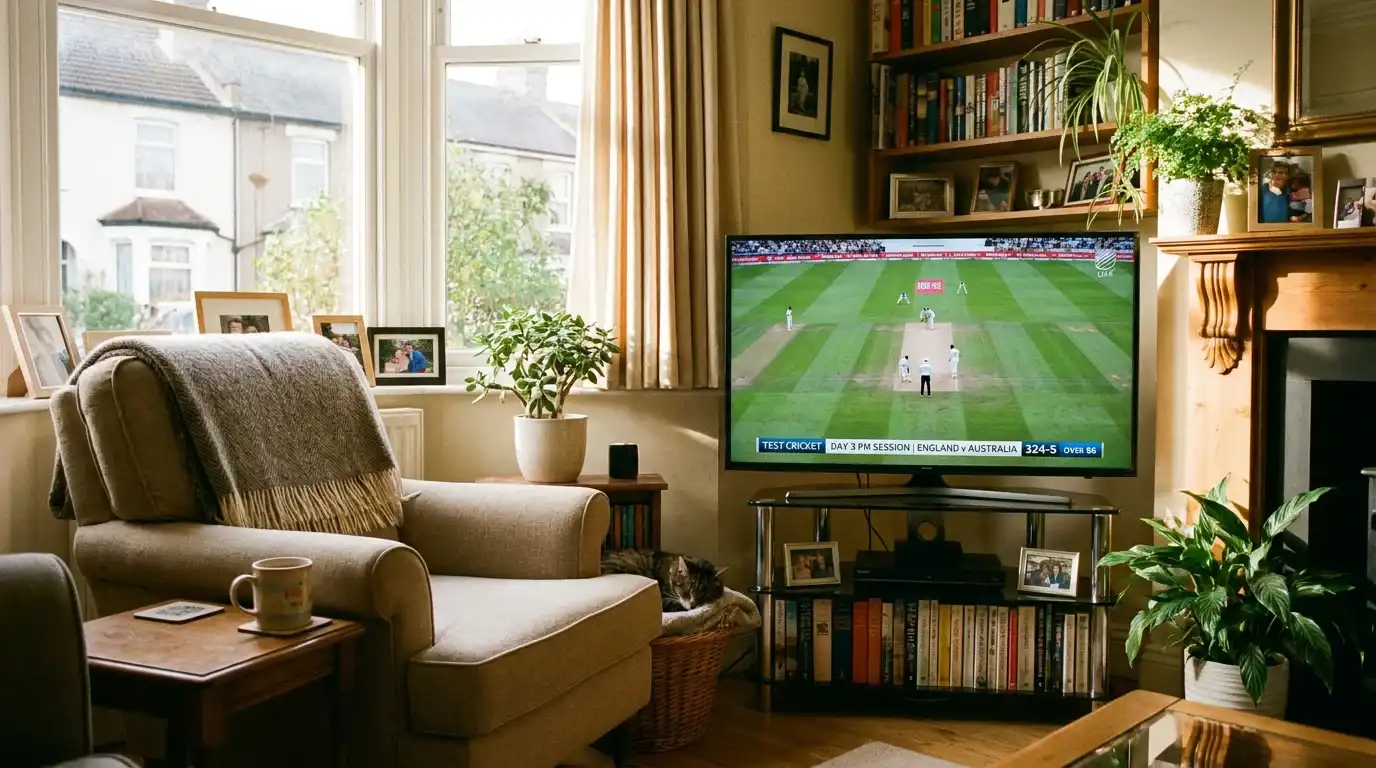
The TV Audience Story Behind Marquee UK Cricket
The day after the 2023 Ashes peaked at 2.12 million UK viewers, I had a conversation with a colleague who could not understand the number. He pointed out that football matches regularly draw four or five times that figure, and asked what was special about a Test cricket peak that did not even reach a Premier League average. I told him to look at where the figure came from — pay-TV behind a Sky Sports subscription, not free-to-air — and the picture changed instantly. The 2.12 million figure is a peak audience inside the pay-walled cricket ecosystem. Set against that constraint, it is the largest UK Test audience since cricket left free-to-air in 2005.

UK cricket TV audiences move on a complicated curve. The big series produce big numbers; the smaller series get modest numbers; the women’s game has climbed sharply but from a lower base; and the free-to-air highlights window has been a separate, much larger audience layer that few cricket watchers think about. Understanding the ratings means separating the marquee from the routine, the live coverage from the highlights, and the linear TV figures from the online ones. The 2023 Ashes is the obvious starting point for that conversation.

The 2023 Ashes Peak: 2.12 Million on Sky
The Sky peak of 2.12 million UK viewers for the 2023 Ashes mens’ series was a record since cricket left free-to-air broadcast in 2005. The number was reached during the climax of the series, with Sky’s live coverage drawing the kind of audience that pay-TV cricket had not produced in nearly two decades. The 2023 series itself was also a record for UK Test audience growth — viewership climbed 44 percent compared to the 2019 Ashes, an unusually steep jump in a sport where year-on-year changes are usually small.
The reasons for the spike were specific. The 2023 series produced the most competitive Ashes in years, with the result hanging in the balance through the fifth Test. The series featured Stuart Broad’s retirement, Ben Stokes’s leadership under England’s Bazball era, and a string of dramatic individual performances. These conditions are not present in every Ashes series, and the 2.12 million peak should be read as a high-water mark rather than a sustainable annual figure.
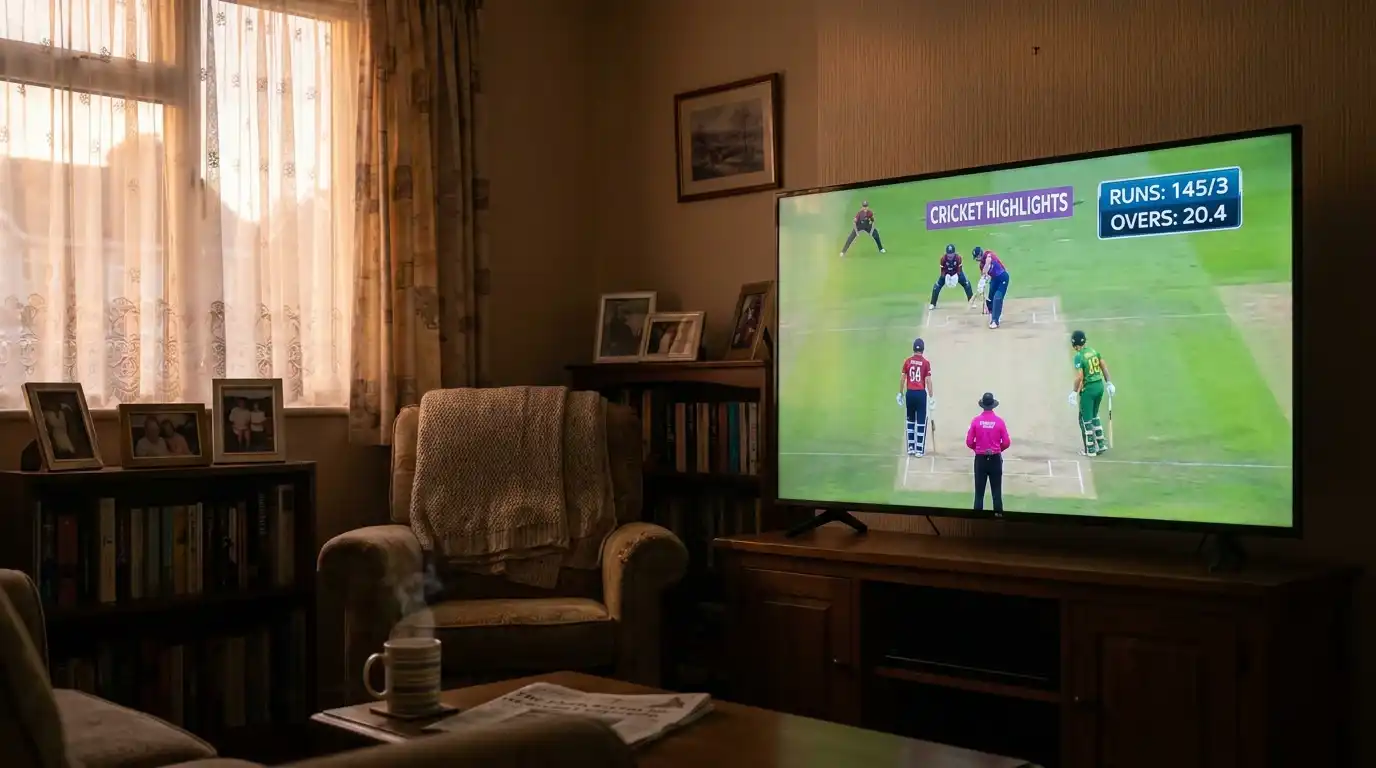
The figure also reflects the broader recovery of cricket viewership in the UK. After several years of declining engagement during the late 2010s, multiple indicators turned upward in the early 2020s — attendance, online video views, podcast downloads, and TV ratings all began to rise. The Hundred’s launch in 2021 was part of this story, even though the Hundred itself does not draw the same TV peaks as the Ashes.
Dr Dan Plumley, the finance expert at Sheffield Hallam University, has noted that there is growth potential in The Hundred and English cricket more broadly, while warning that projections — particularly from 2029 onwards — should come with significant caution about their basis. The TV audience growth is real but not guaranteed to continue at the same pace; the variables driving it are still volatile.
Hundred Group-Stage Viewership Growth
The Hundred’s TV audience has grown each year since its 2021 launch, and the 2025 edition produced one of the largest single-year jumps. Sky Sports reported a 38 percent increase in average group-stage audience compared to 2024, a meaningful step-change that reflected both the competition’s maturing storytelling and the broader rise in UK cricket engagement.
The Hundred’s TV figures are different in shape from Test figures. Where Tests produce big peaks during dramatic sessions and softer averages across full days, the Hundred produces consistent audience numbers across its two-and-a-half-hour broadcast windows. The competition’s compressed format suits modern viewing habits — long enough to be a proper sporting event, short enough to fit in a single evening — and the audience averages reflect that.

The women’s Hundred coverage also contributed to the 2025 audience growth, with double-header broadcasts producing combined audiences that pulled viewers into the women’s matches who might not otherwise have watched. The format’s deliberate parity between men’s and women’s competitions — same teams, same venues, same evening, same broadcast treatment — has been one of the structural reasons for its success in lifting women’s cricket TV figures.
Looking ahead, the UK domestic television deal between the ECB and Sky is structured to increase from £37.8 million in 2025 to £54.3 million for 2026 and each subsequent year through 2028. The rising rights fee implies confidence from both sides that the audience numbers will continue to grow, or at least sustain at the higher levels reached in 2025.
What Returning to Free-to-Air Highlights Has Done
The free-to-air highlights window in UK cricket has been a much larger audience phenomenon than the live pay-TV figures suggest. The BBC’s Hundred highlights for 2025 drew 2.2 million online views, up from 1.6 million in 2024 — a 37.5 percent increase that mirrors the live audience growth but operates at scale through a different distribution model.
The free-to-air model picks up the audience layer that the pay-walled live broadcast cannot reach. Viewers who are not Sky Sports subscribers can still watch highlights, follow the storylines, and engage with the competition through clip-based content on BBC Sport, social media, and BBC iPlayer. For the Hundred specifically, the BBC’s free-to-air highlights are central to the competition’s marketing reach.

The free-to-air-highlights effect on Test cricket has been smaller because the ECB’s pay-TV deal places live Test cricket entirely with Sky, with limited free-to-air highlights rights. The ECB’s broader strategy has tried to soften this by ensuring at least some level of free-to-air access for marquee fixtures, but the structural commitment to pay-TV revenue is firm. Around 75 percent of ECB revenue, or roughly £225 million annually, comes from broadcast rights, which makes free-to-air models difficult to expand without reducing the headline rights fee.
Where free-to-air highlights have had a measurable second-order effect is on attendance. People who watch highlights are more likely to buy tickets the following season; people who watch live pay-TV are also likely to buy tickets, but the conversion funnel from highlights is steeper because the highlights audience is larger. The Hundred’s attendance growth — past 2.5 million cumulative across five seasons, with 580,000 tickets sold in 2025 alone — owes part of its success to the free-to-air highlights audience converting to live ticket purchase.
Online and On-Demand Numbers Behind the TV
Beyond the linear TV audience, online and on-demand viewership has become the layer where UK cricket grows fastest. The BBC’s 2.2 million online views for the 2025 Hundred is one example. Sky’s app-based viewership, the ECB’s own digital platforms, and the social-media clip ecosystem all contribute to a total reach that is now substantially larger than the linear TV figure alone.
Online cricket views are spread across multiple platforms. The major cricket sites generate huge global traffic — one of the largest reports around 398 million monthly visits worldwide. The UK share of those numbers is smaller but meaningful, and the platforms compete with the official broadcaster and ECB digital products for the second-screen attention of UK cricket fans.

The on-demand element of TV consumption has changed how UK cricket is watched. Where ten years ago a Test session that did not produce a wicket might lose viewers permanently, today’s viewers often watch the key moments later via on-demand catch-up. The total reach of a Test day is therefore larger than the live audience number suggests, and the gap between live and total reach has widened consistently across the past five years.
For the major broadcasters, the implication is that “TV audience” is no longer a single figure but a layered measurement: live linear, live streaming, on-demand catch-up, and clip-based social content. Different audiences engage at different layers, and the rights deals signed by the ECB now price all four layers into the headline fee. Whether the 2.12 million peak of the 2023 Ashes is a one-off or the start of a sustained upward trend will become clearer through the Ashes cycles of 2027 and beyond.
If you want the broader picture of how all these TV and digital figures sit inside UK cricket’s broadcasting structure, there is more on that in our UK cricket broadcasting guide.
Published by the Stumply team.
