
Cricket Formats Compared: Test, ODI, T20 and The Hundred Side by Side
 Available in US
Four Codes, One Sport: Why Cricket Has Multiple Formats
A friend who’d never watched cricket asked me last August why the same broadcaster was showing two completely different-looking matches on consecutive evenings: one game finished in three hours, the next was still going after four days. The difference between The Hundred and a Test wasn’t a difference of rules so much as a difference of philosophy. Same sport. Different bargain with the viewer.
Cricket has four major formats running simultaneously in the modern game: Test, One Day International (ODI), Twenty20 (T20) and The Hundred. They share an identical core — bat, ball, two sets of stumps, eleven players a side, two umpires — and then they diverge on the only two variables that matter in cricket scheduling: how long the match takes, and how many balls each side gets. From those two knobs flows everything else: declaration rules, powerplay windows, fielding restrictions, bowling quotas, even the number of new balls allowed.
The reason all four still exist is commercial as much as sporting. Tests were the format the game was built around, played for five days because the original 19th-century calendars allowed it. ODIs were invented in 1971 when a Test was rained off and somebody decided a single-innings match could fill the day. T20 launched in England in 2003 as an explicit attempt to pull a younger audience into county grounds — and it worked spectacularly. The Hundred launched in 2021 and went one step further by inventing a unit of measure (the 100-ball innings) that had never existed in cricket before. Across five seasons of The Hundred, accumulated attendance has now passed 2.5 million.
This guide compares the four formats on every axis that actually matters when you’re watching: duration, scoring rhythm, field restrictions, mechanical quirks, and where each one fits in the UK domestic calendar. I’ll keep the comparisons concrete and side-by-side, because the worst way to learn cricket formats is to read them in isolation. The Test and the Hundred only really make sense once you’ve understood what they’re not.
Match Length and Balls per Innings
If you only know one thing about cricket formats, know the ball count. It’s the cleanest comparison there is, and once you’ve internalised it the rest of the rule differences make sense.
A Test match is scheduled across five days, with each day broken into three sessions of two hours separated by a 40-minute lunch and a 20-minute tea. Ninety overs are scheduled per day. Each over is six legal deliveries. There is no preset cap on balls per innings — a side bats until ten wickets fall or until the captain declares. In practice an innings rarely exceeds 200 overs (1,200 balls); the modern game’s longest first-class innings sit around 250–280 overs.
An ODI is exactly 50 overs per side. Six balls per over, 300 deliveries per innings. The match is single-innings — each team bats once, no follow-on, no declarations. Total match time runs about seven to eight hours including a 30-minute interval between innings. Each bowler is capped at ten overs (60 balls), which means a team needs a minimum of five bowlers to complete an innings, and most pick six.
A T20 is 20 overs per side, 120 balls per innings. Total match time is about three hours plus a short break. Each bowler is capped at four overs (24 balls), so at minimum five bowlers must operate, and the captain usually has six to choose from. The format was designed to fit inside a single evening, which it does almost too neatly.
The Hundred is the odd format, and it’s odd by design. Each innings is precisely 100 balls. There are no overs in the traditional sense. Instead the bowling unit is a “set” of five balls. After each set the bowler may continue with another five-ball set (ten balls in a row maximum) or hand over to a teammate. The bowler swap happens at the same end. Change of ends — when the bowling team swaps which set of stumps they’re attacking — happens every ten balls regardless of who delivered them. Each bowler is capped at 20 balls in a match. Match time is about two and a half hours.
The mathematics has practical consequences. A Test team operating across two innings could face 600–800 balls in a game; a Hundred side faces precisely 100. Strike rates that look unrecognisable across formats are actually doing the same job — they just have radically different denominators. A Test batter on 50 off 120 balls has worked for it. A Hundred batter on 50 off 30 balls has been hitting through the line. Same digit on the scoreboard, opposite kinds of cricket.
How Scoring Rhythm Changes Between Formats
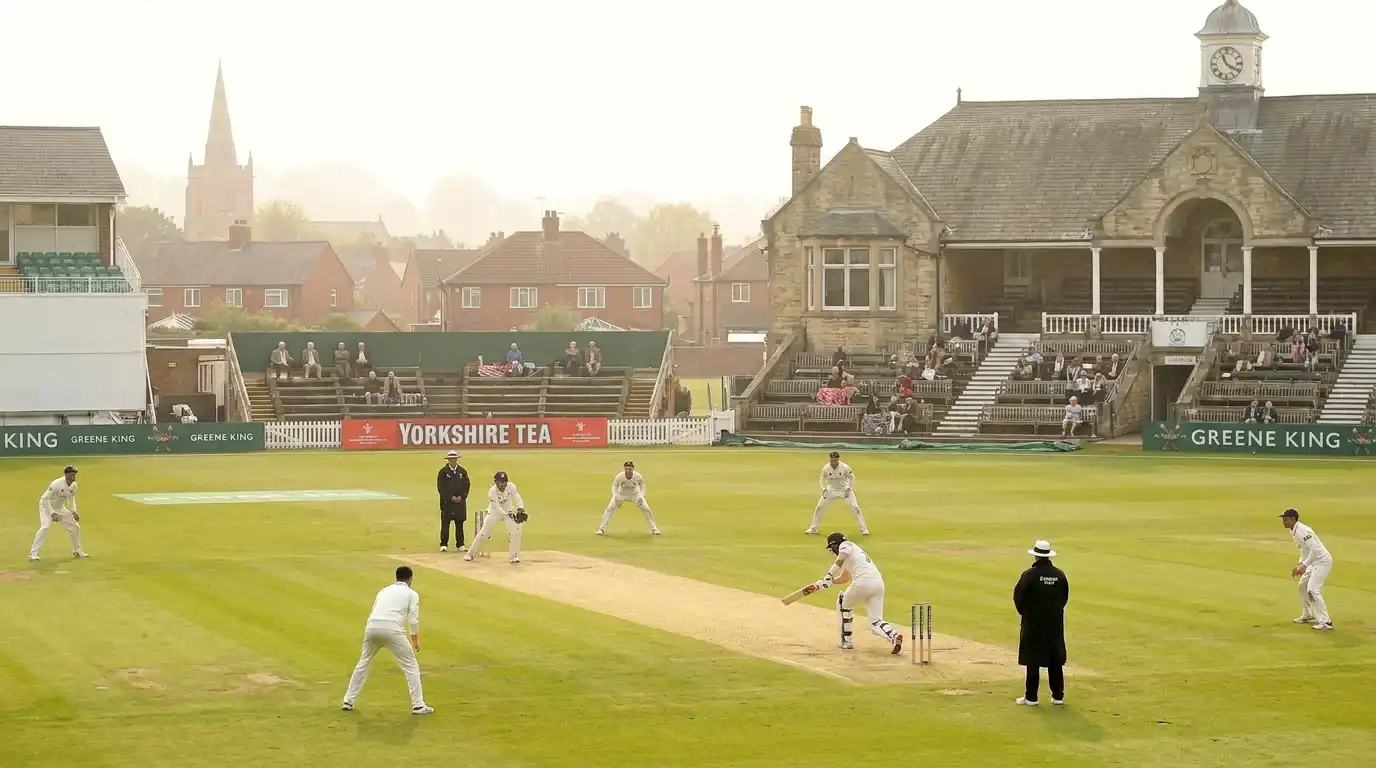
The shape of a scoring graph tells you what format you’re watching even if the scoreboard is blocked. A Test innings is a sawtooth — bursts of accumulation broken by quiet defensive passages. A T20 is closer to a sine wave with a tall spike at the death. The Hundred is a single-peaked curve that arrives faster than you expect.
Test scoring rhythm depends on session-by-session attrition. A “good” first session is 80–90 runs for one wicket. A “good” second session is 90–110 runs. The third session — when light fades and bowlers are tired — often produces the day’s highest scoring rate, around 100–130 runs. Run rates in Tests cluster between 3.0 and 4.5 per over, with anything above 5 considered aggressive cricket and anything below 2.5 read as defensive grinding. England’s Bazball approach pushed Test run rates to historically high levels — 4.7 and beyond — which broke a lot of accepted norms about what a Test innings is supposed to look like.
The format also shifts with spin. In the 2024 County Championship, spin bowlers delivered 1,035.4 overs in Division One, against just 767.3 in 2023. Spin is slower in over-rate but tighter in economy than seam in English conditions, which is why the run-rate ceiling on those spin-heavy days fell year-on-year.
ODI rhythm has three clear phases. The first ten overs are powerplay with field restrictions, and the top order will look to score at 6+ per over while the new ball is hard. Overs 11–40 are middle overs — accumulation, rotating the strike, rarely much above 5 per over. The last ten overs — the death — open up to scoring rates of 9, 10, 11 per over as the batting team trades wickets for boundaries. A par ODI score on a flat pitch sits around 290–310; that floor has risen across the last decade.
T20 compresses the same arc. Powerplay is overs 1–6, when only two fielders are allowed outside the inner circle, and openers will look to score at 9 or 10 per over. Middle overs (7–15) traditionally sat around 7 per over, but modern T20 batters have pushed that band upwards. The death (16–20) routinely produces 12–13 per over from a side with wickets in hand. A par T20 international score is now 175–185 on a good pitch.
The Hundred runs at the highest scoring density per ball of any format, because the powerplay (the first 25 balls) accounts for a higher share of the innings than in T20. The format also has fewer overs in the conventional sense for a captain to “save” a bowler for, so death-balls come thicker. Expect a strong Hundred chase to require around 1.65 to 1.85 runs per ball — equivalent to 9.9 to 11.1 per six-ball over translation.
Powerplay and Field-Restriction Windows
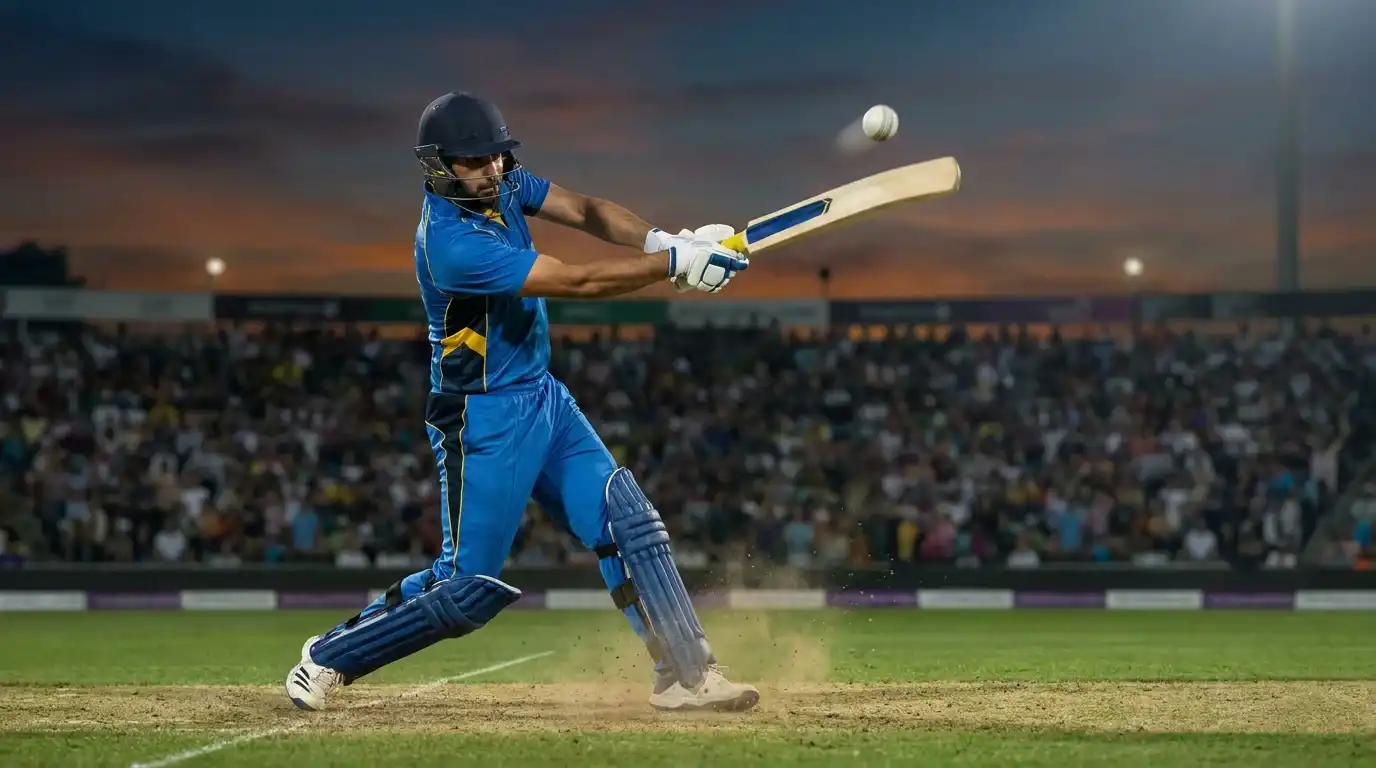
Powerplay is a phrase that gets used loosely on broadcast. In strict cricket terminology, it refers to a specific window of the innings during which the bowling side’s field placements are restricted — fewer fielders allowed outside a 30-yard circle drawn around the pitch. Different formats have different powerplay rules, and the differences are not cosmetic.
In a T20 international, the powerplay covers overs 1–6. During that period only two fielders are permitted outside the inner ring. Everyone else — including the wicketkeeper — sits inside. This is why openers can swing freely through the cover region and over square leg; the gaps in the field are deliberate. From over 7 onward, the fielding captain can post up to five outside the circle, which immediately tightens the boundary options.
In an ODI, the powerplay structure has three phases that the broadcast scoreboard explicitly labels as PP1, PP2 and PP3. PP1 is overs 1–10 with only two fielders permitted outside the circle. PP2 is overs 11–40 with up to four outside the circle. PP3 is overs 41–50 with up to five outside the circle. The middle phase used to allow a discretionary “batting powerplay” that the chasing side could trigger at a time of its choosing; that was removed in 2015 in favour of the cleaner three-phase system.
The Hundred has its own compressed equivalent. The first 25 balls of an innings are the powerplay, with only two fielders outside the inner ring. This is structurally equivalent to the T20 powerplay (six overs = 36 balls in standard T20; 25 balls is slightly tighter as a proportion of the innings). The change-of-ends every ten balls also means the inner-ring geography shifts more frequently, so the bowling captain has to think about which end the powerplay is being played from.
Test cricket has no powerplay. Field placements are entirely at the captain’s discretion across all five days, subject only to the standing law that no more than two fielders may be positioned behind square on the leg side. Test scorecards therefore never carry a “PP” annotation.
One quiet detail. Even within powerplay phases, no more than five fielders can stand on the leg side. That restriction sits permanently in the laws of the game, irrespective of format. It’s the rule that pushed Bodyline-style fields out of cricket in the 1930s, and it’s still policed by the umpires on every delivery.
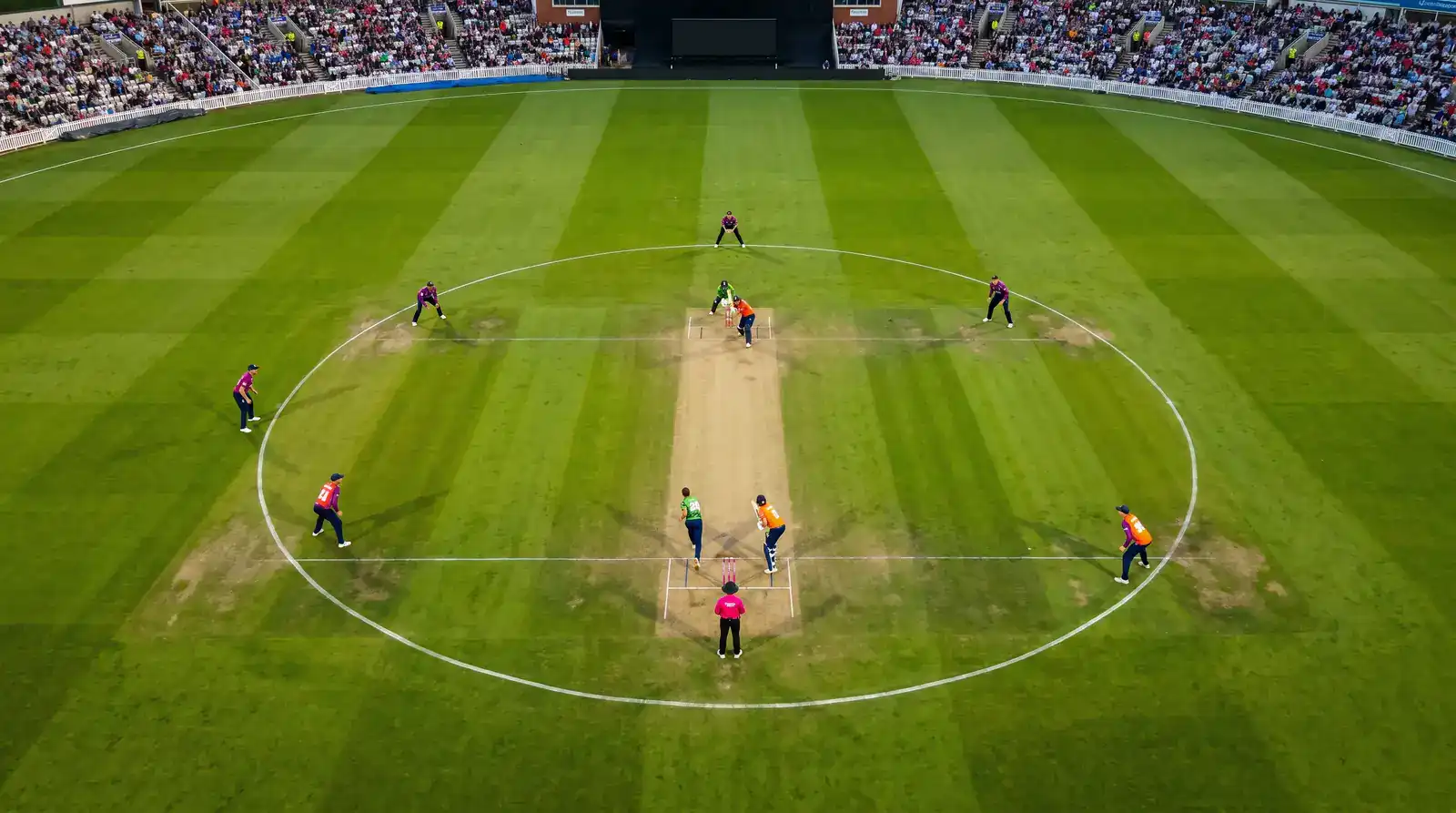
The reason powerplay rules matter to a viewer is that they’re the single largest determinant of scoring rate in white-ball cricket. A team that loses two wickets inside the powerplay has compromised its top-order’s licence to attack, and the chase mathematically becomes harder for the remaining 14 to 75 overs depending on format.
What Makes The Hundred Mechanically Different
I was at the launch of The Hundred in 2021, sitting in the press box at the Oval, and the question every cricket journalist whispered to each other was “how on earth do we score this?”. The answer, after one full innings, was: pretty easily, but with mental gymnastics that took a week to get used to.
The Hundred is built on three mechanical departures from T20. First, the innings is exactly 100 balls. There are no overs. The unit of delivery is the “set” — five legal balls in a row from the same bowler. Second, change of ends happens every ten balls, regardless of how many sets that took. Third, each bowler is capped at 20 balls in a match (four sets), with a maximum of two sets in a row. So a bowler can deliver five, take a breath while their captain decides, deliver another five from the same end, and then sit down for at least one set before coming back.
The decision tree at change-of-ends time is what makes the format mechanically distinct. A captain can have one bowler deliver ten balls in a row (two consecutive sets), which is a heavier load than T20’s four-over maximum but lighter total. The bowler then has to wait at least one bowler’s set before returning. This compresses match strategy: a captain can’t just lean on their best two seamers as they would in T20’s death overs. There’s a structural rule keeping rotation tight.
The format has also produced some unfamiliar viewing habits. The change of ends every ten balls is visually disorienting at first — the action moves from one end to the other faster than the brain expects — but it has a real consequence on the scorecard. Bowlers who like to attack from one end specifically have to choose their moment differently. Spinners can become genuinely useful in The Hundred’s middle phase because the ten-ball block gives them enough deliveries to set a plan in motion.
Commercially the format has worked at a scale few cricket administrators predicted. The Hundred sold 580,000 tickets across the 2025 season, with the women’s final at Lord’s drawing 22,542 spectators. Family attendance accounted for 41% of the audience and women made up 30%, with 23% on junior tickets — a demographic shape that no other UK cricket competition can match.

“We are at a hugely exciting time for The Hundred, and it’s really important that we’ve enjoyed another successful year with strong crowds and viewing figures,” Vikram Banerjee, the competition’s managing director, said in 2025. The format’s growth is now propped up by significant investor money, with the eight franchises valued at a combined £975 million during the most recent fundraise.
For all the noise about whether The Hundred should exist alongside T20, the mechanical case is now settled. It’s a different format with different rules, the same way T20 is a different format from ODI. Each format optimises for a slightly different watching pattern, and The Hundred’s two-and-a-half-hour shape is the most concentrated version of cricket available.
Declarations, Follow-On and the Test-Match Toolkit
Tactical declarations are the most under-appreciated piece of cricket strategy outside the format that uses them. In Test and first-class cricket the batting captain can voluntarily end their innings before all ten wickets fall. The mechanic exists because a four- or five-day match isn’t bound by an over limit — it’s bound by time — and a captain who suspects they have enough runs to bowl the opposition out twice will declare to give their bowlers more overs to do the job.
On the scorecard, a declaration appears as “248/7d” or “248-7 dec”. The team has scored 248, lost seven wickets, and chosen to stop batting. The decision is one of the hardest calls in the sport. Declare too early and your bowlers run out of time. Declare too late and the opposition bats out for a draw. The art is in reading pitch conditions, weather forecast, and the opposition’s batting depth simultaneously.
The follow-on is the other Test-only tool. If a team batting first reaches a total at least 200 runs higher than the opposition’s first innings (in a five-day Test; the margin drops to 150 for four-day matches and 100 for three-day), the captain may invite the opposition to bat again immediately, without taking their own second innings. In theory this saves time and presses the advantage. In practice it has become rare since the early 2000s, after Australia’s loss to India at Kolkata in 2001 — where India followed on, scored 657, and won the match by 171 runs — taught a generation of captains that the follow-on is a high-risk choice. Modern captains usually decline it, take their own second innings, and dictate the run-chase target instead.
Follow-on scorecards carry an “f/o” marker against the second-innings team’s name. The marker is small but meaningful — it tells you the batting order has been forced rather than chosen, which often produces different shot selection in the early overs.
ODI, T20 and The Hundred have no declaration or follow-on. The innings ends when overs (or balls) run out or when all ten wickets fall, whichever comes first. There is no voluntary close. Captains in the limited-overs formats can promote pinch-hitters or shuffle the order, but the structural ability to stop the innings deliberately doesn’t exist in white-ball cricket.
One other Test-specific tool worth mentioning: the new ball. Each side gets a fresh ball at the start of each innings, and may take a new ball again every 80 overs of that innings. The new ball swings harder for the first ten or twelve overs because the seam is proud and the leather is shinier. A captain who takes the new ball at 80 overs is signalling they want their pace bowlers to attack the lower order. The decision to wait two or three overs longer before taking it — letting spin operate while the old ball still grips — is one of the smaller tactical calls that defines a Test session.
Women’s Cricket Across the Same Four Formats
Women’s cricket plays all four formats with identical rule sets to the men’s game. Test, ODI, T20 and the Women’s Hundred — same balls per innings, same powerplay structure, same declarations available in Tests. The competitive ecosystem is different, but the mechanical comparison runs straight across.
Women’s Tests are the rarest of the four formats and sometimes played as four-day matches rather than five. The ECB has reintroduced multi-day women’s cricket in recent years after a long period when only white-ball formats received international scheduling. England’s women played a one-off Test at Trent Bridge against Australia in the 2023 Ashes that pulled a crowd of more than 16,000 across its five days — a figure that would have been unimaginable a decade earlier.
Women’s ODIs follow the same 50-over structure as the men’s format, with identical powerplay phases. Women’s T20 is the format with the broadest international calendar and the deepest professional infrastructure — most women’s domestic franchise tournaments are T20 by default, in part because broadcast windows align with available coverage budgets.
The Women’s Hundred has been the breakout success of UK women’s cricket. The 2025 women’s final at Lord’s drew 22,542 spectators — the highest attendance for a standalone women’s cricket match outside of major international finals. Total women’s audience across The Hundred in 2025 was 349,000+, a number unimaginable in domestic women’s cricket five years earlier. The competition runs concurrently with the men’s tournament, often as a double-header on the same ground on the same day.
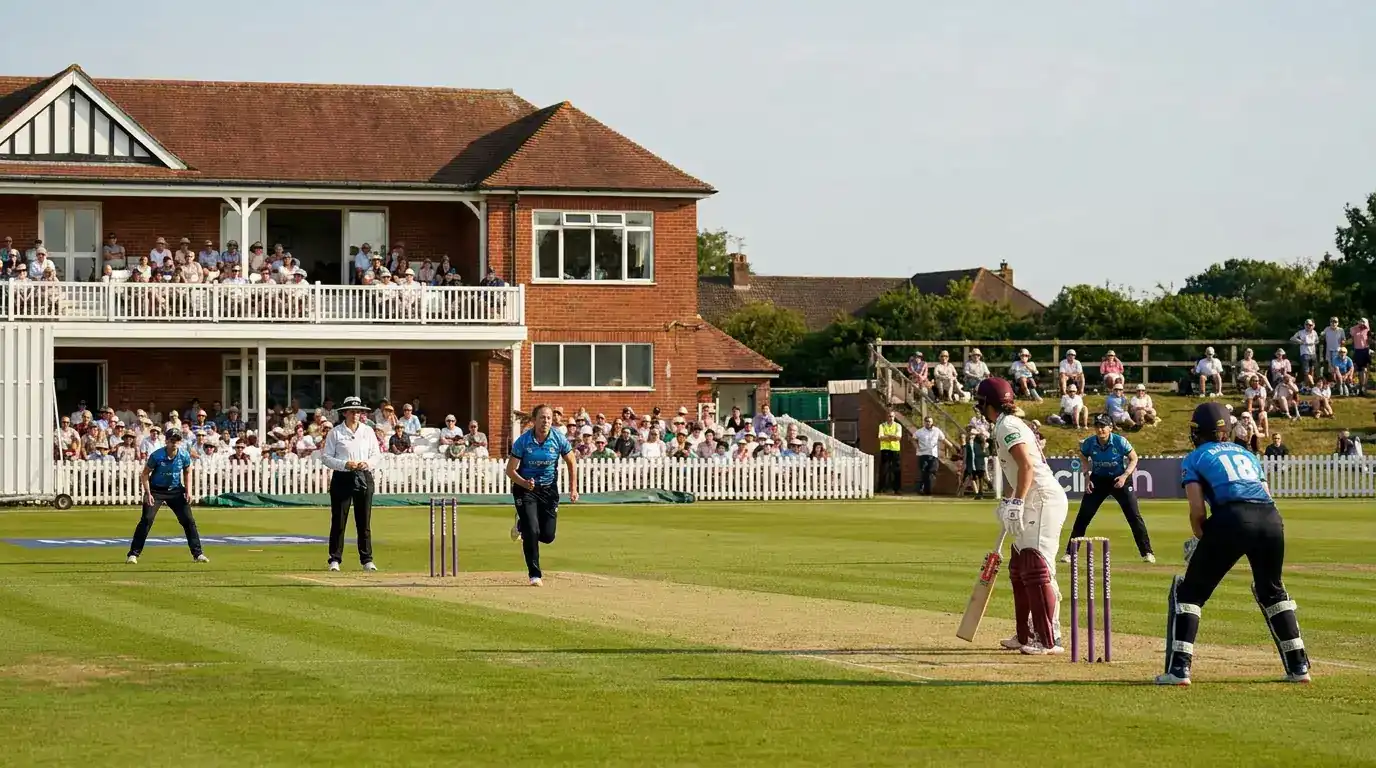
One mechanical detail. The Women’s Hundred uses the same 100-ball structure, same five-ball sets, same change-of-ends every ten balls. The women’s game uses a slightly smaller ball than the men’s — 142 grams as opposed to 156 — and that has measurable consequences for swing and pace off the pitch, but the format architecture itself is identical.
Audience demographics for the Women’s Hundred lean younger and more female than the men’s competition. Looking at the recent participation data, women’s and girls’ grassroots cricket in England and Wales grew by 18% in women’s teams and 13% in girls’ teams in 2025 versus 2024, and that pipeline feeds into the audience curve for the professional women’s game.
The reason this matters to a format comparison is that any cricket scorecard you watch — men’s, women’s, Test, ODI, T20, Hundred — reads the same way structurally. Format literacy is universal. Once you’ve understood why a Hundred set is five balls, that knowledge applies to every Hundred match you’ll ever follow, regardless of which gender is playing.
How the Four Formats Sit in the UK Domestic Game
The UK domestic season runs four competitions across the four formats, each in its own slice of the calendar. The shape of that calendar — how the four formats interlock from April to September — is covered in more depth in the UK domestic cricket season calendar.
The County Championship is the multi-day, first-class competition equivalent to Test cricket. The 2025 season was the 125th in the competition’s history, running across 18 counties in two divisions with 126 matches in total. Nottinghamshire took their seventh title. Each match is four days, not five, but uses Test rules: declarations, follow-on, and all the same tactical architecture I described above. Two innings per side, 90 overs scheduled per day, identical to Test cricket in every operational respect.
The Royal London / Metro Bank One-Day Cup is the 50-over domestic competition. In 2025 it ran across 18 counties in two groups, 77 matches in total, with Worcestershire taking their first title. The format is straight ODI rules — 10 overs per bowler maximum, three-phase powerplay, single innings each. The competition has the awkward calendar slot of running in parallel with The Hundred, which means many counties field development-heavy squads.
The T20 Blast is the domestic Twenty20 league. 18 counties split into North and South groups, regular-season fixtures from late May to mid-July, knockout rounds in August, Finals Day in early September. The 2025 winners were Somerset, beating Hampshire in the final. T20 Blast regularly draws 15,000-plus spectators per match, second only to The Hundred in domestic UK cricket attendance.
The Hundred itself runs through August, in a compressed block that lasts roughly four weeks. Eight teams, men’s and women’s competitions running on the same days, mostly at major international grounds (Lord’s, the Oval, Edgbaston, Trent Bridge, Old Trafford, Headingley, Hampshire’s Rose Bowl and Cardiff). The competition’s standalone format means players from county T20 Blast squads are temporarily seconded to the eight Hundred franchises for the duration.
“The game constantly debates the number of overseas players, the number in the Blast, the number in the County Championship,” Rob Andrew, the ECB’s managing director, observed in 2026. “It goes to the bigger value of the county game as well, in terms of helping grow the game.” The four-format coexistence is the structural debate behind every ECB calendar discussion.
For a UK viewer pulling up live scores in any given week between April and September, the format question often boils down to “what’s on today?”. County Championship Tuesday-to-Friday, Royal London on weekends, T20 Blast on Friday nights, The Hundred concentrated in an August window. Every one of those uses the same scorecard architecture, with the format-specific quirks I’ve described above.
Which Format Suits Which Type of Viewer
Cricket fans tend to develop a primary format the way other sports fans develop a primary team. Choose the format that matches how much sustained attention you actually have to give.
If you want a multi-day commitment that builds across sessions and rewards patience, Test cricket is the format. The pleasure is cumulative. A morning’s grinding pays off three days later when a number-nine batter is jamming out the last over of day five to save a match. There’s a reason 40%+ of the UK cricket fan base is aged 65 and over — the format rewards the kind of attention span that gets harder to maintain when work and small children compete for your time.
If you want a single-day commitment with a clear winner and three phases of identifiable tactical shape, ODI is the format. The 50-over rhythm gives a contest enough time to develop a story (the loss of a top-order wicket can be recovered from) but not so much that the result is in doubt for hours. ODI cricket is the format the World Cup is built around, and the women’s ODI World Cup in particular has been the format-stage on which English women’s cricket has built its modern fan base.
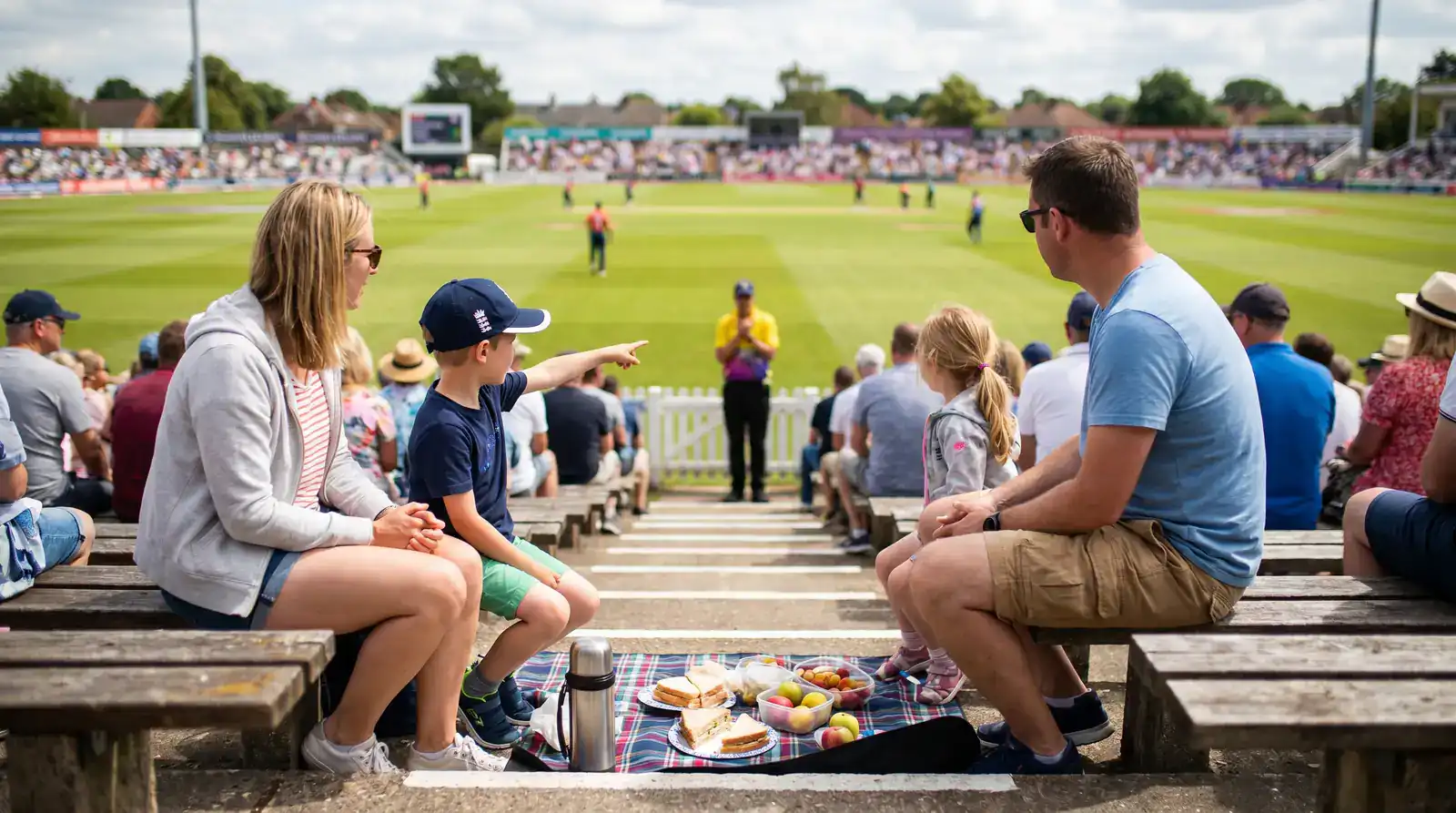
If you want an evening’s entertainment compressed into three hours, with high boundary-hitting, T20 is the format. T20 Blast tickets in the UK still routinely cost less than a Premier League away ticket, and the post-work group setting — pub-style grounds, picnic blankets at smaller venues, a brisk pace — is what built the format’s UK domestic audience from 2003 onward.
If you want the most compressed cricket experience available, with the youngest demographic mix in the UK game and the most family-orientated atmosphere, The Hundred is the format. 31% of the Hundred fan base is aged 18-44, against 24% of the general UK cricket fan base. The Hundred’s family share is 41% of total attendance — the highest in domestic UK cricket. Audience research from Nielsen shows 25.5% of UK adults rate themselves “interested or very interested” in cricket, and the Hundred has been the entry point for a meaningful share of the under-45 portion of that group.
One more dimension. Income is a clearer predictor of cricket fandom in the UK than age alone. YouGov data has shown 30% of British adults with household income above £100,000 are cricket fans, against 20% of those earning under £20,000. The format you gravitate to often reflects when in life you came to the sport — whether through school cricket, through a friend taking you to a T20 evening, or through a parent’s love of the long Test format.
The good news for a new viewer: starting with any format teaches you the sport. Once you’ve followed one summer of any format in the UK, the others become legible. The differences I’ve described feel large at first; they shrink fast.
Format Comparison Points Worth Clarifying
Published by the Stumply team.
