
UK Cricket Broadcasting: Where Live Coverage Lives and What It Costs
 Available in US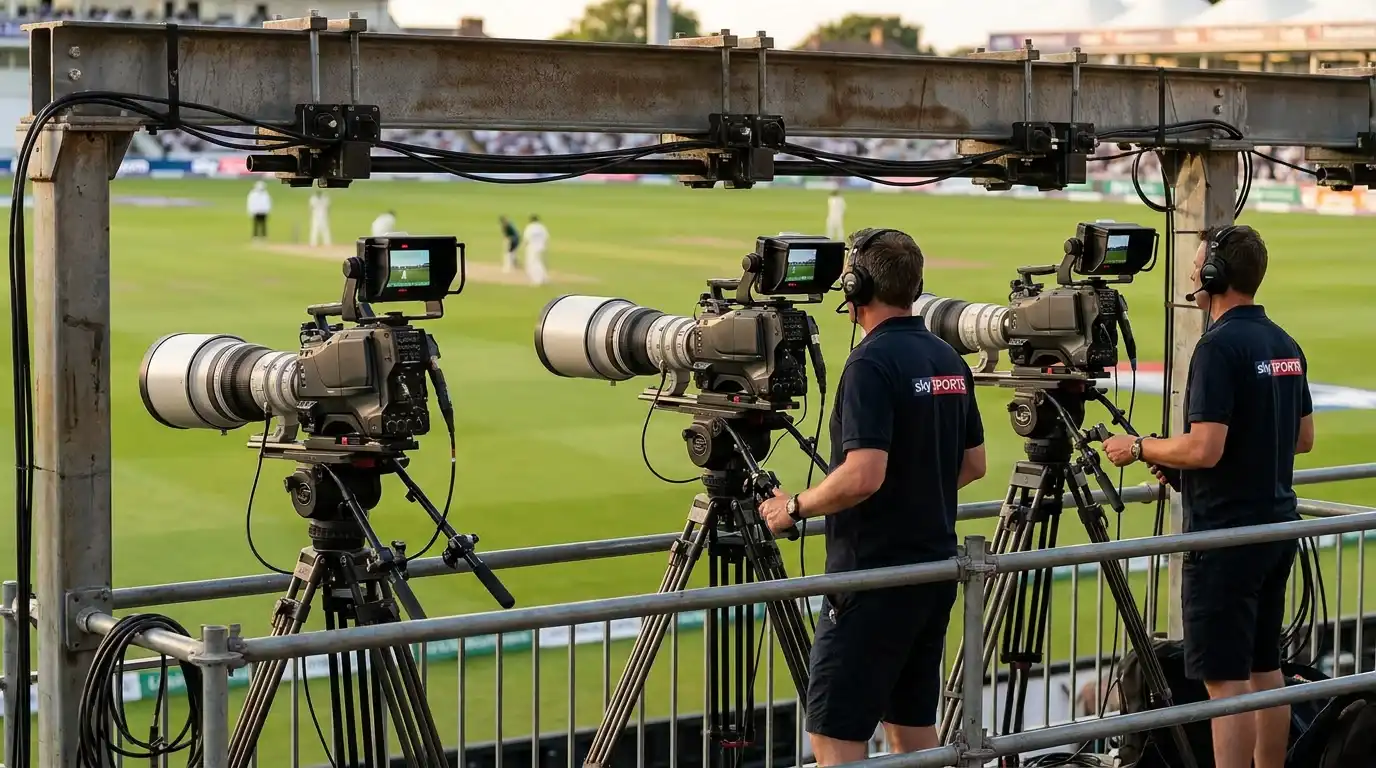
Following the Money Behind UK Cricket Coverage
I once tried to calculate how much it would cost a single household to watch every ball of an English cricket summer — every Test, every ODI, every T20I, every Hundred match, every County Championship game with live coverage. The answer, including the necessary streaming subscriptions, came to over £600 per year. That’s the financial reality of UK cricket broadcasting now, and most casual viewers don’t realise it until they try to follow a specific match and find themselves bouncing between four different platforms.
The reason for the fragmentation is straightforward. The ECB takes around £310 million in annual revenue, and approximately three-quarters of that — roughly £225 million — comes from selling television rights. That single income stream funds everything from the international team’s wages to grassroots grants, and the ECB has every incentive to keep its rights deals competitive. Selling those rights to Sky has been the operating model for two decades, and the deal has only grown in value.
What that means for UK viewers is that the bulk of live cricket coverage sits behind a pay-TV paywall, with a free-to-air highlights package layered on top, a radio commentary tradition that predates television, and a growing collection of streaming services carrying specific tournaments. Each route gives the viewer different things at different price points, and the choices a UK cricket fan makes about subscriptions are shaped as much by which formats they care about as by household budget.
This guide walks through the entire UK cricket broadcasting landscape: the historical context, the current pay-TV deal and its scale, the free-to-air remnants, the radio tradition, the streaming options, and the second-screen habits UK viewers have layered on top. I’ll be specific about money where the figures are public, and I’ll be honest about the trade-offs different subscription combinations produce.
A Short History of Cricket Rights in the UK
UK cricket broadcasting changed forever in 1999, when the ECB signed its first exclusive pay-TV rights deal with Sky. Until then, Test cricket had been on free-to-air television — the BBC, then Channel 4 — and a generation of viewers had grown up watching the sport on the sofa at home without paying directly for it. The move to Sky in the late 1990s and the loss of all live cricket from terrestrial television in 2005 (after the famous Ashes series of that year) is the single most consequential business decision in modern English cricket.
The reasoning was financial. Sky paid significantly more for exclusive live rights than free-to-air channels could afford. That money flowed into the professional and grassroots game, funded the central contracts, and built the infrastructure that supports the modern county system. Sky has invested approximately £1.4 billion in cricket rights since 2000, an amount that has underwritten the sport’s economics through two and a half decades.
The cost was audience reach. The 2005 Ashes series — broadcast on Channel 4 — drew live peak audiences in the millions and made household names of Andrew Flintoff, Kevin Pietersen and the rest of the squad. After 2005, with live cricket disappearing behind the paywall, those audience numbers collapsed for daily Test viewership. The 2023 Ashes peak audience for the men’s final — by then watched only on Sky — was 2.12 million, the highest figure since the move to pay-TV but still a fraction of the 2005 peaks. Total tuned-in viewers across the 2023 series reached 17.8 million across the UK.
“Sky have been fantastic partners for cricket for over 30 years,” Clare Connor, the ECB’s interim chief executive at the time of the most recent renewal, said in 2022. “Their broadcast coverage is rightly lauded as the best in the world.” The choice to stay with Sky, repeatedly, has been a choice to prioritise revenue over reach.
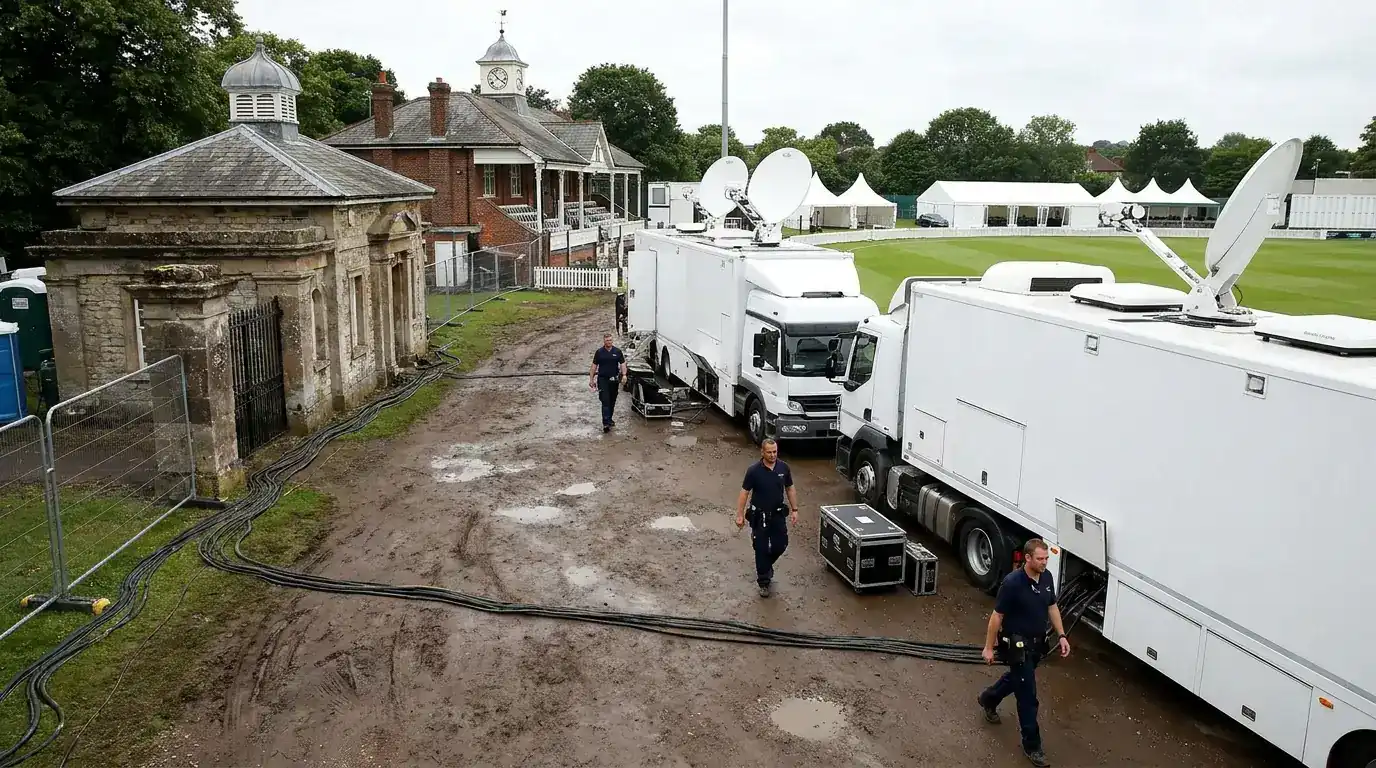
There have been partial concessions to the free-to-air problem. The BBC carries highlights packages. From 2020 the BBC has carried a limited number of live T20 internationals and Hundred fixtures, partly funded by the ECB to broaden free reach for the white-ball formats. The Hundred specifically was designed with free-to-air access in mind — a recognition that the format’s growth depended on visibility, not just revenue.
The overall historical arc is clear: cricket made a calculated trade in the late 1990s, exchanging mass terrestrial visibility for the financial security that has underwritten the modern professional game. Whether that trade has worked depends on which metric you weight more heavily, and the debate has been running for two decades now.
The Current Pay-TV Deal and What It Includes
The current pay-TV arrangement between the ECB and Sky was extended to run through 2028. The headline annual figure for the previous deal cycle was around £220 million, paid by Sky for exclusive live rights to England’s men’s and women’s internationals, the T20 Blast, the County Championship (with selective live coverage), and a share of The Hundred. The new contract has a slightly different structure, with The Hundred’s domestic TV income alone projected to rise from £37.8 million in 2025 to £54.3 million in 2026 and each subsequent year until 2028.
That increase reflects something important about The Hundred’s financial trajectory. The competition was launched in 2021 with significant ECB investment and uncertain commercial returns. By 2025 it had become a genuine commercial asset, with the eight franchises valued at a combined £975 million during the most recent investor round. Sky’s willingness to pay 40%+ more per year for The Hundred’s domestic rights is a market endorsement of that growth.
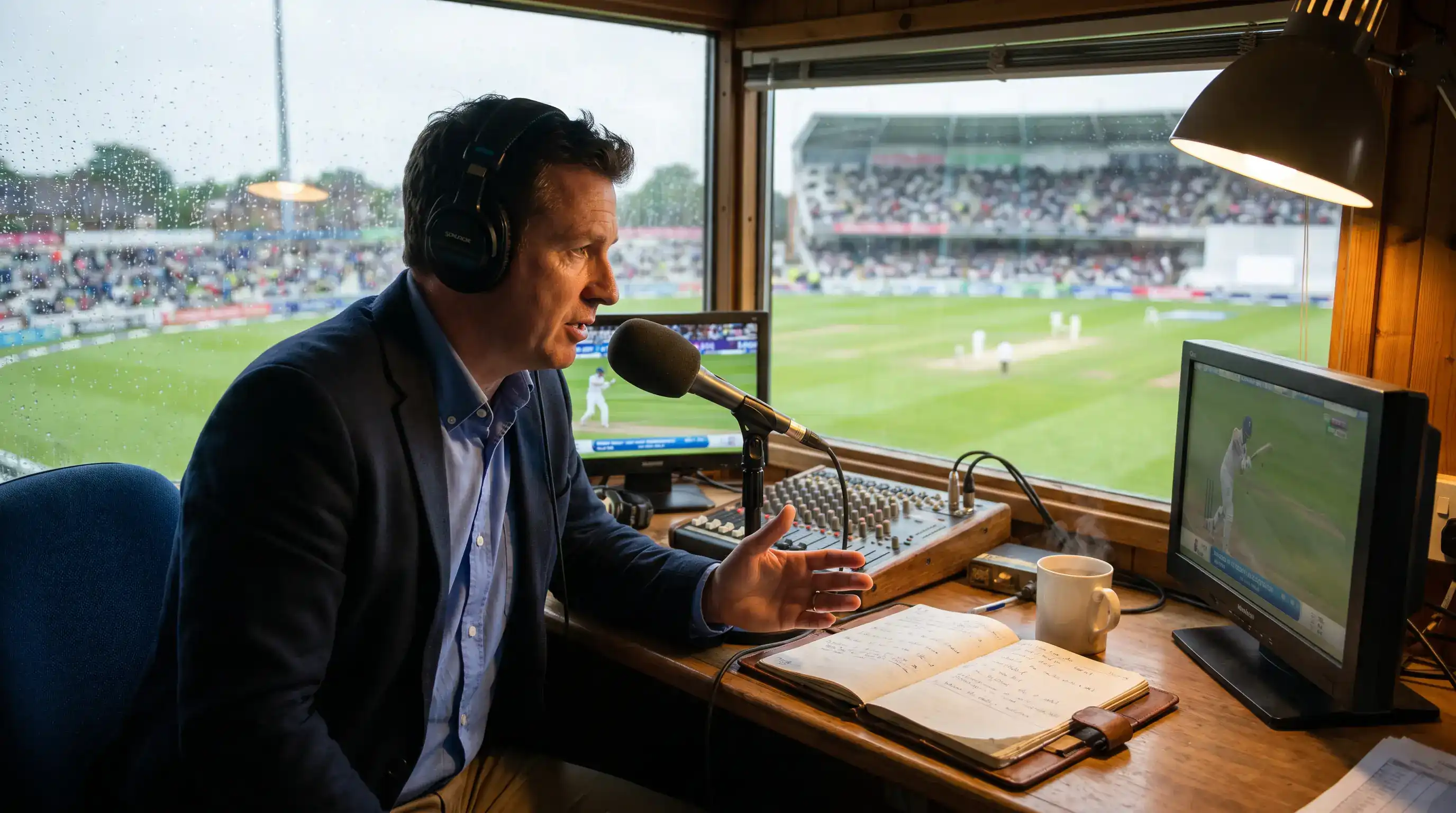
What the Sky package includes, in practical terms: live coverage of every England men’s and women’s home Test match, every home ODI, every home T20I, the full T20 Blast competition (group stage, knockouts, Finals Day), the men’s and women’s Hundred competitions, selected County Championship matches with live coverage (typically those involving title-chasing sides or featuring England internationals), and a comprehensive package of overseas tour matches where Sky has secured the international rights.
The subscription tiers vary. The base Sky Sports package costs around £25-30 per month, with cricket as one channel among several. Direct streaming via NOW TV offers daily, monthly and seasonal passes at lower commitment levels — the seasonal Sky Sports pass typically costs around £40 for a month, which works out reasonably for someone who wants to watch a specific Test series without committing to a long-term subscription.
“This is an exciting time for English cricket and we’re thrilled to be furthering our long and successful partnership with the ECB,” Stephen van Rooyen, Sky’s EVP for UK and Europe, said when the most recent extension was announced. “Together we will continue to help grow the game while boosting participation in the sport by children from all backgrounds.”
The package’s largest single component is now The Hundred. The ECB’s own commentary on the deal — including the leaked slides that put The Hundred’s TV revenue figures into the public domain — makes clear that the competition’s commercial value is what’s pulling the broadcast deal’s headline figure upward. The County Championship and the One-Day Cup remain in the contract but contribute smaller commercial value individually.
For deeper context on which competitions sit where in the UK season, the UK domestic cricket season calendar walks through the calendar slot each format occupies and how the broadcast deal maps onto it.
Free-to-Air Cricket: What Remains and Where to Find It
Free-to-air cricket exists in the UK, but you have to know where to look. The headlines about cricket “disappearing” from terrestrial TV in 2005 are accurate for live Test coverage but overstate the case for the modern landscape. There is more free-to-air cricket on UK television in 2026 than at any point in the previous twenty years.
The BBC carries highlights packages for England’s home Tests, ODIs and T20Is. These typically appear on BBC Two or BBC iPlayer in the evening following a day’s play, lasting between 90 minutes and two hours. The highlights cover all wickets, key partnerships, and the day’s defining passages, but compress 90 overs into a fraction of the live broadcast. The highlights package is funded as part of a sub-licensing arrangement between Sky and the BBC.
Live free-to-air cricket has been clawing back territory. The BBC carries live coverage of a small number of T20 internationals each year, typically men’s home fixtures against marquee opposition. The corporation has also carried live coverage of selected Hundred matches each summer since 2020. The total free-to-air online viewership for the 2025 Hundred reached 2.2 million on BBC platforms, up from 1.6 million in 2024 — a meaningful jump that justified the renewal of the BBC’s coverage commitment.
The Hundred’s design as a partially free-to-air competition is one of its more deliberate features. The competition is co-produced with the BBC for a defined slice of matches each season, which means a household without a Sky subscription can still watch a meaningful portion of The Hundred’s group stage and women’s matches. The trade-off is that the marquee men’s fixtures and Finals Day remain primarily on Sky.
Channel 5 has also dipped into cricket from time to time, particularly with selected international highlights and one-off coverage of franchise league matches that fall within their commercial reach. The pattern is opportunistic rather than systemic.
What “free-to-air” effectively means in 2026 for a UK cricket viewer: the BBC highlights packages will give you a comprehensive evening summary of every day of every home Test. Live free-to-air will give you a handful of T20s and a third of The Hundred’s matches per season. Anyone wanting to watch every ball of a Test series, the entire County Championship, or the men’s Hundred Finals Day needs a paid subscription somewhere.
There’s no obvious commercial path to restoring full live free-to-air cricket. The numbers don’t work — the BBC and Channel 4 simply can’t outbid Sky for the full international portfolio at current rights values. What does work is the layered approach now in place: paid live, free highlights, selective free live for marquee fixtures and white-ball expansion. It’s not the 2005 settlement, but it’s a functioning compromise.
Cricket on the Radio: Ball-by-Ball Without a Screen
Test Match Special is older than the modern broadcast cricket arrangement, older than colour television, older than most things in British sport. The BBC Radio commentary tradition dates from 1957, and it remains the cleanest, lowest-cost way to follow cricket live in the UK. Free at the point of use, available across BBC Sounds, BBC iPlayer Radio, and on traditional FM and DAB frequencies, the radio coverage gives every ball of every England men’s home Test from first ball to stumps.
The radio commentary tradition is built around the rotating panel — three or four commentators describing play, a summariser providing tactical context between deliveries, and a producer cueing in archive segments and crowd colour during breaks. The format works because cricket has natural rhythm; bowler walks back, sets, runs in, delivers, and there are several seconds between every delivery for description and commentary to develop.
BBC Radio 5 Live carries selected ODI and T20I coverage. BBC Sounds carries county club audio streams from a growing number of grounds — Lancashire, Yorkshire, Surrey, Hampshire and Somerset all now produce their own ball-by-ball audio for County Championship matches, available free through the BBC platform.
The international reach of the radio coverage is one of its quietly important features. Test Match Special’s online stream is accessible to UK users without subscription, which makes it the default companion for anyone who can’t watch the television coverage. A commuter on the train, a worker in an office without TV access, a parent juggling weekend childcare — all of them can listen to TMS on a smartphone for free.
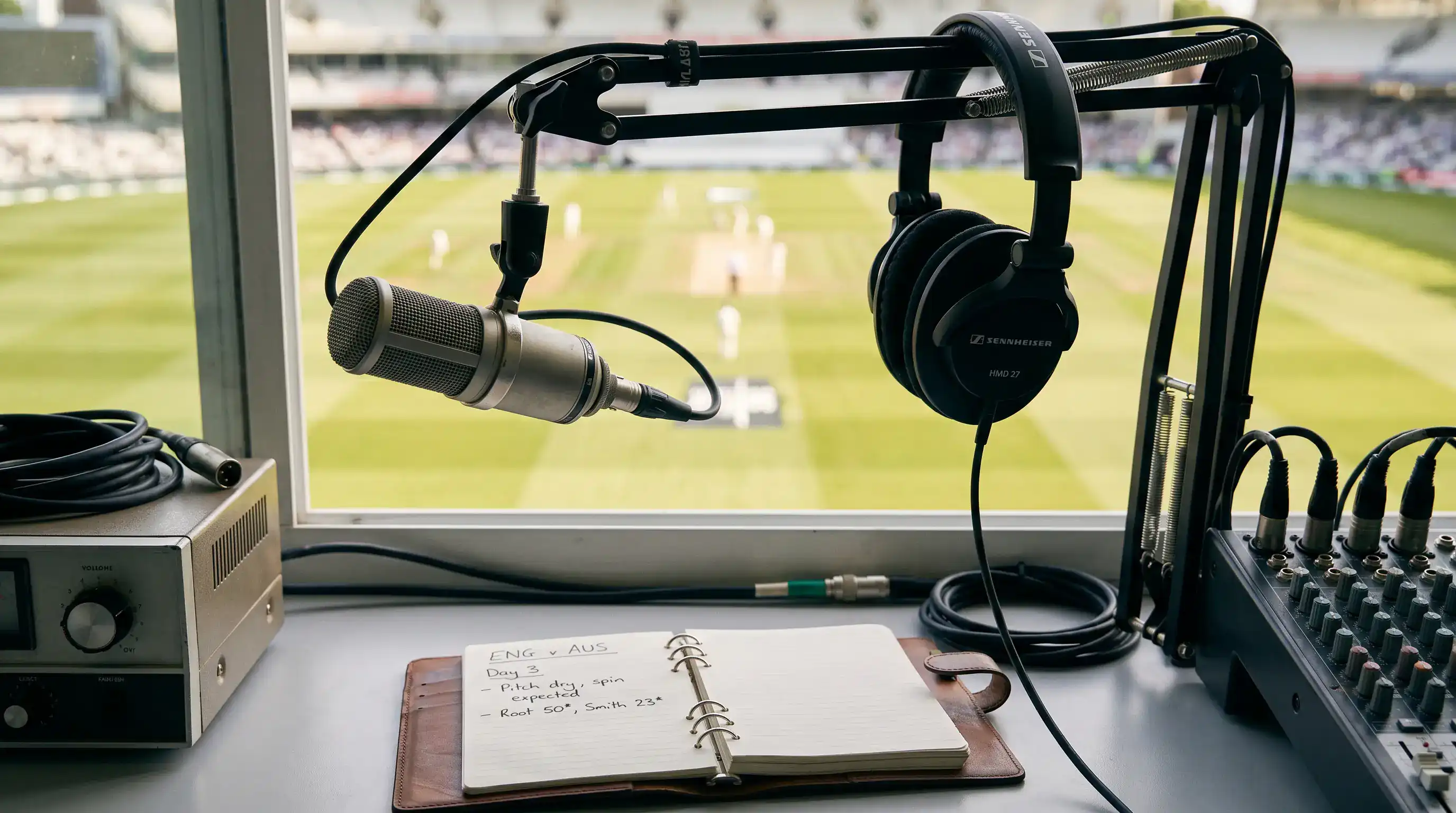
One operational detail. Radio commentary runs a few seconds behind the live action — typically two to five seconds behind a TV broadcast, which itself runs about 30 seconds behind real-time events at the ground. The lag is small but real. Anyone using a live-score app at the same time as radio will sometimes see a wicket on the app a moment before the commentator says it out loud.
Talksport carries some cricket commentary, particularly for international tours where the BBC has not secured rights. The coverage is smaller in scale than TMS but extends the radio ecosystem further into the franchise league and overseas tour space.
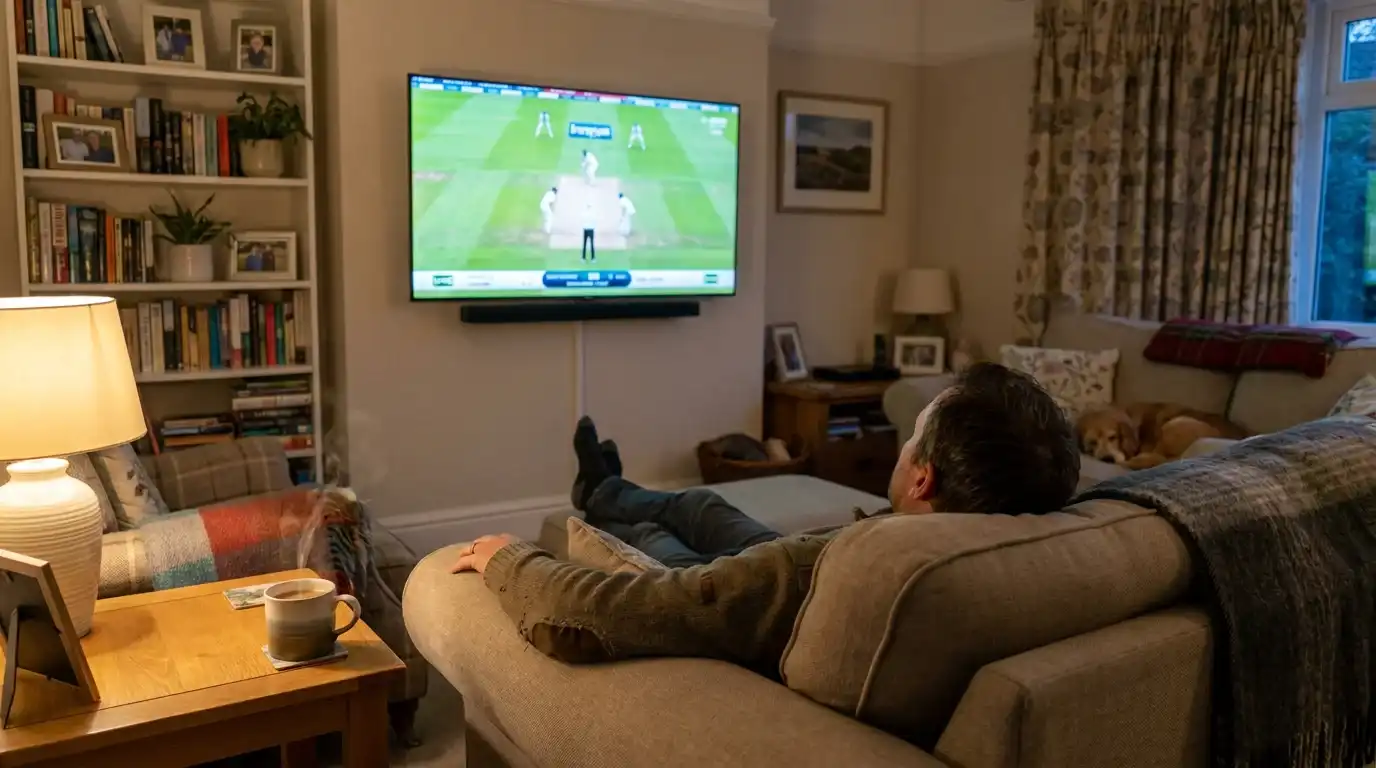
For a UK viewer who wants ball-by-ball coverage without paying for it, radio remains the single most cost-effective route. It’s a different experience to television — no slow-motion replays, no Hawk-Eye graphics, no detailed close-ups — but the verbal description carries the match’s narrative arc as well as any visual broadcast. Around two-thirds of British adults use a phone or device alongside watching television, and a significant share of cricket fans now use TMS specifically as a second-screen audio source while keeping the TV muted.
Streaming Services Carrying UK Cricket
The streaming layer has been the fastest-growing slice of UK cricket coverage. The IPL streams via Disney+ in some seasons and via TNT Sports / Discovery+ in others, depending on which broadcaster holds the current rights cycle. The Big Bash League, the Caribbean Premier League, and other major franchise tournaments rotate similarly through whichever streamer has bought the package.
Sky’s own streaming product, NOW TV, makes Sky Sports cricket available on a day-by-day, month-by-month or season-by-season basis without the long-term contract attached to a Sky Q subscription. The flexibility matters for cricket because the sport’s calendar is concentrated rather than continuous — a fan can pay for a single month to cover an entire Test series and then drop the subscription until the next series.
The ECB Match Centre on the ECB’s own website provides live streaming of County Championship matches via Sky’s grassroots and supporters’ platform. Coverage is more limited than the full Sky broadcast — fewer cameras, no Hawk-Eye, no commentary in some matches — but it makes domestic red-ball cricket accessible to viewers prepared to register for a free supporters’ account.
YouTube has become a quiet third route. The ECB’s official YouTube channel carries highlight clips, full-match replays of selected county matches, and behind-the-scenes content. Many individual counties — Surrey, Lancashire, Yorkshire and others — run their own YouTube channels with longer-form match content available on demand.
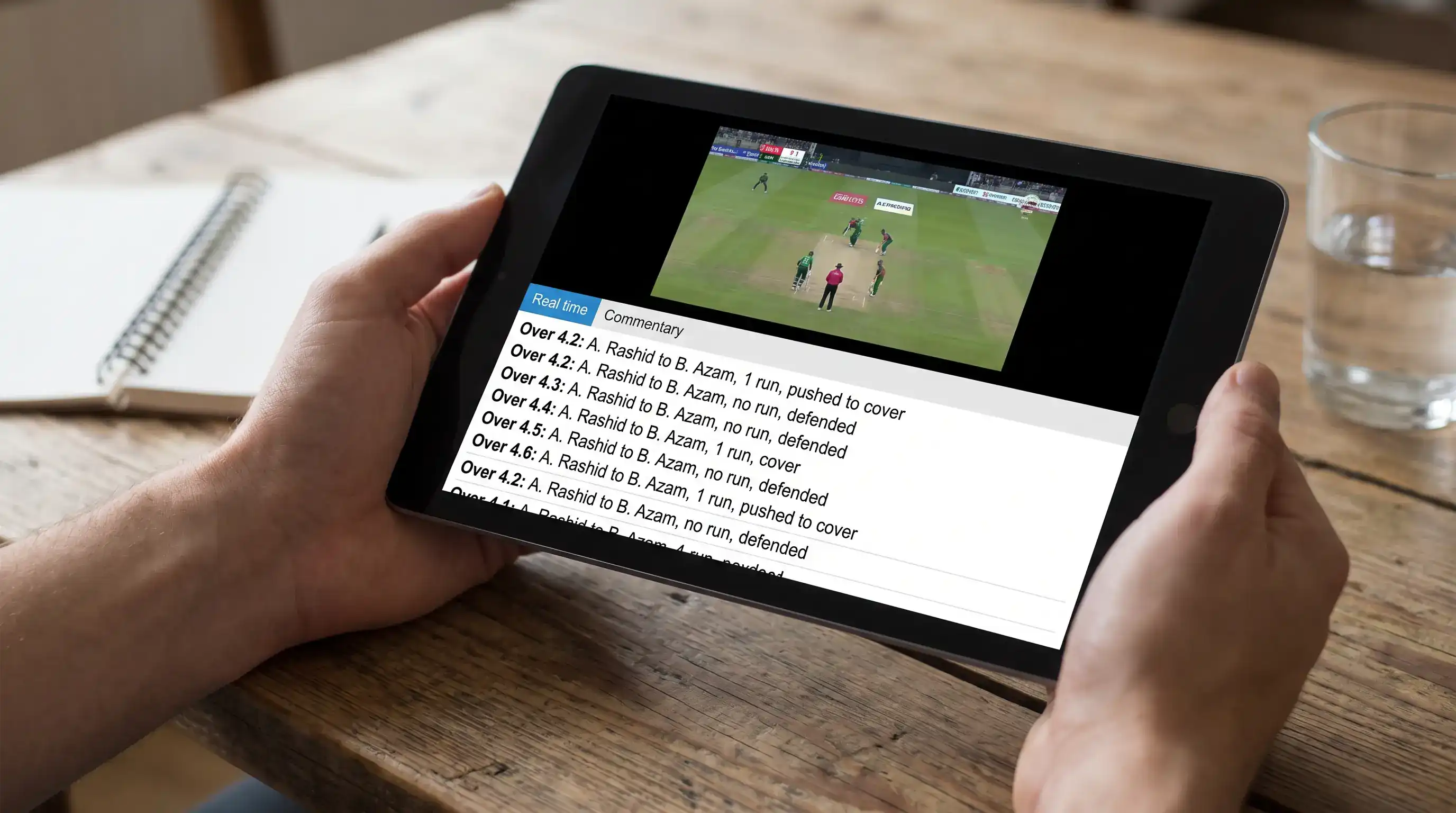
The Hundred has its own streaming presence beyond the Sky and BBC linear broadcasts. The competition’s social-media-led production team has invested heavily in short-form clip content — boundary highlights, wicket replays, player reactions — designed for mobile audiences who don’t watch the full broadcast. The result is a coverage stack that’s broader than any other UK cricket competition: linear pay-TV, linear free-to-air, streaming, social clips, and the ECB’s own digital channels.
“We had a really long sit-down meeting where the social media digital journalists came and spoke to the content team and the production team as a whole about what they were trying to achieve,” Liz Thorne, a senior production manager at Sky Sports Cricket, said in 2025. “We’re super happy to support that and give them what they need in terms of accessing that younger generation and people that are more interested in instantaneous, maybe shorter clips.”
The fragmentation of streaming sources for UK cricket means a fan now needs to plan ahead which platform they’re using for which competition. The IPL might be on one streamer this year and another next year. The Big Bash might be on yet another. The constant shifts in rights packages mean the answer to “where is X cricket on?” requires checking each season rather than relying on memory.
Coverage of Women’s Cricket in the UK
Women’s cricket broadcasting in the UK has transformed over the past five years more profoundly than any other corner of the coverage map. The 2025 Women’s Hundred drew a total cricket audience of 349,000+ across the competition, with the women’s final at Lord’s pulling 22,542 spectators in person. Those numbers would have been unimaginable a decade earlier, and the broadcast coverage has scaled to match them.
Sky carries every England women’s home Test, ODI and T20I. The broadcast production is now substantively identical to the men’s coverage — same camera deployments, same Hawk-Eye, same commentary panels, same studio analysis between innings. The investment hasn’t been performative; it’s been structural. Women’s matches are produced with the same broadcast tools because the audience has reached a scale that justifies it.
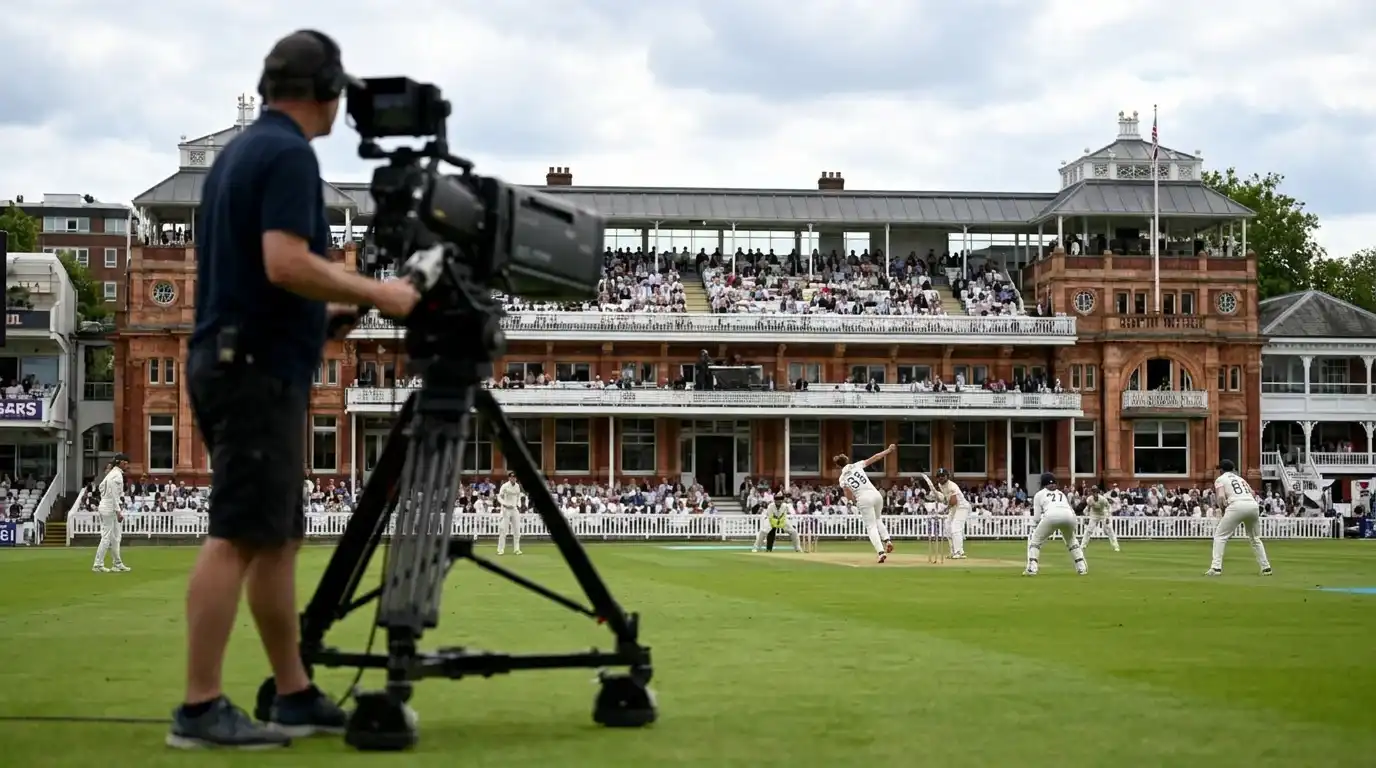
The BBC carries highlights of women’s internationals on the same basis as men’s coverage, plus a slice of live coverage for selected fixtures. The Women’s Hundred is broadcast in equal partnership with the men’s competition, often as a double-header on the same ground on the same day. That production decision has been one of the most consequential single moves in UK women’s cricket broadcasting — the women’s audience benefits directly from the men’s broadcast infrastructure, and the women’s matches inherit production quality that would otherwise have taken decades to build.
Audience growth in women’s cricket has been broad-based. The 2023 Women’s Ashes drew a 288% rise in attendance against the comparable 2019 series. The TV figures grew correspondingly. Women’s domestic cricket also benefits — the Women’s T20 Blast and the women’s regional structure now produce televised matches that would have been unthinkable when the competition started.
Coverage on the radio side has expanded similarly. Test Match Special covers women’s home internationals on BBC Sounds, and county club audio streams now include women’s matches where coverage exists.
The streaming side carries less women’s content proportionally — partly a hangover from earlier rights arrangements, partly because women’s franchise cricket internationally hasn’t matched the scale of the men’s franchise league market. The Women’s Hundred is the exception, with the same multi-platform coverage as the men’s competition.
For a UK viewer interested specifically in women’s cricket, the practical landscape is now reasonably clear: Sky for live internationals and The Hundred, BBC for highlights and selected live matches, ECB digital and individual county channels for domestic women’s matches with patchier coverage. The cost mirrors the men’s game, which is itself a marker of how far women’s cricket broadcasting has come.
Watching Overseas Tours from the UK
Following England on tour from a UK living room is the most logistically complicated cricket-watching activity I do every winter. Different overseas boards sell their broadcast rights to different UK partners, time zones shift the live broadcast to inconvenient hours, and not every series receives the same depth of coverage.
England’s tours of Australia (the away Ashes), New Zealand, India, the West Indies, South Africa, Sri Lanka, Pakistan and Bangladesh all carry live UK coverage, but the broadcaster varies. Sky has historically held the bulk of the major touring rights, particularly for tours of Australia, India, the West Indies and South Africa. The IPL has rotated between broadcasters across rights cycles. The smaller franchise leagues — the Caribbean Premier League, the Pakistan Super League, the Big Bash — appear variously on TNT Sports, Discovery+ and other streamers depending on the season.
The time-zone problem is the biggest single barrier to live UK viewership of overseas tours. England’s tours of Australia mean play starts at midnight UK time and runs until lunchtime. India tours produce slightly more friendly evening starts. New Zealand tours typically start in the early UK morning. South African and West Indian tours are the most viewable for a UK working schedule, with afternoon and early-evening starts.
The 2023 Ashes is the most-watched English cricket of the past decade for total UK audience, with 17.8 million tuned-in viewers across the series. That figure was inflated by the home advantage — every Test was on Sky in UK prime time. The away Ashes the previous year drew much smaller live audiences because of the time-zone friction.
For UK viewers committed to following England on tour, the practical answer is a Sky Sports subscription or NOW TV pass plus selective other streamers for franchise leagues. The TMS radio coverage typically covers England’s overseas Tests, which makes radio the most cost-effective fallback for tours where the time zone makes live TV impractical.
Highlights packages help. The BBC carries evening highlights of major overseas tours for England men’s matches, typically running 60-90 minutes per day’s play. The highlights appear in the UK evening following each day’s play overseas, which works well for India and West Indies tours but lags by a day for Australia and New Zealand tours where the play has already finished by UK breakfast.
The most-watched overseas franchise tournament for UK viewers is consistently the IPL. The broadcast deals for the IPL in the UK have rotated through several partners over the past decade, and each rights cycle has involved a different consumer subscription requirement.
What UK Viewers Open Alongside the Broadcast
Switch on any English cricket broadcast and look around the room. Most viewers won’t be watching just one screen. According to Ofcom’s Online Nation 2025 report, almost two-thirds of British adults use a phone during television viewing — and cricket fans are particularly prone to it. The sport’s natural rhythm of pauses between deliveries makes it ideal for a second-screen experience layered on top of the live broadcast.
The typical UK cricket second-screen stack looks something like this. A live broadcast on Sky or BBC carries the primary feed. A phone in hand carries either Cricbuzz, ESPNcricinfo, the ECB Match Centre app, or the Sky Sports app for additional scorecard depth. Sometimes a tablet adds a third screen for statistical sites like CricViz or Statsguru. The viewer pulls up player records, head-to-head statistics, and historical context as the match unfolds.
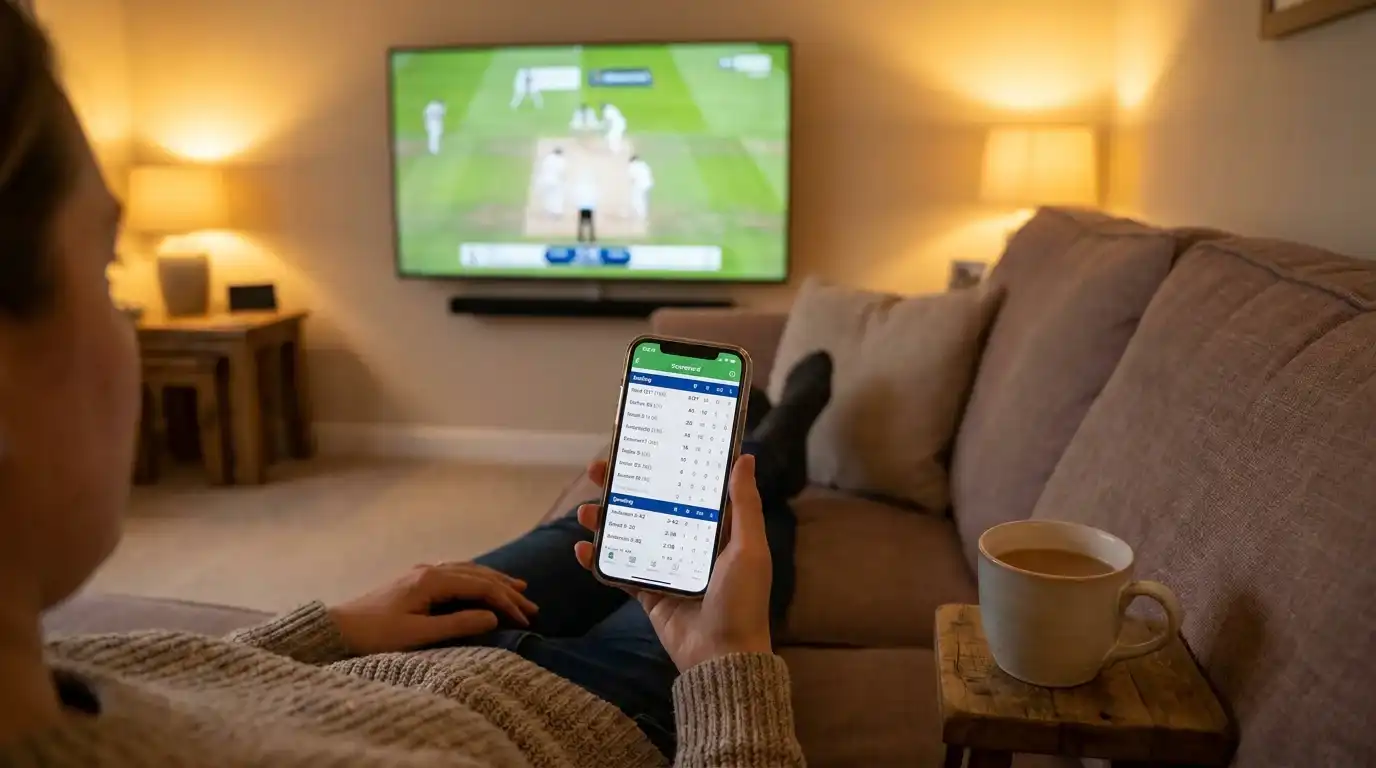
The Cricbuzz app sits on over 100 million downloads on Android alone, and its UK user base is meaningful even though the app’s primary editorial focus is India. ESPNcricinfo’s Android app has 24 million downloads with around 9,100 daily installs in the most recent thirty-day window. Both apps are widely used by UK fans as the canonical second-screen source for ball-by-ball updates and deep statistics.
The numbers behind concurrent app usage tell their own story. During an India-Pakistan match, the live broadcast platform Sports Tak recorded 42,000 concurrent viewers on its ball-by-ball stream, ESPNcricinfo recorded 17,000, and Cricbuzz recorded 1,900. Those numbers fluctuate by match and by competition, but they illustrate the order of magnitude that live cricket apps now sustain during marquee fixtures.
For UK viewers, the second-screen layer also serves a coverage-gap function. The TV broadcast might be following one specific match, but the viewer can use the second screen to check parallel fixtures: an ODI in another country, a T20 Blast match running concurrently with The Hundred, a county fixture happening on a separate ground. The radio’s audio commentary on TMS can be paired with a TV broadcast on mute, particularly for viewers who prefer the radio voice but want the picture.
The trade-off is occasional spoilers. A second-screen app updates a few seconds ahead of the broadcast feed in most setups, which means a wicket appears on the phone before the TV shows the appeal. Some viewers turn off app notifications while watching to avoid the spoiler problem. Others embrace it, preferring to see the wicket coming a second early.
The cumulative effect is that UK cricket viewers are now consuming the sport across multiple screens simultaneously in a way that no other major British sport quite matches. The pace of cricket allows it. Whether it’s a Test session ticking past on Sky with TMS on radio and Cricbuzz on a phone, or a Hundred match on the BBC with ESPNcricinfo open in a browser, the multi-platform consumption pattern is now the standard UK cricket-watching experience.
Broadcast and Streaming Curiosities Addressed
Published by the Stumply team.
