
UK Cricket Attendance in 2025: What the Numbers Across Formats Show
 Available in US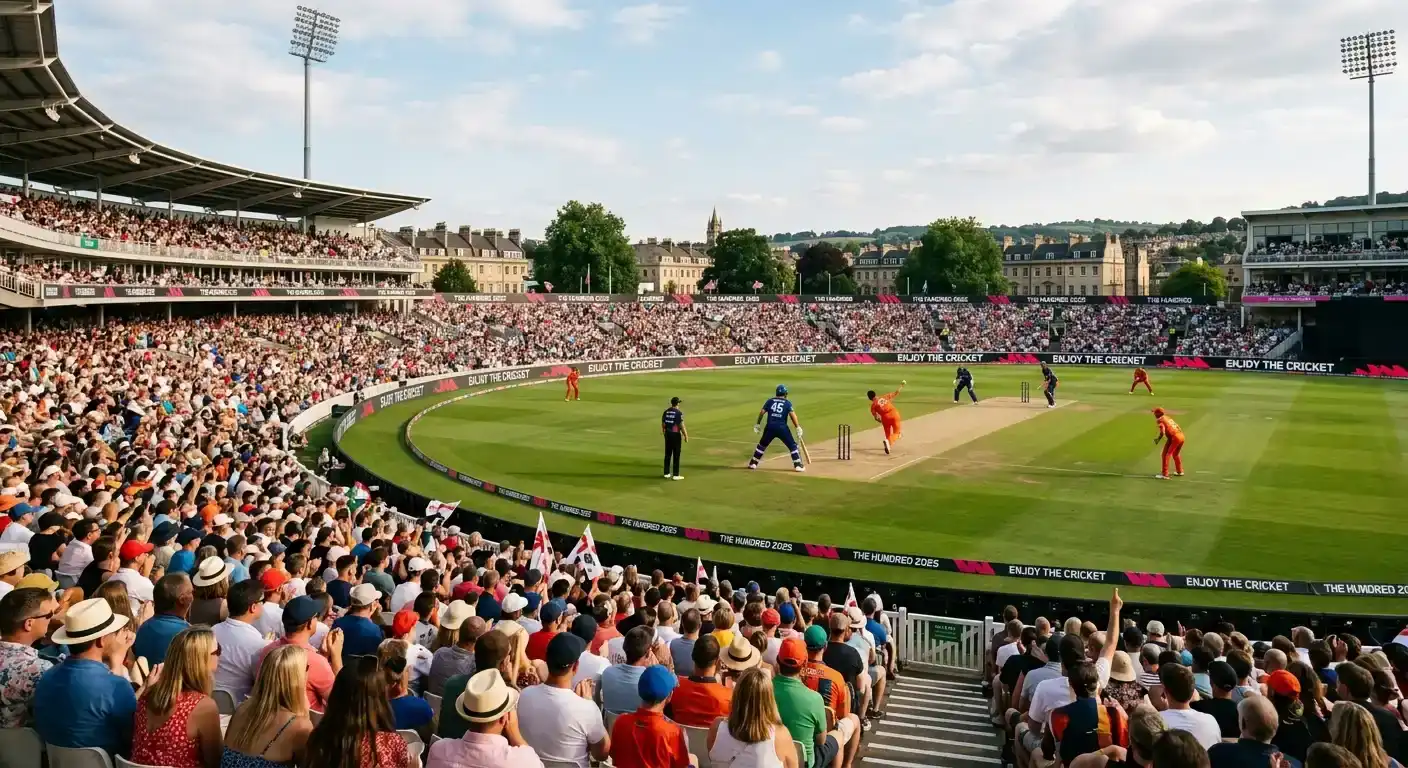
What “2.84 Million” Really Tells Us About UK Cricket
The first time I saw the 2.84 million attendance figure for the 2024 UK cricket year, I assumed it was a slow year. England Men hosted West Indies and Sri Lanka — neither side likely to fill grounds the way Australia or India do — and the summer was crowded with the Paris Olympics and the men’s football Euros competing for sporting attention in the same window. The number turned out to be the best ever attendance for a non-Ashes or non-India year. That gap between expectation and reality is the kind of thing that shows up only when you actually look at what UK cricket attendance has done in recent seasons.
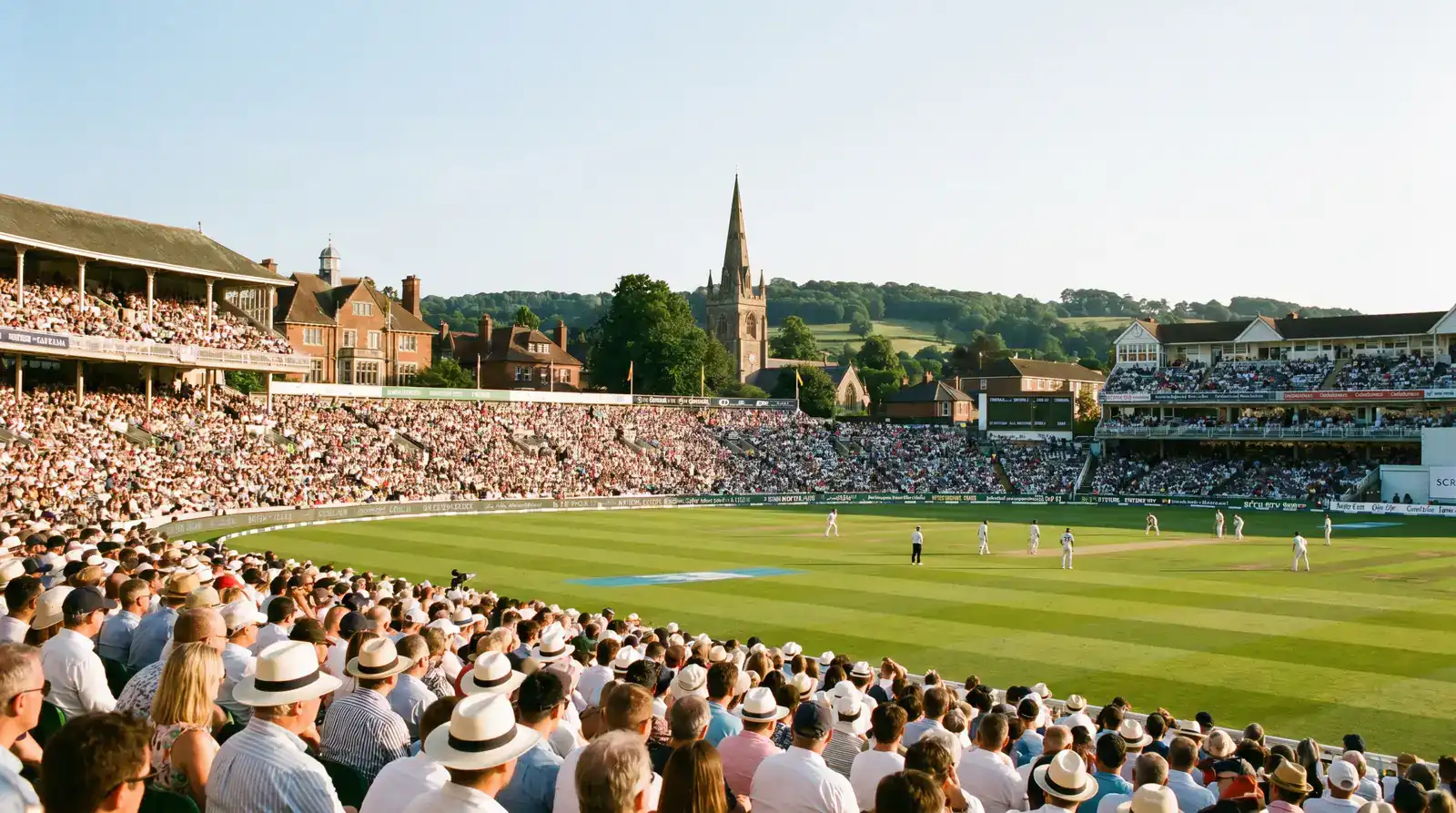
UK cricket attendance is not one number. It is a layered set of figures across formats, competitions, and gender splits, each of which behaves differently. The Hundred drives huge crowds in compressed three-and-a-half-week windows. The County Championship draws steady but smaller crowds across the long four-month season. T20 Blast group games regularly exceed 15,000 per fixture; The Hundred matches push past 20,000. Women’s cricket has gone from being a sideshow to drawing record audiences at venues like Lord’s. The 2025 attendance figures across all these competitions tell a more interesting story than the headline figure alone suggests.

International Match Attendance in 2024–25
The 2.84 million figure covers England’s home international fixtures plus the major domestic competitions counted in the ECB’s annual reporting. The figure is broken down across Test matches, ODIs, T20 internationals, the Hundred, T20 Blast, One-Day Cup, and County Championship. The international portion makes up a substantial share — Test matches in particular draw large crowds even against less marquee opposition.
England’s home Test summer in 2024 produced strong attendance despite the touring sides. Lord’s drew its usual full houses across both home Tests, the Oval’s late-summer match sold strongly, and the regional Test venues — Edgbaston, Trent Bridge, Headingley, Old Trafford — produced their typical mix of full crowds at the weekend and softer attendance on Tuesday and Wednesday play. The ECB has been working steadily on the issue of weekday Test attendance, with discounted family tickets, school programmes, and group bookings designed to lift the midweek numbers.
ODI and T20 international fixtures produced more variable attendance, with marquee fixtures (England against the major sides) selling out and less significant series struggling to fill grounds. Bilateral white-ball series have become harder to sell in a calendar dominated by franchise leagues and major tournaments, and the ECB has been adjusting the international schedule to put fewer but more impactful fixtures into the calendar.
Women’s international matches contributed a growing share of the total. The 2023 Women’s Ashes attendance grew by 288 percent against the 2019 series — a step-change in profile rather than the gradual rise that some had predicted — and the 2024–25 figures continued the upward trajectory, with women’s home Tests and white-ball matches drawing crowds that would have looked exceptional a decade ago.
The Hundred’s Attendance Shape
The Hundred’s attendance pattern is unlike anything else in UK cricket. The competition runs across roughly three and a half weeks in late summer, packed into a window between the early-summer Test matches and the late-summer Tests. Across those weeks, the eight host venues run a mix of double-headers (men’s and women’s games on the same day) and standalone matches.
The 2025 Hundred edition recorded around 580,000 ticket sales, lifting the competition’s cumulative five-season attendance past 2.5 million. The figure represents both growth from previous seasons and the consolidation of the Hundred as the highest-drawing competition in the UK domestic calendar per match. The competition’s match-day attendance averages around 20,000, with major fixtures pushing higher and finals drawing capacity crowds.
The 2025 women’s final at Lord’s drew 22,542 spectators — a record for a domestic women’s match anywhere in the world, and a number that would have been considered impossible at the launch of the competition in 2021. The figure carries particular weight because it was achieved at a venue with the Hundred’s full media infrastructure and as part of a double-header day. The women’s final has now established itself as one of the genuinely flagship events of the UK cricket calendar.
The audience composition is as significant as the headline numbers. Around 41 percent of Hundred 2025 attendees came in family groups, 30 percent were women, and 23 percent were junior tickets. These numbers represent a demographic profile no other UK cricket competition produces — the standard County Championship match is heavily skewed toward older male attendees, and even T20 Blast group games tilt older and more male than the Hundred. The competition has genuinely opened a new audience segment for the sport.
County Game Attendance Realities
The County Championship attendance pattern is the most challenging part of the UK cricket picture. The 2025 season was the 125th edition, running 126 matches across 18 counties. Total crowd figures across that volume of cricket are difficult to compile because counties record attendance with different levels of precision, and many matches play to crowds in the hundreds rather than thousands.
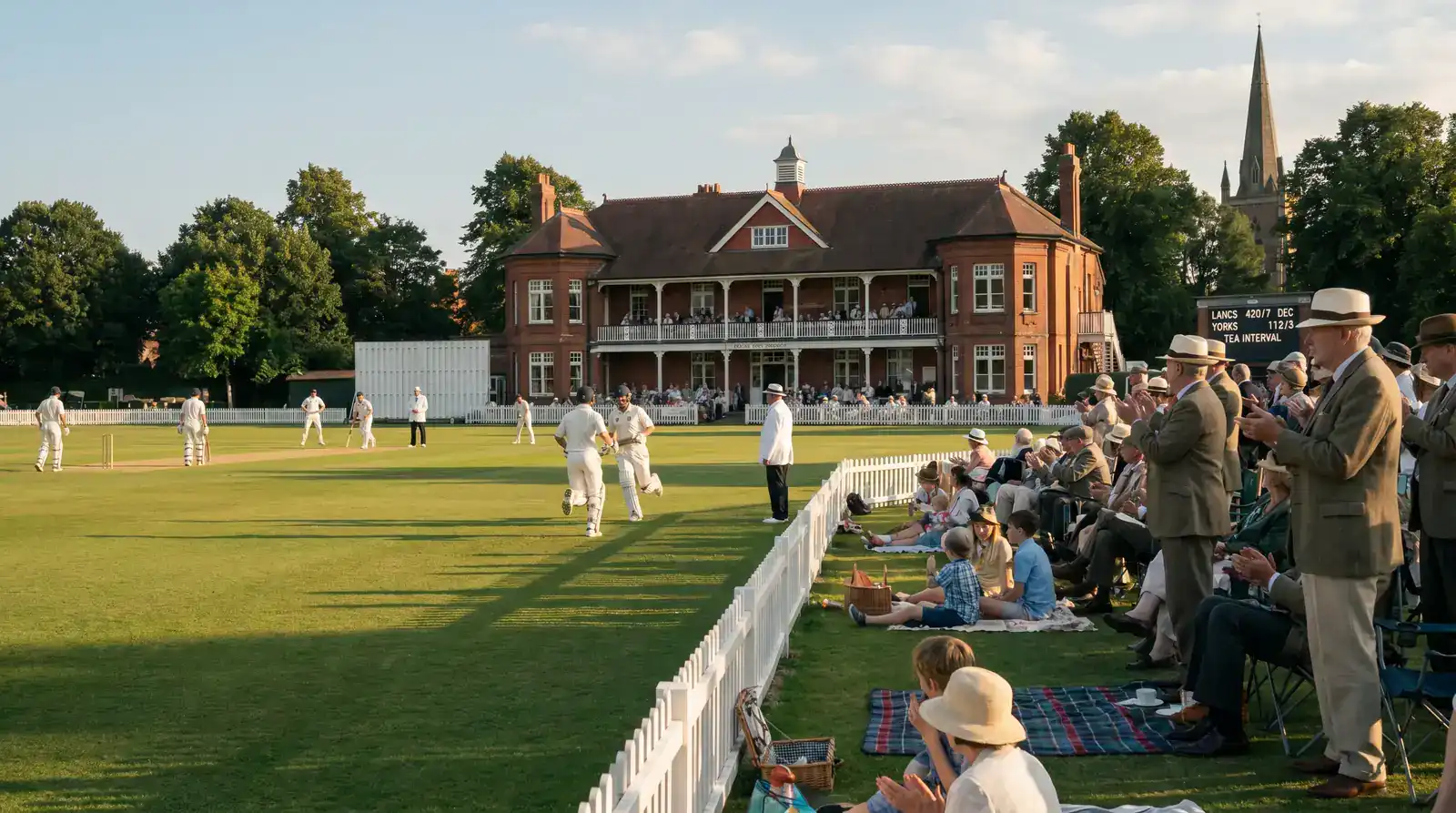
The headline averages are modest. A typical Championship match draws a crowd of one to three thousand across its four days, with day one often the strongest and day four (if the match reaches it) drawing smaller numbers as the result becomes clear. The bulk of County Championship cricket plays to enthusiast crowds rather than mass audiences — long-form supporters, retirees, and members of the home county club.

The T20 Blast performs much better. Group-stage Blast fixtures regularly exceed 15,000 spectators at the major county grounds, and Finals Day at Edgbaston typically draws around 25,000 across the three matches. The Blast’s evening fixtures, the floodlit atmosphere, and the family-friendly format have made it the strongest domestic T20 competition the UK has ever produced.
The Metro Bank One-Day Cup occupies an awkward middle space. The competition runs in parallel with the Hundred — counties cannot field their senior names because they are committed to franchise sides — and the attendance reflects this. One-Day Cup crowds are typically smaller than T20 Blast crowds and larger than weekday Championship crowds, with the format struggling for identity even as it produces genuinely interesting cricket. The 2025 edition saw Worcestershire win their first title, with Nick Gubbins topping the tournament’s run charts on 707.
Who Is Actually Walking In
The audience walking through UK cricket gates in 2025 looks different from the audience that came a decade ago. The most dramatic shift is at the Hundred, where the 41 percent family share, 30 percent women, and 23 percent junior ticket figures represent a competition deliberately designed to broaden the audience and one that has succeeded in that goal.
Across the overall UK cricket fanbase, around 25.5 percent of UK adults are interested or very interested in cricket — a sizeable minority that includes both lifelong supporters and newer fans. Of that group, around 40 percent are over 65, reflecting the long generational depth of cricket interest in the UK. The 18–44 share has historically been smaller, but the Hundred has helped lift it: 31 percent of the Hundred’s fanbase falls in the 18–44 bracket, against 24 percent for UK cricket fans generally.
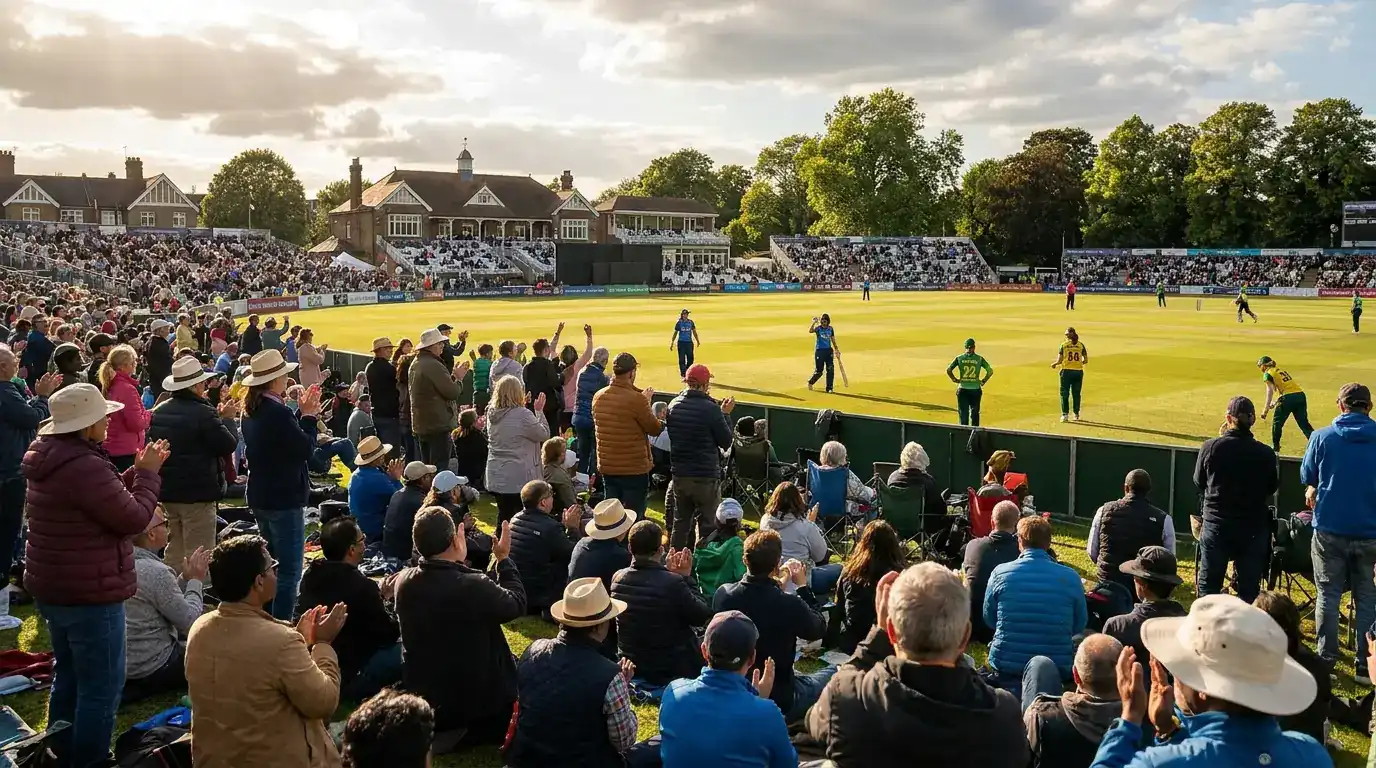
Higher-income groups are more represented in the cricket fanbase than lower-income groups — around 30 percent of UK adults earning above £100,000 are cricket fans, against 20 percent of those earning under £20,000. The pattern reflects the historic class structure of UK cricket as much as any current marketing effort. The Hundred has worked harder than any other competition to broaden the income profile of its crowd.
The county game’s audience composition is harder to summarise because attendance varies so much by venue and fixture. A Lord’s match draws a different crowd from a Worcester match; a Headingley Test draws a different crowd from a Sophia Gardens ODI. The patterns are local, shaped by the catchment, the ticket pricing, and the historical relationship between the county and its supporters. What unites them is the slow, gradual demographic broadening that the Hundred’s success has begun to push through the rest of the UK cricket calendar.
If you want the broader picture of how these attendance numbers map onto the UK cricket calendar itself, there is more on that in our UK cricket season calendar guide.
Written by the editors at Stumply.
