
T20 Blast Finals Day: The Group Stage, Quarter-Finals, and the One-Day Climax
 Available in US
One Day, Three Matches, One Trophy
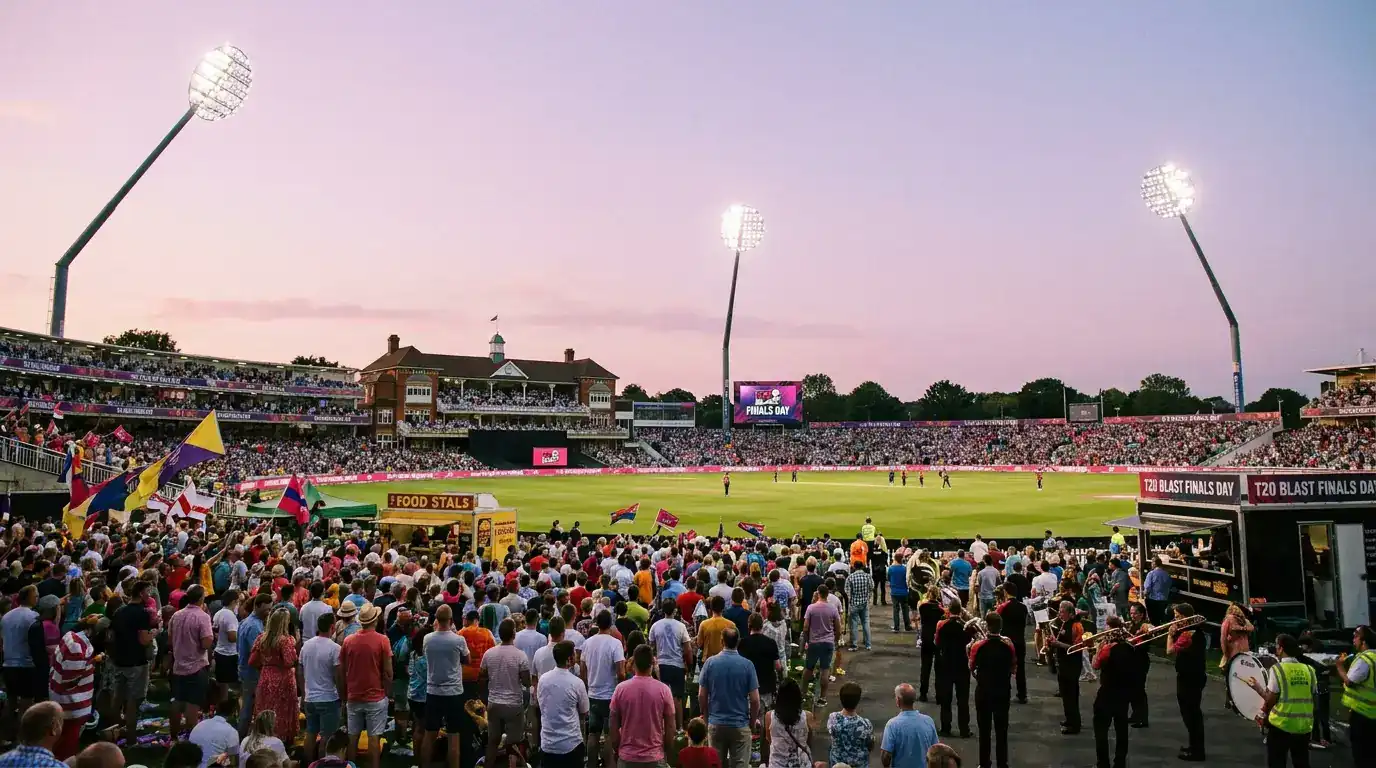
I have been to Finals Day at Edgbaston more times than I can count, and the thing I tell everyone who goes for the first time is to take a jumper and forget about pacing the beer. The day starts in bright sunshine, ends under floodlights, and contains three full T20 matches in a single ground over roughly twelve hours. The crowd that arrived at noon for the first semi-final will still be there at 22.00 for the final’s last ball, by which point the temperature has dropped ten degrees and the noise has somehow gone up.
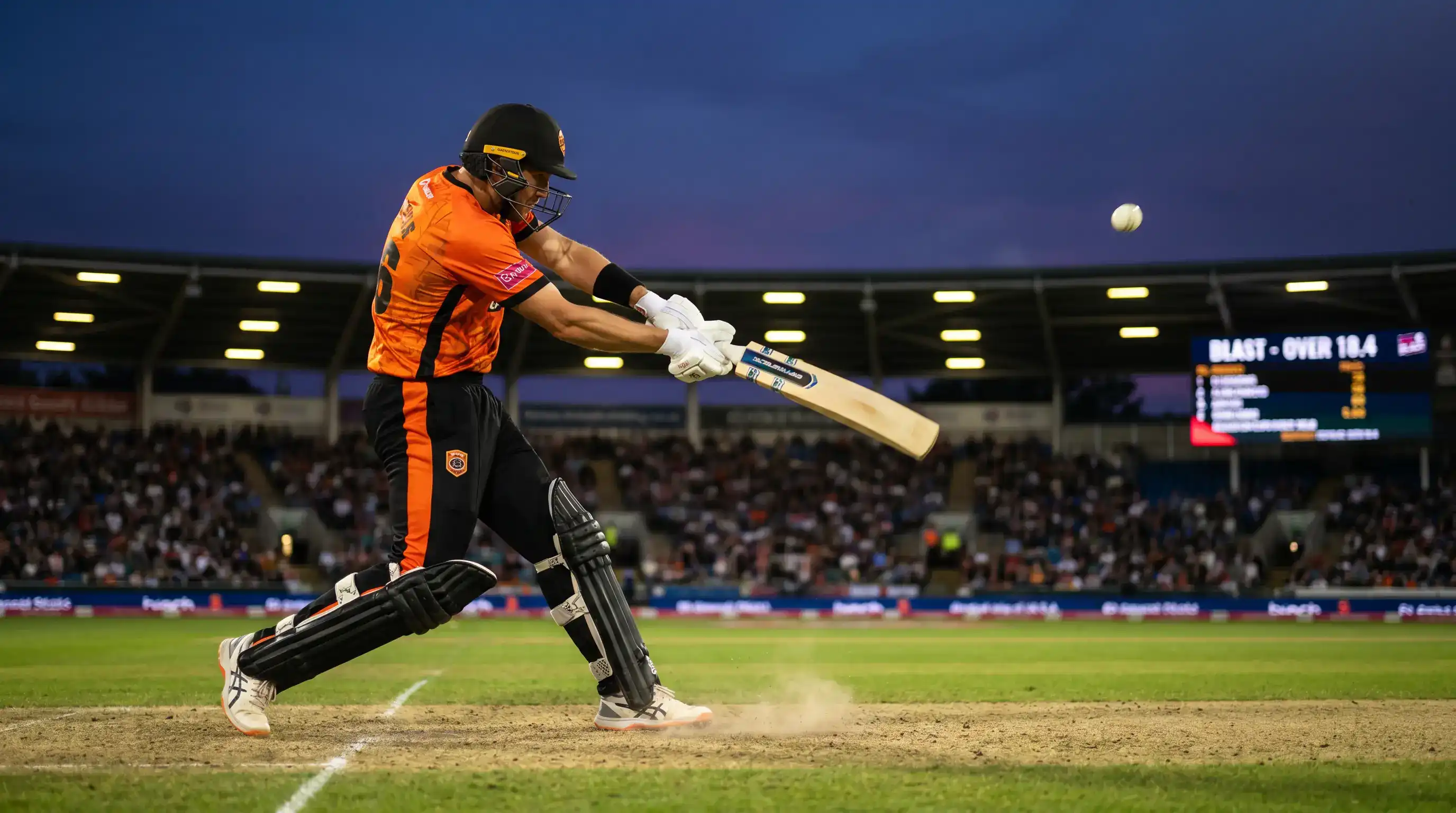
T20 Blast Finals Day is the climax of the English domestic T20 competition. Four teams arrive at one venue — Edgbaston in Birmingham has hosted it consistently — and play two semi-finals followed by a final. The winning team takes the trophy and the headline. The format is compressed, brutal, and produces some of the most-watched cricket of the English summer outside The Ashes and the Hundred.
The 2025 T20 Blast was won by Somerset, with Hampshire as the beaten finalists. T20 Blast matches regularly pull crowds of 15,000-plus at home venues across the group stage, with Finals Day itself selling out Edgbaston’s capacity. The competition’s combination of accessible format, neighbourhood rivalries, and party-day atmosphere has made it one of the genuinely commercial successes of the county game.
The Group Stage Structure
The Blast splits its eighteen counties into two regional groups of nine — North and South. Each county plays the other eight teams in its group twice across the season, home and away, producing fourteen group-stage matches per county. The split keeps travel manageable for the players and gives each region a built-in narrative of local rivalries that gets played out across the summer.
The group-stage runs from late spring through to mid-summer, sitting roughly between the early Championship rounds and the start of the Hundred. The fixture density picks up in June and July, with most counties playing two or three Blast matches a week during the busiest periods. That density is what builds the competition’s identity — Blast nights become a routine part of summer evenings in cities like Manchester, Birmingham, Leeds, and the south coast.
The top four teams in each group qualify for the knockout stage. The next two teams below them — fifth and sixth in each group — are out of the competition. The structure produces a clear pressure point in the final round of group fixtures, with playoff positions on the line and several matches typically still mattering on the final night of the group stage.
What makes the Blast distinct from The Hundred or international T20 is the audience it pulls. Average attendance per match sits around 15,000 at the major Blast grounds — Edgbaston, the Oval, Old Trafford, and the larger county venues. The Hundred averages closer to 20,000 per match because it is fewer teams playing fewer fixtures at venues built to draw the crowd. The Blast is the working-class T20 night out, played twenty-five-plus times a year across the country, and that pattern is what keeps the competition financially viable in a way that international T20 alone could not.
The Quarter-Final Bridge to Finals Day
The quarter-finals are where the Blast’s structure starts producing the matches that linger in memory. Eight teams qualify — the top four from each regional group — and they play single-knockout quarter-finals to determine who reaches Edgbaston for Finals Day.
The matches are seeded based on group-stage performance, with the top finishers playing the lower qualifiers at home. The home-field advantage matters more in T20 than in any other cricket format — the crowd noise, the familiarity of the pitch, the practical knowledge of which sightscreen produces the most awkward late-evening angle. A first-seeded home quarter-final is a genuine edge, and the teams that finish top of their groups earn that edge by design.
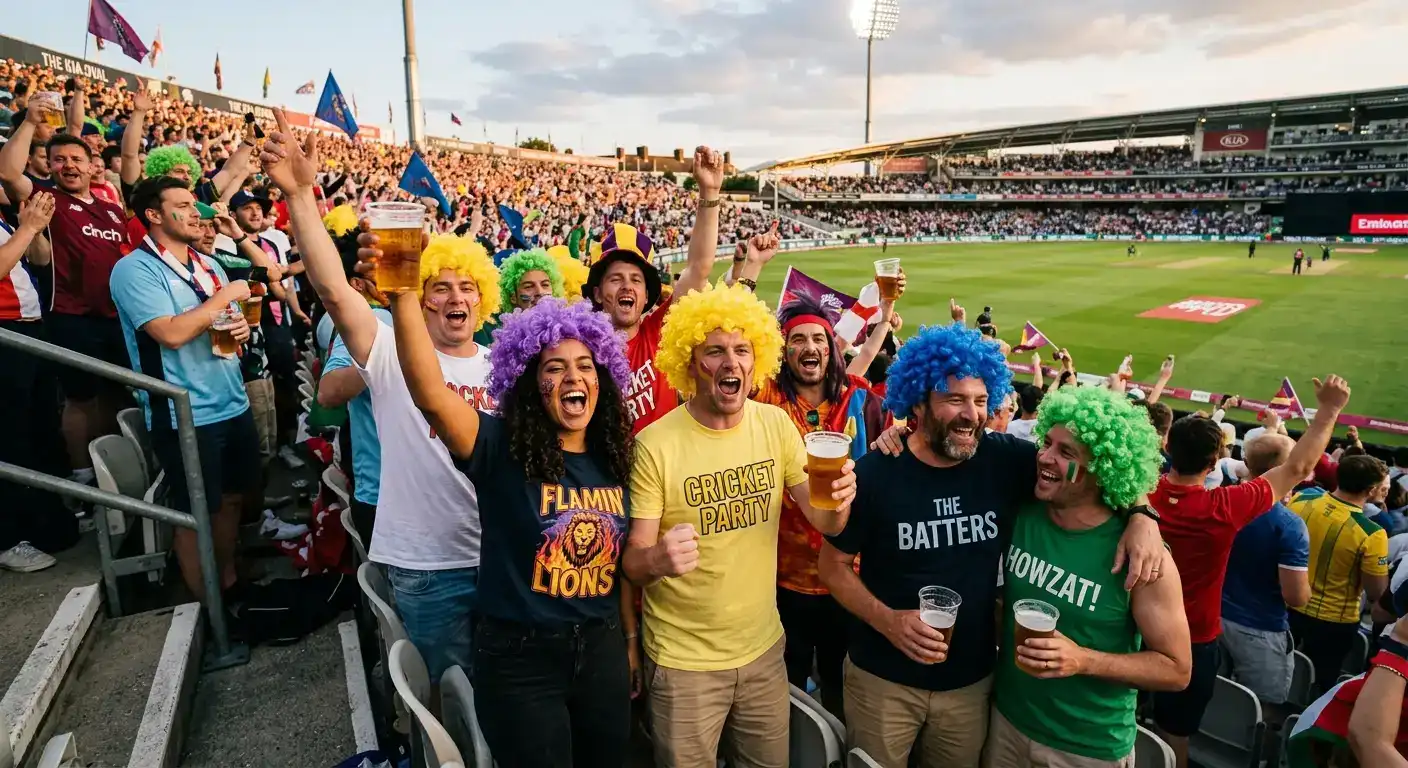
The single-match knockout produces the kind of pressure that the Blast group stage builds up to. A side that has won eight of fourteen group matches and finished third in their group has had a perfectly good season. A single bad evening at the quarter-final stage ends the campaign there, and the difference between a triumphant week and a lost summer can come down to one mistimed slog over deep midwicket or a single yorker that does not land.
The quarter-finals also produce a particular kind of live-score traffic. The matches are typically played across two or three evenings in the same week, with crowds at the host venues drawing close to 10,000-plus and the audiences at home spread across the country. Cricket apps see sharp evening spikes during quarter-final week. The combination of recent group-stage form and single-knockout finality makes for compelling viewing even for fans of teams already eliminated.
How Finals Day Itself Runs
Finals Day at Edgbaston is the structural climax. Two semi-finals run back-to-back in the early afternoon and early evening, with the final following in the floodlit late-evening slot. The schedule is tight — toss for the first semi-final around 11.00, with the final’s last ball usually delivered between 21.30 and 22.00 depending on innings durations.
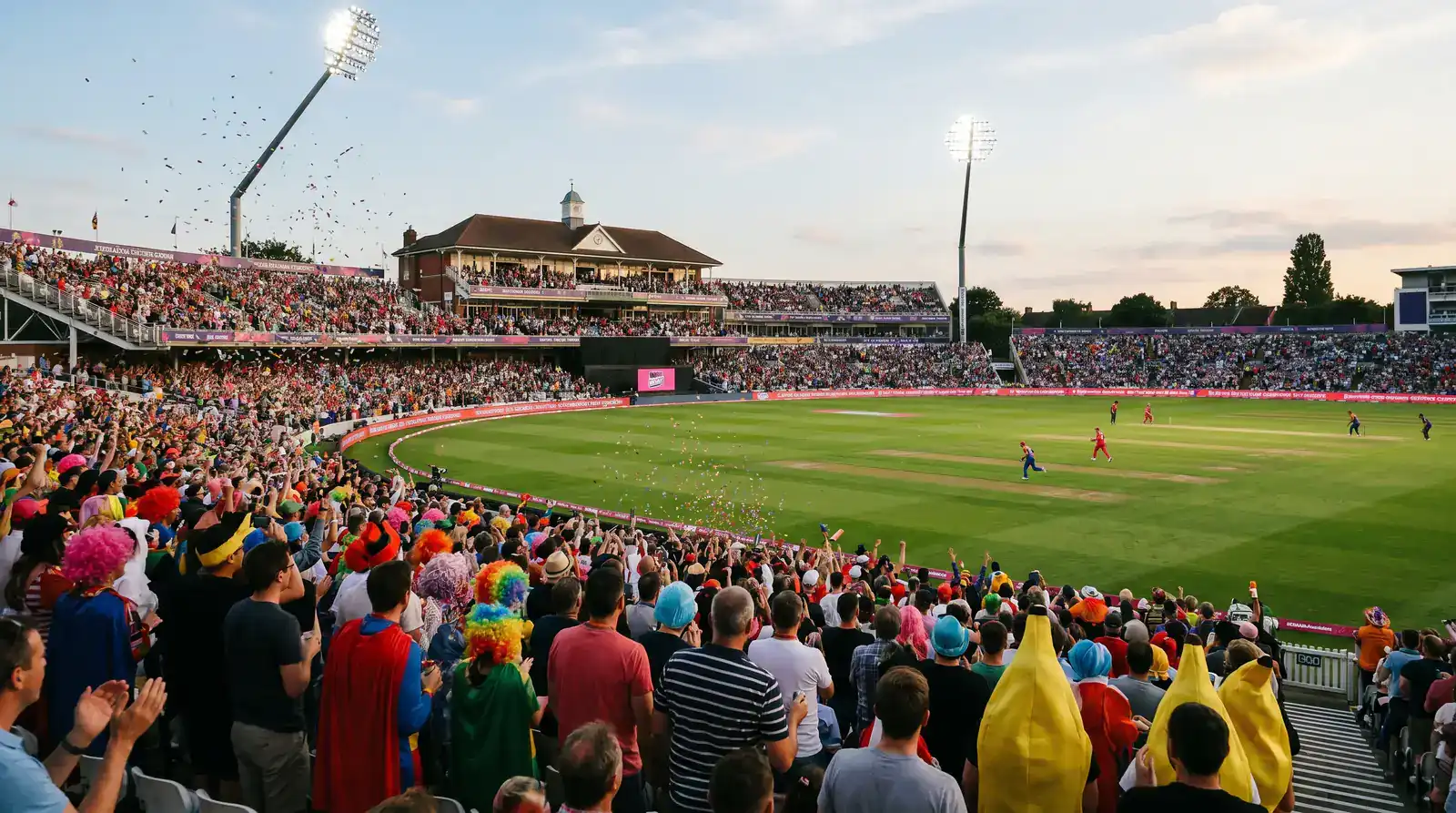
The crowd that fills Edgbaston for Finals Day is unlike any other cricket crowd of the year. The competing teams’ supporters are mixed with neutral fans who travel for the occasion. Fancy dress is normal. The bars do good business. The party atmosphere through the early matches gradually gives way to focused attention as the final approaches and the floodlights take over from the daylight.
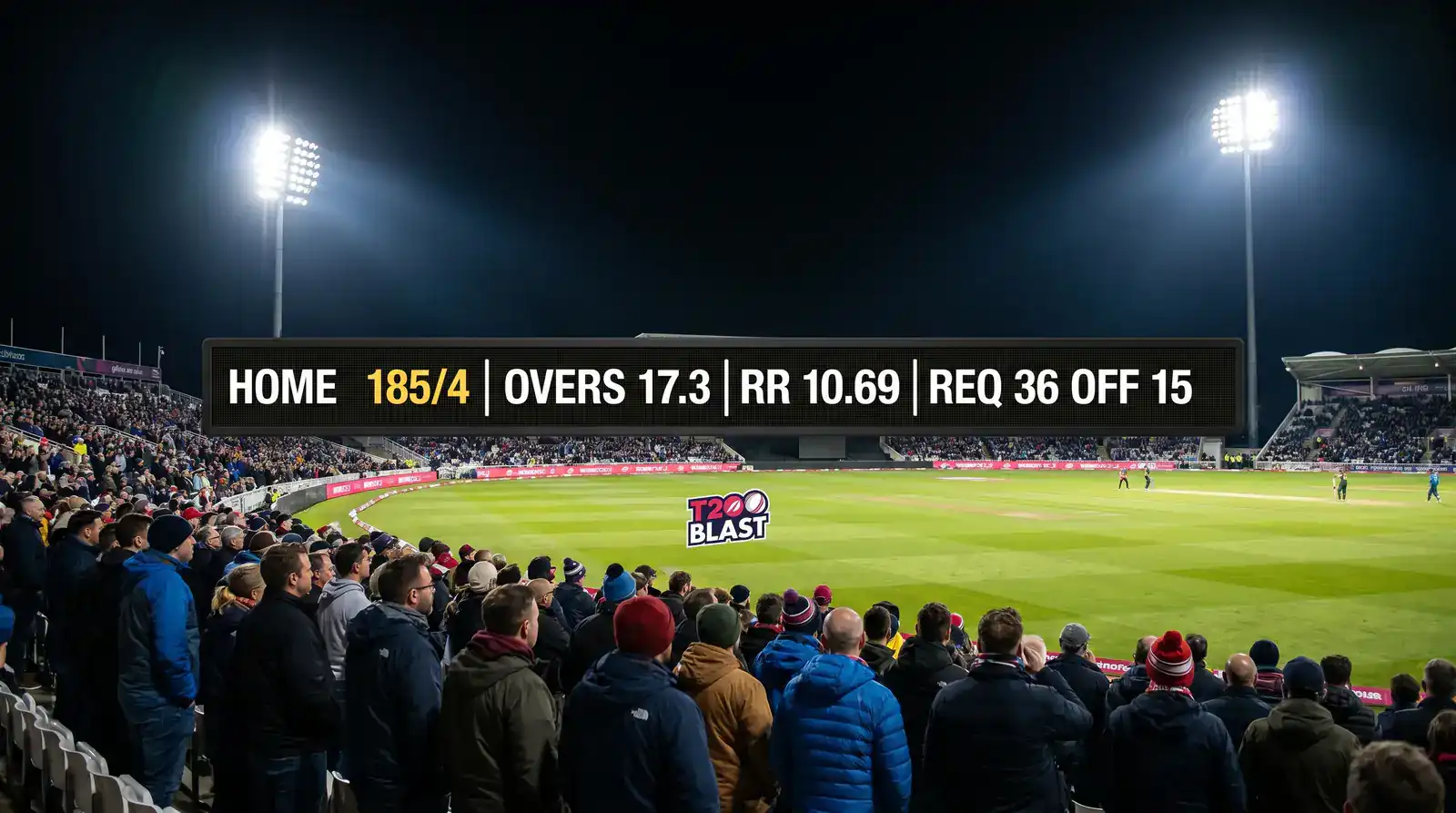
The semi-finals matter on their own terms — they are full T20 matches with full implications. The first semi-final winner has to wait through the second semi-final to learn their final opponent, then play a third T20 in a single day across what is roughly an eight-hour window. The physical and mental load on the finalist players is significant, and matches have been won and lost by which side handled the recovery between semi-final and final better.
For viewers at home, Finals Day is one of the most watched UK domestic cricket days of the year. The TV audience sits significantly above an average group-stage Blast match. Live-score apps see their busiest UK day of the summer for white-ball cricket, often only matched by the Hundred final and Ashes Test days. The compressed scheduling means there is no break for the audience either — the gaps between matches are short enough that the score-checking traffic stays elevated through the whole afternoon and evening.
Following T20 Blast Scores in Parallel
The Blast group stage is one of the most fragmented periods in the UK cricket calendar to follow live, because so many matches happen simultaneously. A typical Friday evening in June can have six or seven Blast fixtures running across the country, all starting around 19.00 BST, all running through to roughly 22.30. Following more than one in any depth requires multiple windows or a feed-aggregator app.
The ECB Match Centre carries every Blast match with ball-by-ball coverage and full scorecards. The platform’s home page during a busy Blast night becomes a grid of in-progress matches, each updating in real time, with the user clicking into whichever match holds their attention at the moment. The video coverage for the Blast is more selective — selected matches each week are streamed live, with the others available on highlights packages later.
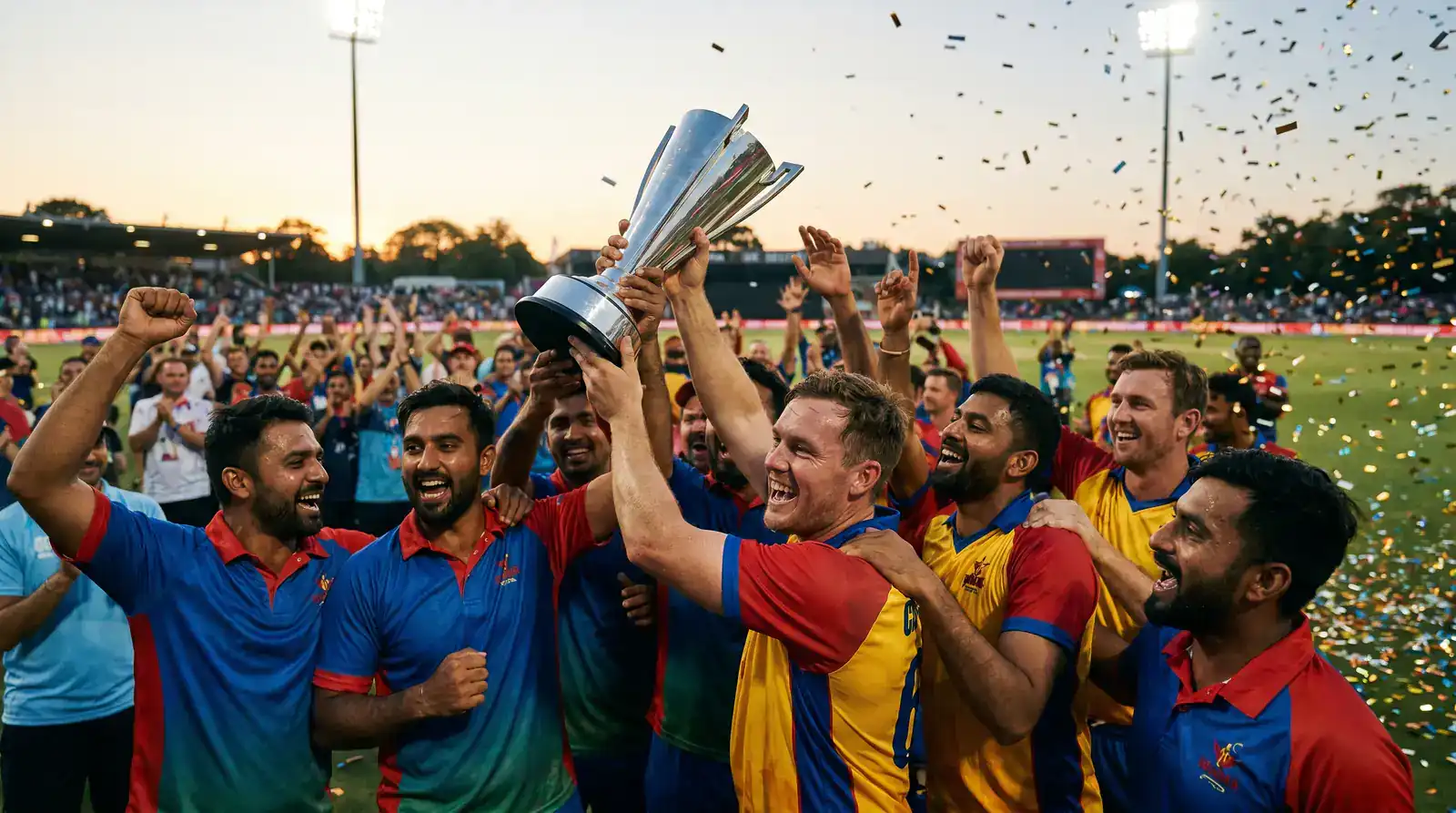
Sky Sports Cricket carries the live broadcast of selected Blast matches through the group stage, with the focus increasing for the knockout phase. The major cricket apps carry full Blast coverage in their UK fixture lists, treating it as a primary domestic competition alongside the Hundred. Notification settings can be tuned to alert on wickets, milestones, or end-of-innings scores depending on how granular the follower wants to be.
What I tell anyone trying to follow the Blast properly is to pick one or two counties and stick with them through the season. Following all eighteen counties in real time across fourteen group fixtures each is genuinely impossible. Picking a regional favourite plus a contender from the other group gives you a manageable two-match-a-week routine and lets you build the narrative across the summer without burning out by July.
If you want the wider context on where the Blast sits inside the UK domestic calendar — alongside the County Championship, One-Day Cup, and The Hundred — there is more on that in our UK cricket season calendar guide.
Created by the "Stumply" editorial team.
