
Powerplay Rules in T20 and ODI: Field Restrictions on the Scoreboard
 Available in US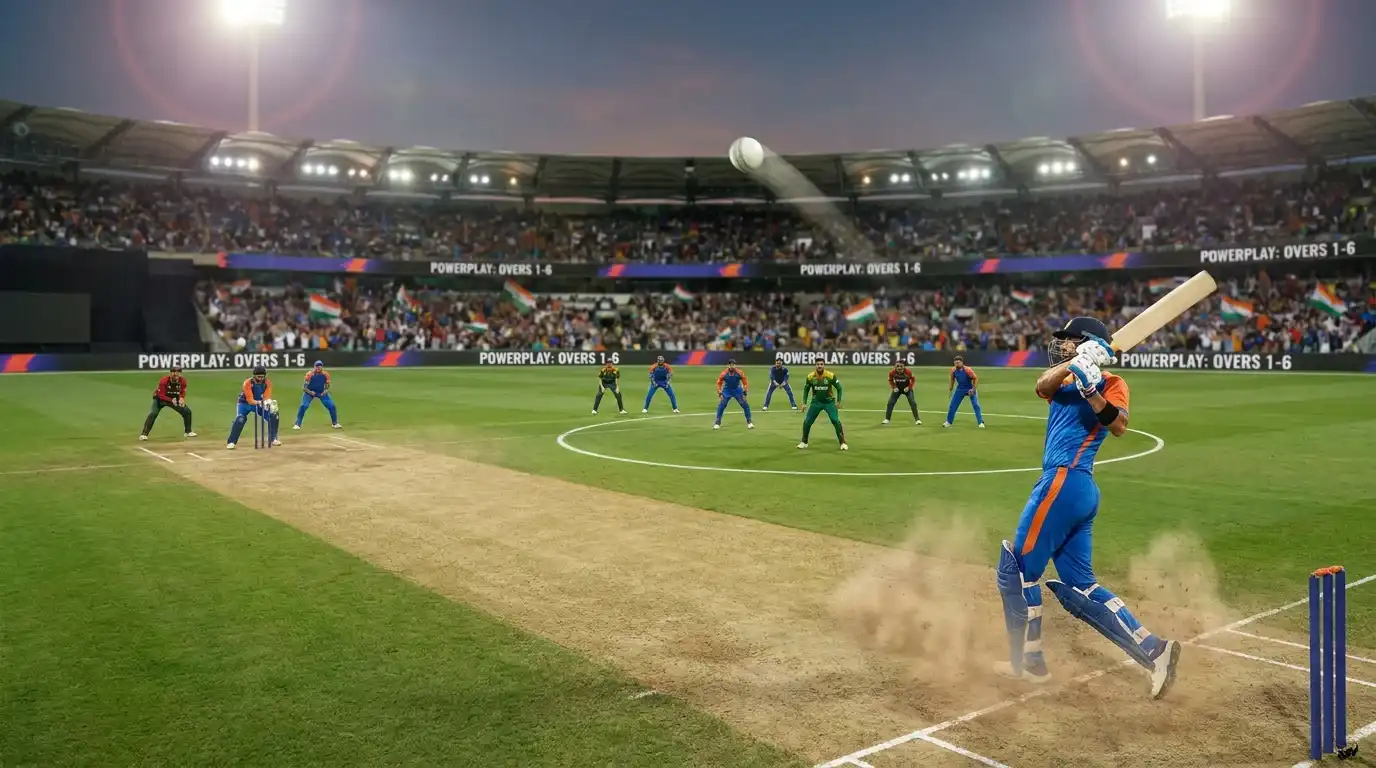
What a Powerplay Changes Inside the 30-Yard Circle
I remember watching my first T20 Blast game with a friend who had grown up on football. About four overs in he leaned over and asked why all the fielders seemed to be standing on top of the batter. Then a batter cleared the rope over a half-empty deep midwicket and he said “oh, I see” and went back to his pint. That was the powerplay doing exactly what the rule was designed to do.
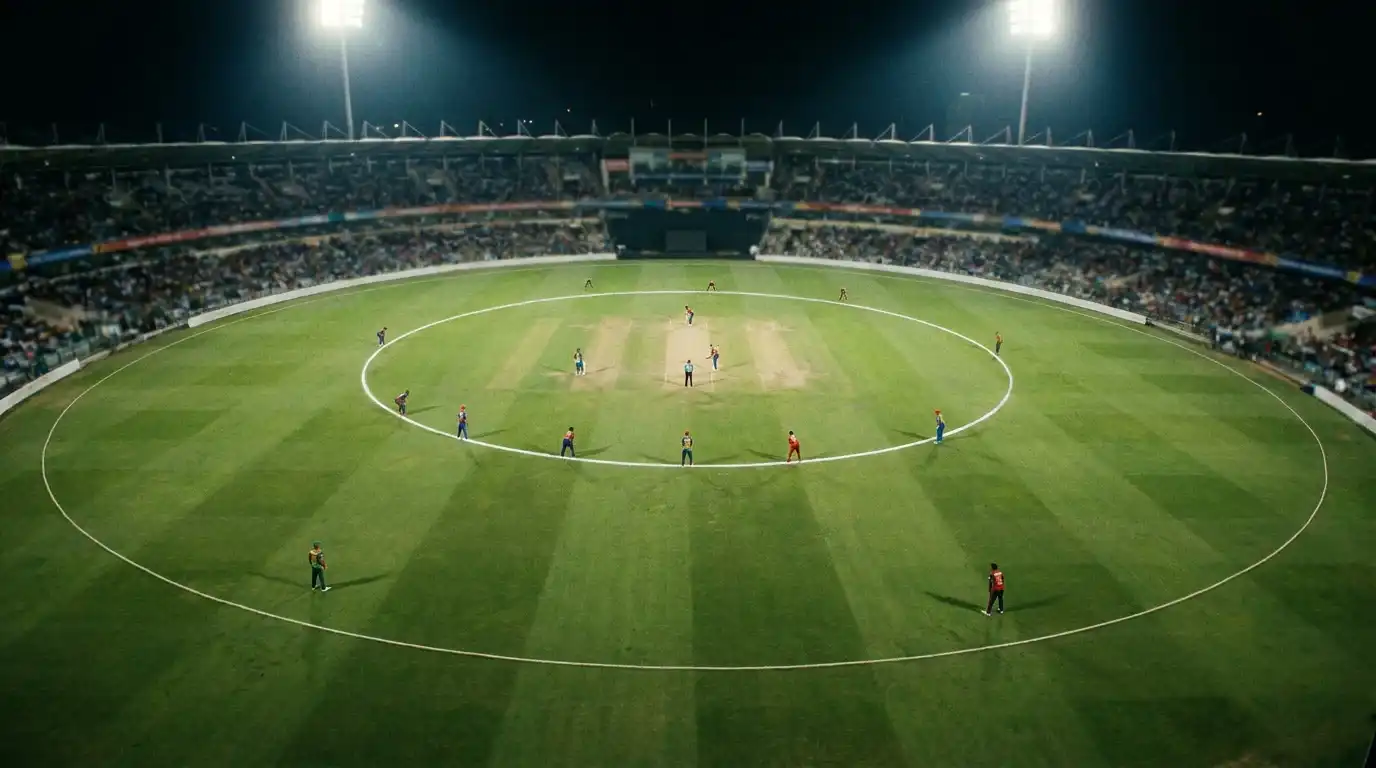
A powerplay is a set period at the start of an innings — and in ODI cricket, also at other phases — when the fielding side is restricted in how many fielders they can place outside the 30-yard circle. Inside that circle, the field is crowded and gaps in the deep are large. Batting sides know it. Bowlers know it. The strategy on both sides changes accordingly, and the run rate during the powerplay is usually the highest of any phase except the death overs.
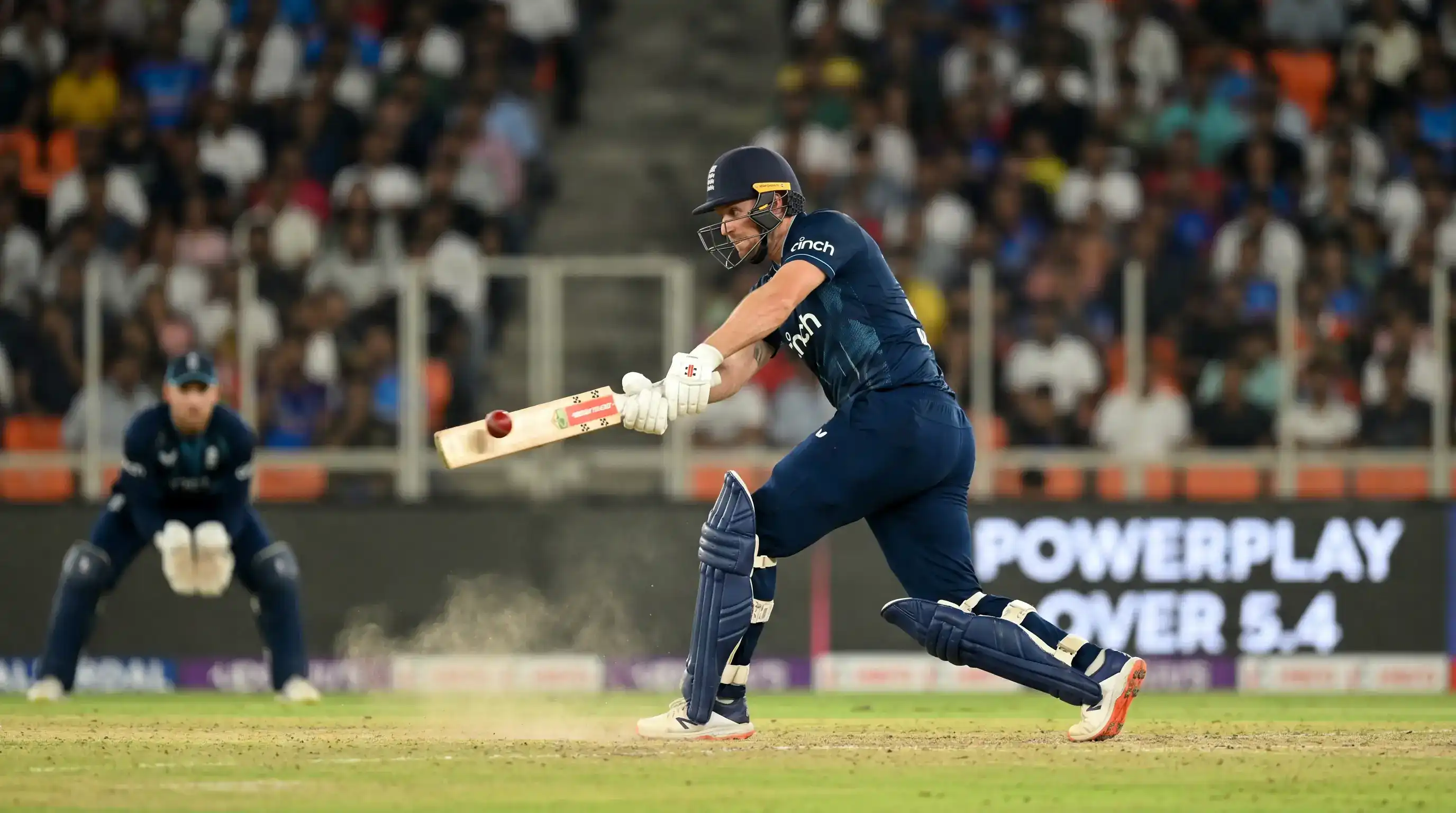
The rule exists for a single reason: to force aggression. Without field restrictions, a captain could place every fielder on the boundary in the first over and reduce scoring to ones and twos. The powerplay turns the early overs into an attacking phase where batting sides are expected to score and bowlers are expected to take risks. Every limited-overs format uses some version of it, and the variations between formats are worth knowing.
The T20 Powerplay Window
In T20 internationals and the T20 Blast in England, the powerplay covers the first six overs of each innings. Only two fielders may be positioned outside the 30-yard circle during those six overs. That leaves nine fielders inside the circle, including the bowler and the wicket-keeper.
What this means in practice is that the leg-side and off-side boundaries are protected by only two players each — or one each, with one on a sweeper position. Any ball clipped over the inner ring is likely to clear the deep fielder by a comfortable margin, and any ball that beats the inner ring on the ground races to the rope. The powerplay’s six overs typically produce 60 to 80 runs in modern T20 cricket, and totals at the end of the powerplay shape the rest of the innings.
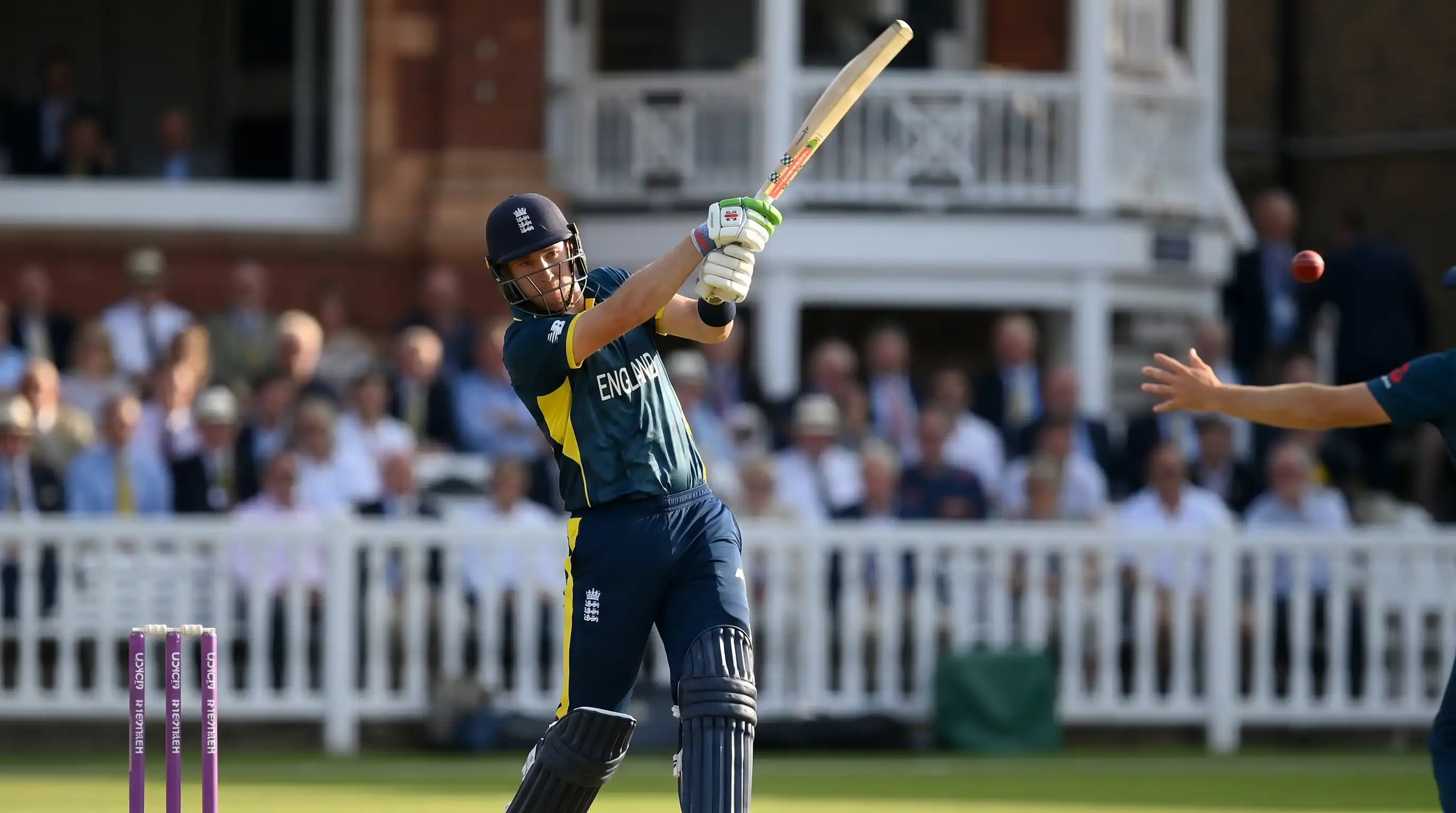
For the bowling side, the powerplay is a different kind of test. You cannot afford to bowl loose, because the boundary fielders are not there to save you. You cannot afford to bowl too defensive either, because batters in a free-hitting mood will pick the gaps. The best powerplay bowlers in T20 cricket are the ones who can land yorkers, slower balls, and length deliveries on demand — the ones who do not need a sweeper to bail them out.
The 2025 T20 Blast in England, won by Somerset with Hampshire as runners-up, regularly saw powerplay totals in the 65-to-75 range across Finals Day. The format encourages it, and the crowds at grounds like Edgbaston and the Oval respond to the early-overs theatre. T20 Blast group-stage matches at home venues across England consistently pull crowds of around 15,000, and the powerplay is the period when most of that crowd is in their seats and watching.
The Three ODI Powerplay Phases
ODI cricket uses a more complex three-phase powerplay structure, and it has been revised several times since the format was first introduced. The current arrangement splits the 50 overs into three windows with different field restrictions.
The first powerplay covers overs 1 to 10. During these overs, only two fielders may be outside the 30-yard circle — the same restriction as a full T20 powerplay. The opening ten overs are designed for aggressive batting, and most ODI sides treat them as the most productive phase for run-scoring outside the death overs.
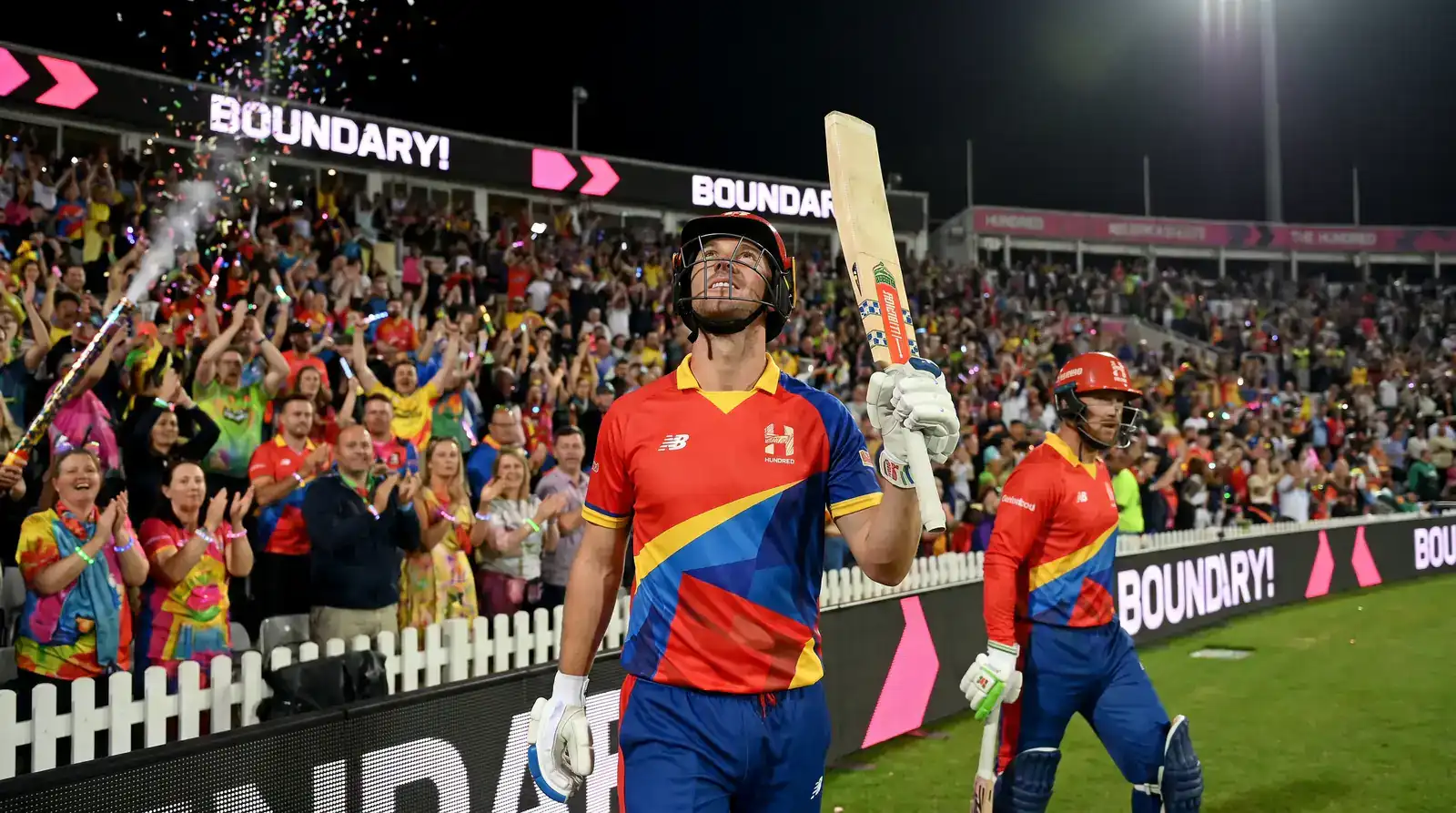
The second powerplay covers overs 11 to 40. The restriction loosens — four fielders may now be outside the circle, with five required inside. This is the middle phase of the innings, where consolidation and accumulation matter more than fireworks. Strike rotation and partnerships take over from boundary-hitting as the primary scoring mode.
The third powerplay covers overs 41 to 50 — the death overs. Five fielders may be outside the circle, which is the maximum the rules allow. The bowling side gets full freedom to set defensive fields, and the batting side has to find runs against deep set boundaries. The death overs are where the high-percentage scoring shots — yorkers driven through the line, sliced sixes over backward point — become essential, because the ones and twos through the deep fields are simply harder to come by.
The 50-over format means the strategic balance across the three phases is fundamentally different from T20. A side scoring at 5.00 an over through the first powerplay is fine in ODI cricket. The same rate in T20 would mean disaster.
The Hundred’s Compressed Restriction Phase
The Hundred uses a powerplay equivalent that occupies the first 25 balls of each innings — a quarter of the 100-ball total. The field restriction during those 25 balls is the same as the T20 powerplay: only two fielders permitted outside the 30-yard circle.
The proportional length is similar to T20 — 25 balls out of 100 is one-quarter, compared to 36 balls out of 120 in T20, which is 30 percent. The Hundred’s restriction phase is therefore slightly shorter in relative terms, but the field configuration during it is identical.
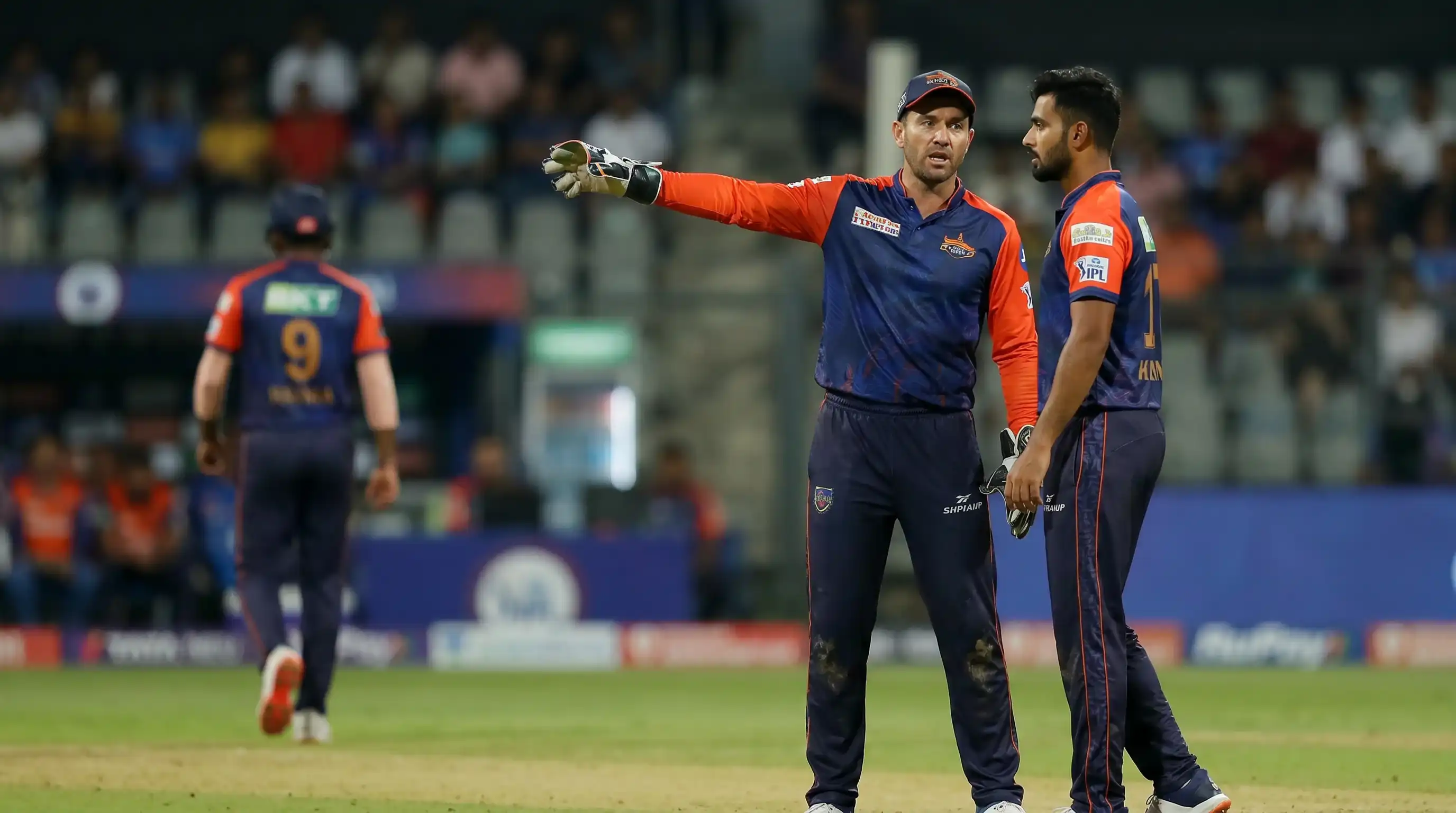
What changes is the way it integrates with the format’s other innovations. Bowlers in The Hundred deliver in five-ball sets rather than six-ball overs, and they can deliver two sets in a row from the same end. This means a single bowler can theoretically bowl all 25 balls of the restriction phase if the captain wants. The strategic option is rare in practice — most captains rotate bowlers — but the rule allows it, and the resulting batting tempo is genuinely different from a six-ball-over T20 powerplay.
The Hundred drew over 580,000 ticket sales in 2025 and crossed 2.5 million total attendance across its first five seasons. The format’s compressed pace, including the restriction phase, is part of why it has attracted a younger and more diverse audience than traditional county cricket. Roughly 41 percent of Hundred audiences in 2025 came as families, with the early powerplay-equivalent overs frequently producing the loudest crowd response of the entire match.
How Powerplay Shows Up in the Scoring Curve
If you look at a worm chart for almost any T20 innings, you will see the same shape. The line rises steeply through the powerplay, flattens through the middle overs, then steepens again into the death overs. The same shape appears in ODI cricket, with the middle section longer and the curve a touch shallower.
The powerplay typically produces between 8 and 10 runs per over in modern T20 cricket. The middle overs settle into 7 to 8 per over for most sides, with elite teams pushing higher. The death overs frequently exceed 10 per over, particularly with set batters at the crease and the field still scattered.
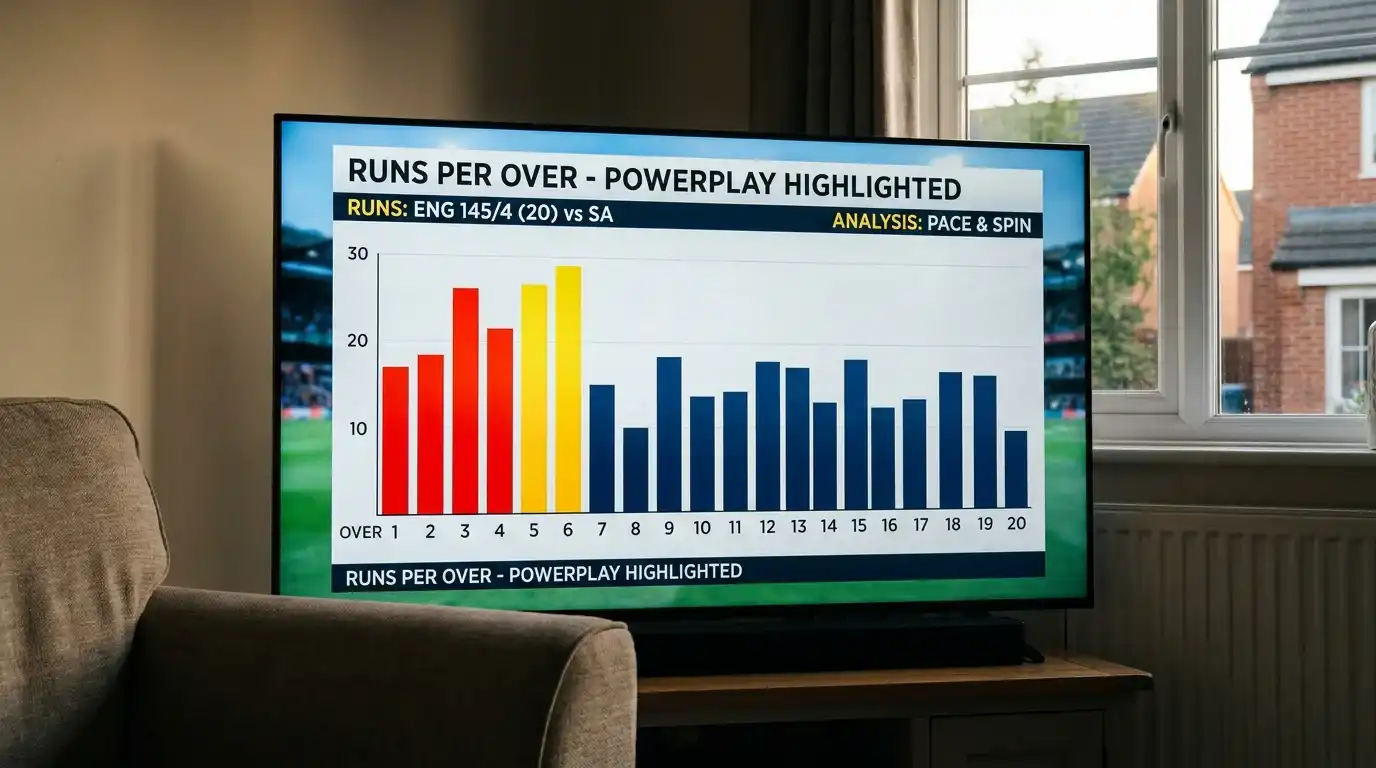
What this means for reading a live score is straightforward. A T20 side at 70 for 2 after six overs has done exactly what the powerplay was designed to produce. A side at 35 for 1 has under-used the restriction and faces a harder middle and death. A side at 90 for 5 has over-attacked and now has limited options for the remaining 14 overs.
The same logic applies in reverse for bowling. A bowler with figures of 2-0-12-2 after his first two overs in the powerplay has had a brilliant phase. The same figures across overs 11 and 12 would look ordinary. Context — which phase of the innings, with which restrictions — is what makes the numbers meaningful.
If you want the wider comparison of how the four formats handle field restrictions and other structural rules side by side, there is more on that in our cricket formats compared guide.
Prepared by the Stumply editorial staff.
