
What Is a Maiden Over in Cricket and Why Bowlers Chase Them
 Available in US
The Six-Ball Sequence That Changes a Bowler’s Day
I once watched a county opening bowler take three wickets for ninety runs across a Saturday afternoon and walk off looking flat. The next morning he bowled a single maiden over to start the day’s play and came off the field grinning. The wickets were the headline figures. The maiden was the moment he knew the rhythm had clicked.
A maiden over in cricket is six legal deliveries from which the batting side scores no runs. That is the simple version. The fuller story is that maidens are the most undervalued unit of bowling success in the format-rich modern game, and the bowlers who care about them tend to be the ones building careers rather than chasing highlights.

Watching a maiden being bowled is one of the quieter pleasures of red-ball cricket. The crowd notices around the third or fourth dot ball. By the fifth, even casual viewers are leaning forward. The sixth ball carries a particular tension because everyone — including the batter — knows what is at stake. A run conceded, even from a thick outside edge, breaks the spell.
The Strict Definition of a Maiden
The textbook definition is precise. An over is a maiden if no runs are scored off the bowler during all six legal deliveries. Wides and no-balls do not count toward the six but do break the maiden — they are runs against the bowler, and once one has been conceded, the over cannot be a maiden regardless of what happens next.
Byes and leg-byes are the interesting cases. A bye occurs when the ball passes the bat and the batter, and the batting side runs without anyone hitting the ball. A leg-bye is the same but the ball came off the batter’s body. Both add to the team’s total but are not credited to the bowler’s analysis. For maiden purposes, byes and leg-byes do not break a maiden — the bowler’s six balls were all dot balls from the bowler’s accounting, even though the batting side scored.
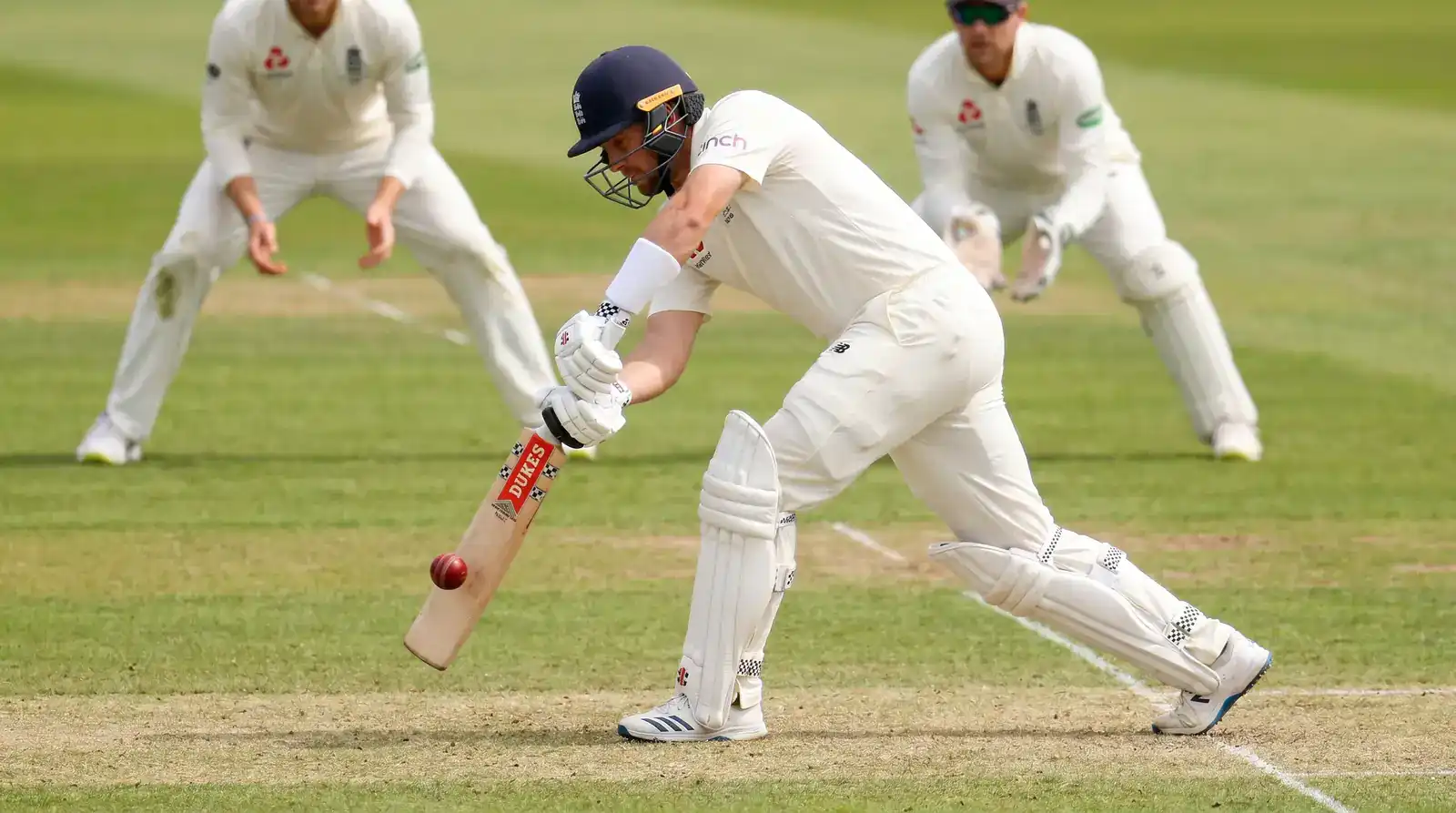
This distinction matters more than people think. A bowler can finish an over with zero runs against him and have the team total move by four runs from a thick edge that went for byes. His analysis still records a maiden. The scorecard often makes this look stranger than it is because the partnership total goes up while the bowler’s column stays still.
The rule has a hard test for a maiden across every format: zero in the bowler’s runs column for the over. Anything else — anything that adds to his economy — kills the maiden, even a single leg-bye that gets reclassified later by the scorers.
Maiden vs Wicket Maiden vs Double-Wicket Maiden
The variants are worth knowing because they appear in commentary regularly and on scoring tickers without much explanation.
A wicket maiden is an over with no runs conceded and at least one wicket taken. The bowler bowls six legal deliveries, the batting side scores nothing, and one or more batters are dismissed during the over. The wicket can come on any of the six balls. The combination is harder to achieve than a clean maiden because the dismissal often comes from a ball that produces some scoring — an inside edge that runs away for a single, for example, would prevent the maiden even if the next ball took the wicket.
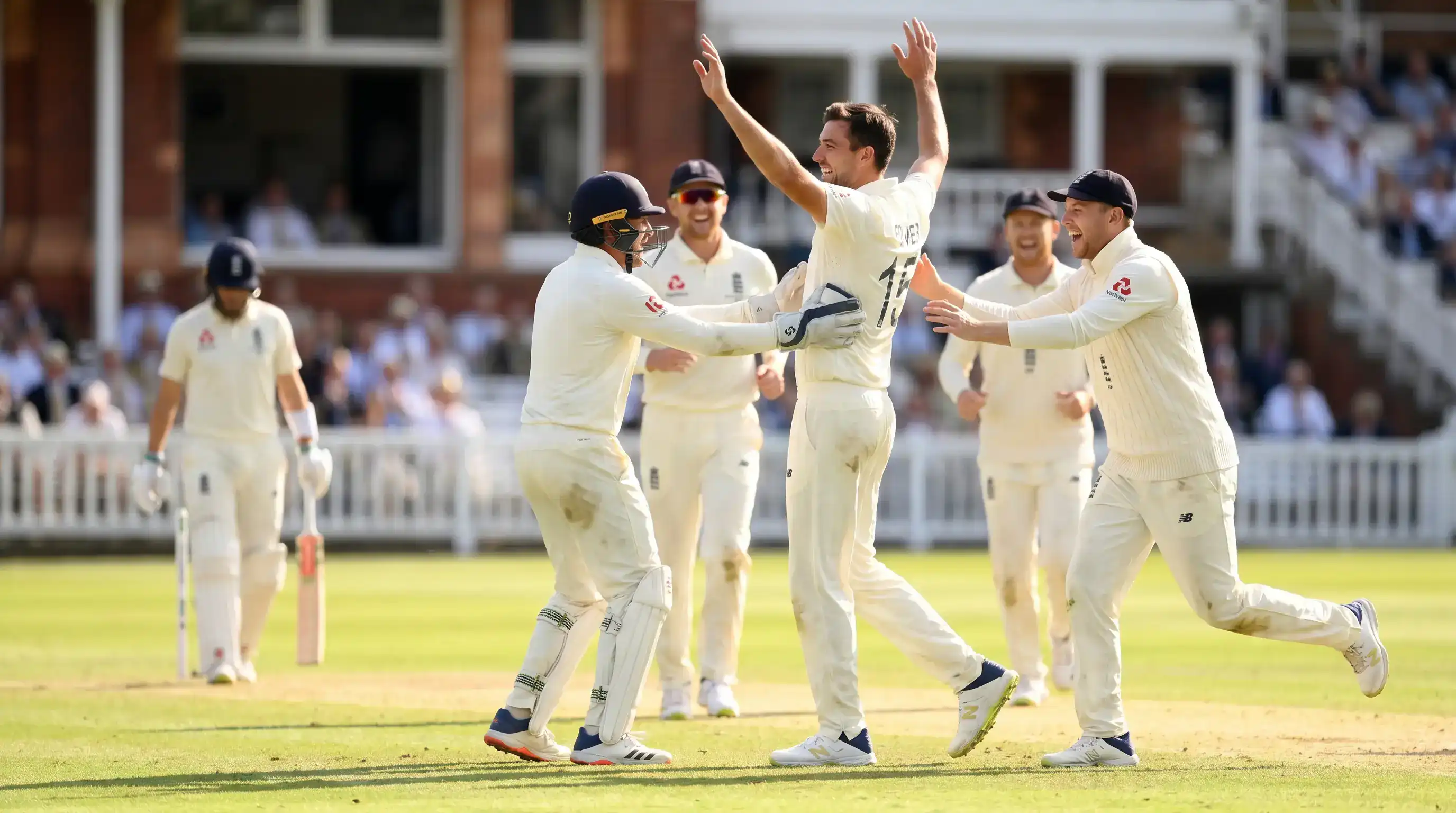
A double-wicket maiden is the same but with two wickets in the over. These are rare in any format and rarer still in white-ball cricket where batting sides do not give up four balls in a row easily. A triple-wicket maiden requires three wickets in the same over with no runs conceded, and these are vanishingly rare in international cricket — usually celebrated by name when they happen.
The scoring tradition gives all three a special place in match reports. A maiden is a dot in the over column. A wicket maiden is a W inside that dot. A double-wicket maiden gets two Ws. The visual shorthand on a scorecard tells a story about how the over went without any text needed.
How a Maiden Drags Down a Bowler’s Economy
This is the part that explains why bowlers chase maidens even when they are not getting wickets. The economy rate — runs conceded per over — is the single most important stat for a bowler in white-ball cricket, and maidens are the only way to push it down without taking wickets.
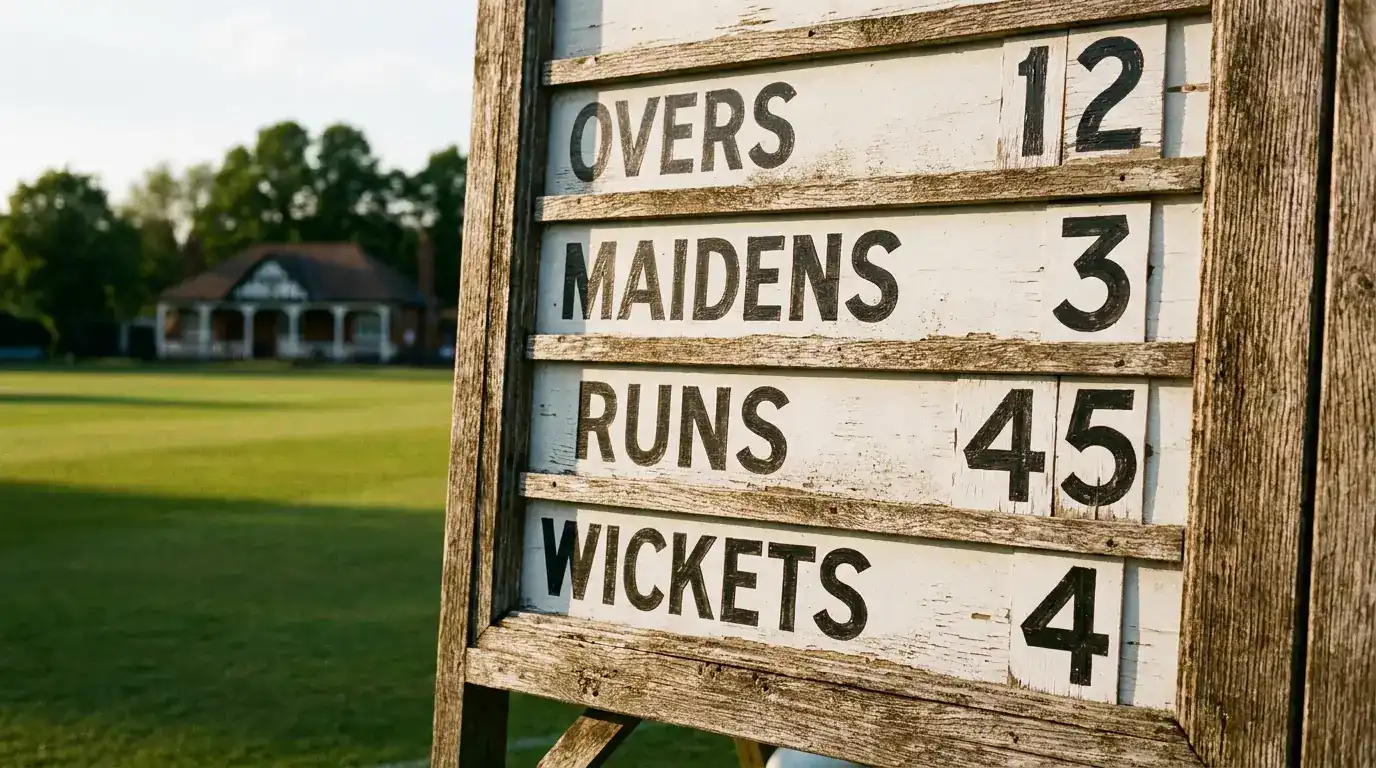
Picture a bowler who has bowled five overs and given up twenty runs. His economy is four. If he bowls a sixth over for one run, his economy ticks down to 3.5. If he bowls a sixth maiden, it drops to 3.33. That gap may sound small, but across a full day’s bowling — say eight overs in a T20 or twenty overs in a Test — those decimals shape match-changing differences.
The deeper effect is psychological. A maiden disrupts the batting side’s rhythm in a way that a tight over conceding two singles does not. The dot ball repeated six times forces the batters to take risks they were not planning to take, and the risk-taking often produces the wicket two or three overs later. Bowlers who string maidens together create a pressure that compounds — every dot ball makes the next one feel more urgent for the batting side.
I have lost count of the number of bowling collapses I have watched that traced back to a maiden over earlier in the spell. The wicket comes from frustration, not from a magic ball. The maiden is the engine, even when the credit goes to the delivery that broke the partnership.
Why Maidens Are Rare in T20 and The Hundred
Across the 2024 County Championship, spin bowlers accounted for roughly 37 percent of overs bowled, up from 17 percent the year before — a rise that produced more maidens because spin grips the pitch in ways that pace cannot in dry English late-summer conditions. The four-day format gives bowlers the space to plug away for the maiden. The shortest formats do not.
In T20 cricket, every batter is trying to score off every ball. The strike rotation is built around finding a single off any delivery the bowler does not get exactly right, and the field placements help — the inner ring is packed during the powerplay, leaving gaps in the deep that reward an aerial swing. Six dot balls in a row in T20 is genuinely difficult, and maidens are noticed in the moment because they are so unusual.

The Hundred compresses the issue further. Bowlers deliver in five-ball sets rather than six-ball overs, so the unit of “maiden” does not exist in the same form. A bowler who lands five dots in a row in The Hundred has done the equivalent in his own context, but the scorecard does not record it the same way. The format’s pace and the absence of the traditional over structure mean a true T20-style maiden in The Hundred is even harder to define.
Across Test cricket, maidens still pile up. A top-class seamer bowling on a green Friday morning at Lord’s might string together five or six maidens in a session. The pace bowler’s job in red-ball cricket is partly about denying runs while waiting for the breakthrough, and the maiden is the fundamental unit of that denial.
If you want to see how the maiden sits inside the wider geometry of a scorecard — alongside economy, strike rate, and the bowling analysis as a whole — there is more on that in our guide to reading a cricket scorecard.
Created by the "Stumply" editorial team.
