
The Hundred Format Rules: 100 Balls, Five-Ball Sets, and What Changes
 Available in US
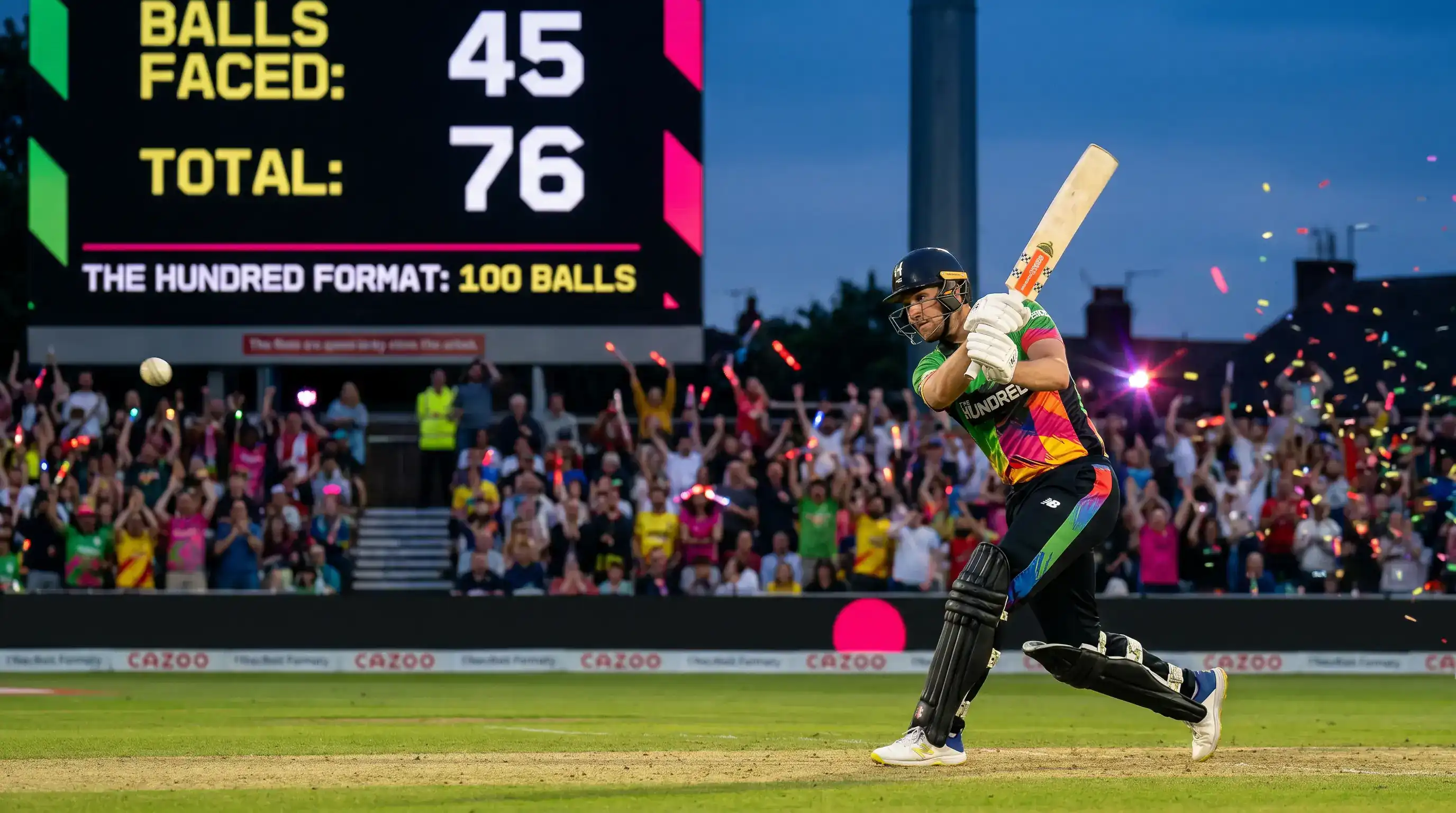
The Format Built Around a Single Number: 100
When the Hundred launched in 2021, I watched the first match with a mate who had bowled club cricket for twenty years. About fifteen minutes in he turned to me and said the format made sense once you stopped trying to map it onto overs. That is the simplest summary I have heard. The Hundred is not T20 with a different number of balls. It is a different format built around a different structural unit, and the people who get the most out of it are the ones who accept the unit on its own terms.
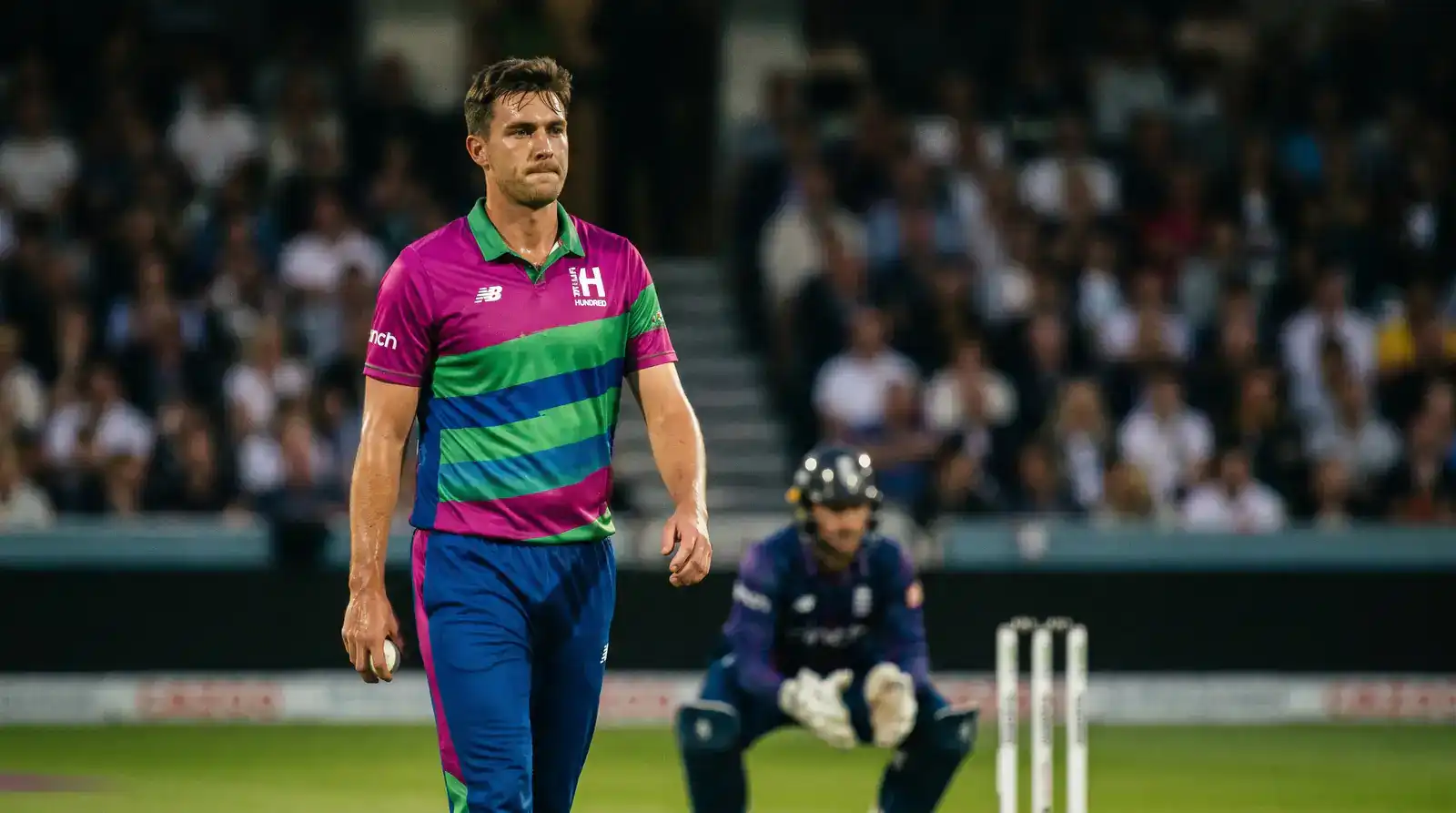
The Hundred gives each side exactly 100 balls. There are no traditional overs. Bowlers deliver in five-ball sets, with the option for the same bowler to deliver two sets back-to-back. Ends change every ten balls rather than every six. The result is a format that runs faster than T20, scores at similar rates, and produces a different rhythm of strategic decisions for both batting and bowling sides.
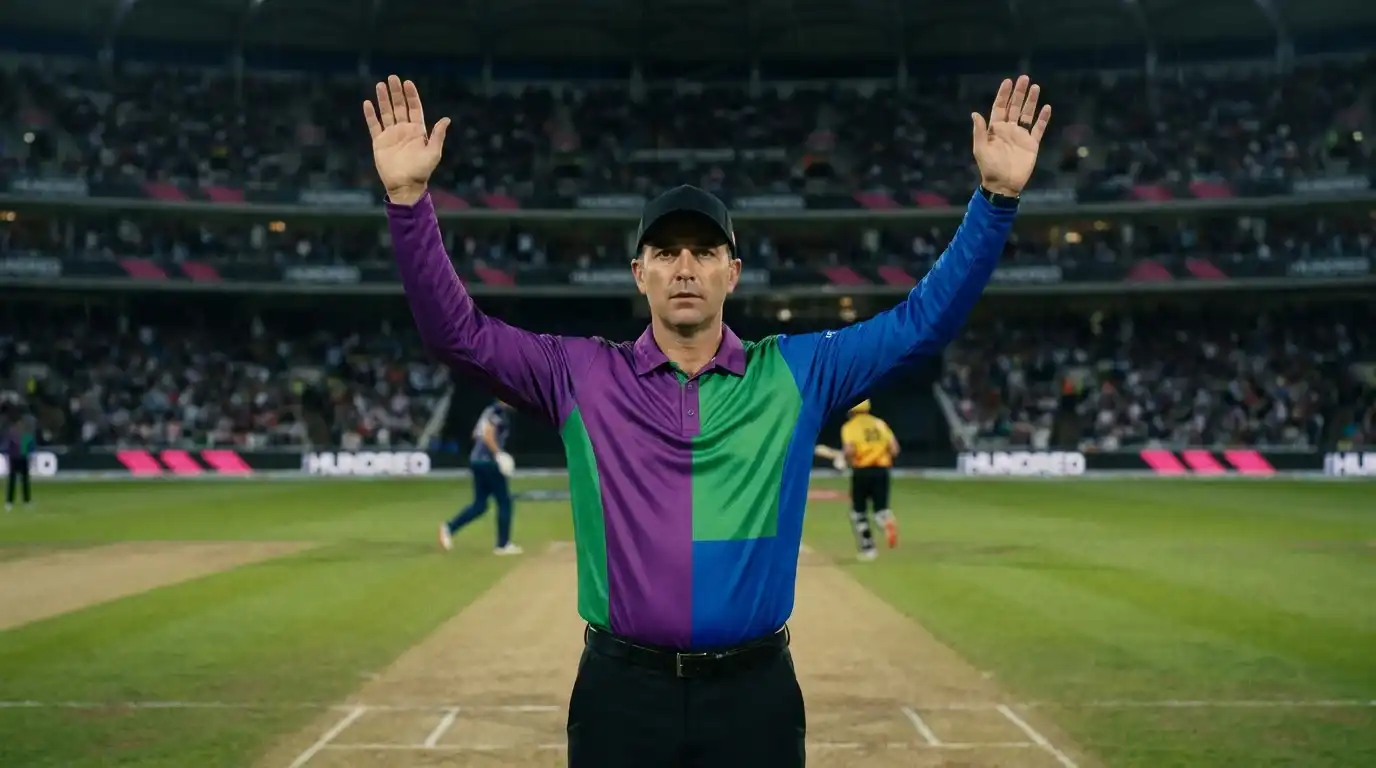
Across its first five seasons the Hundred has crossed 2.5 million cumulative attendance, with 2025 alone drawing over 580,000 ticket sales. The competition has produced more than 1 billion video views across all platforms across those five seasons, and the format itself has been the structural difference that pulled in audiences cricket had not reached before. Roughly 41 percent of Hundred crowds in 2025 came as families.
Five-Ball Sets and the Death of the Six-Ball Over
The five-ball set is the Hundred’s defining structural choice. A bowler steps up, delivers five legal balls, and then either hands the ball to another bowler or — uniquely — bowls a second set back-to-back from the same end. The traditional six-ball over disappears entirely.
This change has cascading effects on the format. The bowler’s per-set economy is the immediate metric. A bowler giving up 8 runs in a five-ball set has produced the equivalent of 9.6 runs an over in T20 terms — a poor result. A bowler conceding 4 runs in a set has produced an economy equivalent to 4.8 — a brilliant one. The set is the unit on which bowling effectiveness is measured, and the scorecard tracks it accordingly.
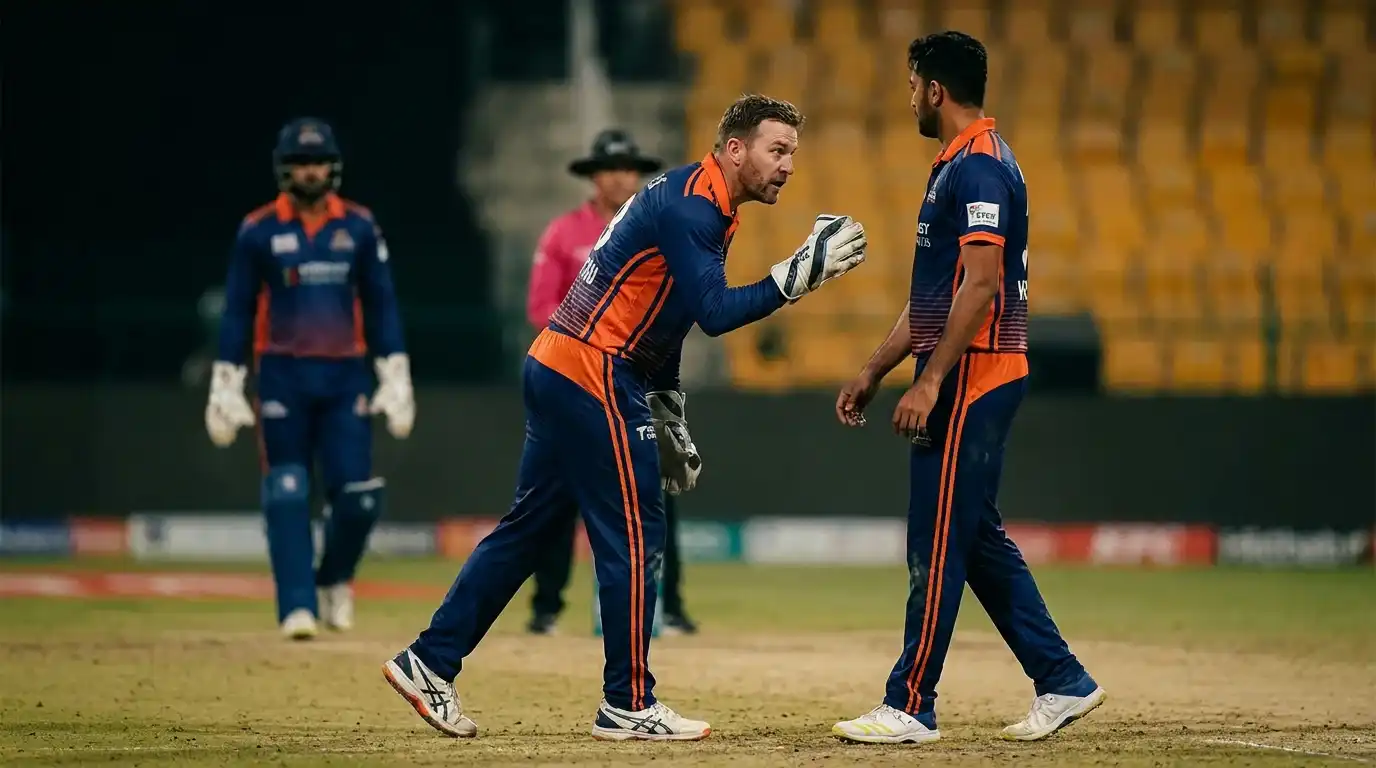
For batters, the five-ball set means strategic decisions compress. There is no longer the rhythm of “first three balls of the over to settle, last three to attack” that T20 batters use. Each set is short enough that the batter has to be active from the first ball. Settling for two balls and then attacking the third leaves only two more deliveries in the set — there is no spare margin.
Vikram Banerjee, the Managing Director of the Hundred, has noted that the competition’s design specifically aimed to bring families and new audiences into cricket grounds, and the format’s compressed structure is part of how it achieves that. The matches run faster than T20 — usually around two and a half hours total — and the absence of the six-ball over gives the action a continuous flow that the traditional format breaks more often.
Change of Ends Every Ten Balls
The other structural innovation is the change of ends. In T20 and ODI cricket, the bowling end changes after every six-ball over. In the Hundred, the end changes after every ten balls — which usually means after two five-ball sets, though the captain can choose to have a single bowler deliver both of those sets back-to-back.
This timing rule has practical consequences. Bowlers can string together longer continuous spells from the same end if the captain chooses, which gives the bowling side more flexibility in matching bowler to batter. A captain who wants to keep a left-arm seamer against a right-handed top order can have him bowl two consecutive five-ball sets from the same end before the change. T20 cricket does not allow this — the over structure forces the change every six balls.

From the batter’s perspective, the ten-ball end-change creates a different kind of pressure. A set batter facing the same bowler from the same end for ten consecutive balls has more information to work with — the bowler’s release point, the trajectory, the pace off the pitch from that end. The batter who can pick the bowler’s variations across ten balls has a measurable edge. The bowler has to mix things up across the same window or risk being read.
What this means in practice is that the captain’s role in the Hundred is more decision-heavy than in T20. The choice of who bowls each set, whether to chain two sets together, and when to make the end-change adds up to more tactical calls per innings than the standard T20 bowling-rotation logic produces.
Bowling Quotas Inside 100 Balls
The bowling quota in the Hundred is tighter than T20 cricket. Each bowler can deliver up to 20 balls in an innings — which is four five-ball sets. T20 allows four six-ball overs per bowler, or 24 balls. The Hundred trims this slightly, which means a team needs at least five bowlers to deliver all 100 balls if the maximum-quota bowlers are used.
In practice, most Hundred sides use six bowlers across an innings, with the workload distributed somewhere between three and four sets per bowler. The captain has to make calls about who gets the extra set in tight matches and which bowler is held back for the death overs. The 20-ball cap means a captain cannot lean on a single elite bowler the way a T20 captain can — the maximum impact a top bowler can have on the innings is capped at 20 of 100 balls, or one-fifth.

The quota also shapes which players succeed in the Hundred compared to T20. Bowlers who specialise in short, sharp bursts — yorker specialists, hard-length seamers, wrist-spinners with strong variations — tend to thrive in the format because the 20-ball workload suits a maximum-effort approach. Bowlers who rely on rhythm built across longer spells find the format less natural.
For batters, the quota means the same bowler can be confronted at most four times across an innings. A batter who has scored heavily off a particular bowler in the first set is likely to see less of him later — the captain will rotate to a different option. The result is more match-ups across the innings than T20, and more tactical adjustment from both sides as the innings unfolds.
What a Hundred Scoreboard Looks Like
The scoreboard for a Hundred match looks similar to a T20 scoreboard but with some structural differences worth noting.
The top line shows the team total, wickets, balls used, and balls remaining. Rather than “overs”, the scoreboard tracks balls — typically “47 balls used” rather than “7.5 overs”. The current run rate appears in two forms on most scoreboards: as a per-five-ball-set figure and as a per-six-ball-over equivalent for comparison with T20 totals.

The batting card shows the same fields as T20 — runs scored, balls faced, fours, sixes, strike rate. The strike rate convention is the same as T20, expressed as runs per 100 balls, which makes Hundred strike rates directly comparable to T20 strike rates without conversion.
The bowling card shows balls delivered, sets bowled, runs conceded, and wickets taken. Some scoreboards convert the figures to a T20-equivalent overs format for comparison, while others stick strictly to the Hundred’s own conventions. The ECB Match Centre uses the Hundred-native format. Major cricket apps with global audiences sometimes convert to overs for consistency with other formats.
The 25-ball restriction phase — the Hundred’s powerplay equivalent — appears on the scoreboard with a visual marker, similar to the way T20 powerplays are displayed. During the restriction phase, only two fielders may be outside the 30-yard circle. After the 25 balls, the standard field restrictions of five outside the circle apply for the remainder of the innings.
DRS is available in the Hundred, with full Hawk-Eye and UltraEdge support at all venues. Reviews appear on the scoreboard with the same status indicators as international cricket. The ICC’s 2021 update to the wicket zone — extending it to the top of the bails and raising the overturn rate on clear LBW reviews from 22 percent to 27 percent — applies in the Hundred as it does in Tests and other formats with DRS.
If you want the broader comparison of how the Hundred sits alongside Test, ODI, and T20 cricket in terms of structural rules, scoring patterns, and audience profiles, there is more on that in our cricket formats compared guide.
Created by the "Stumply" editorial team.
