
Super Over Explained: How Cricket Breaks a Tie in White-Ball Matches
 Available in US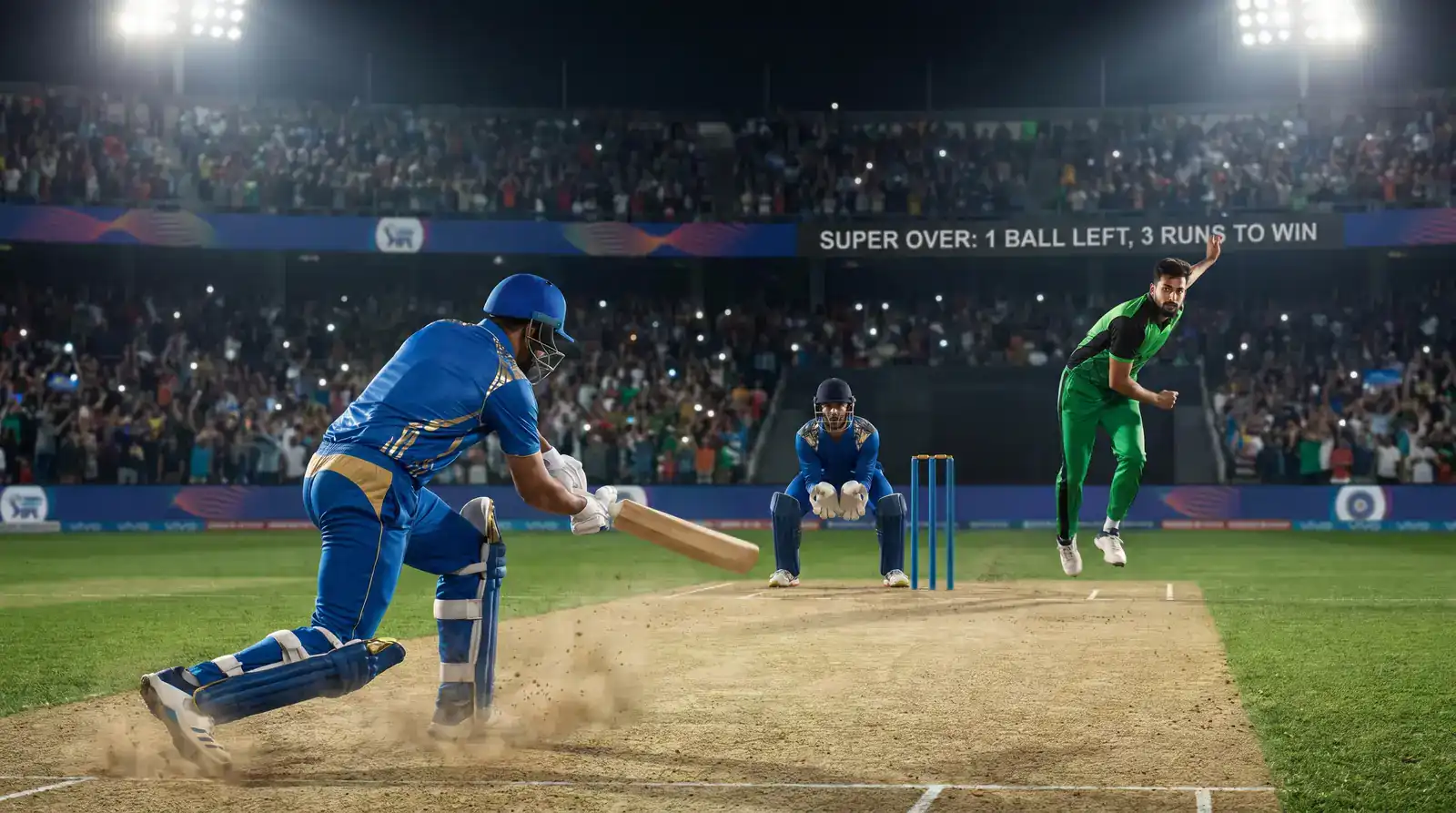
Six Balls, Two Wickets, One Trophy
I was in a pub in Bristol in July 2019, watching the Cricket World Cup final on a screen with about forty other people who suddenly cared more about cricket than they ever had in their lives. When the match tied after 50 overs each, half the room thought it was over. When the super over also tied, half the room thought we were going home. When the boundary count rule gave England the trophy, the room exploded — and then about a minute later, every single one of those people was asking the same question. Why a boundary count? Why not just keep playing?
The super over is cricket’s tiebreaker for white-ball matches that finish level on runs. Each side bowls one over of six legal deliveries to the other, and the side scoring more in their six balls wins. It is a compressed, single-take version of the entire format — all the drama of a chase in 36 seconds of actual ball-in-play time — and it has produced some of the most memorable moments in modern cricket.

Across Test cricket the equivalent does not exist because a draw is a legitimate outcome. White-ball matches, by contrast, are built around producing a winner, and the super over is the mechanism that delivers one when the scheduled overs cannot.
The Core Rules of a Super Over
The super over has a small set of rules that combine to create its particular tension. They are worth knowing because the format is unforgiving — one mistake at either end of the bat or ball changes everything.
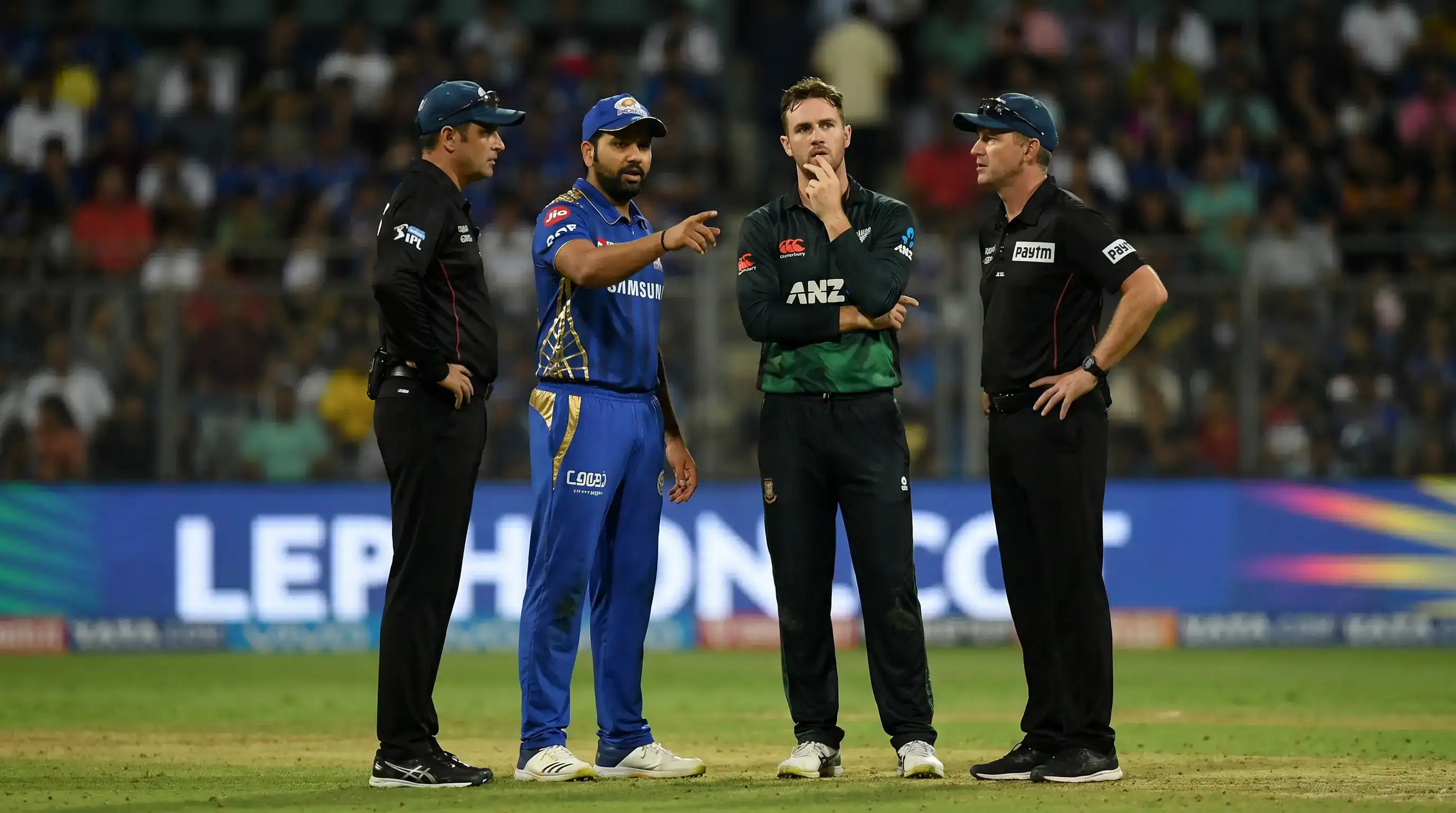
Each team gets one over of six legal deliveries. The batting order is set by the captain and is not fixed by the order of the main innings. Most sides pick their two most explosive hitters and one backup, because each side can only lose two wickets in the super over before their innings ends — even if those wickets come on the first two balls.
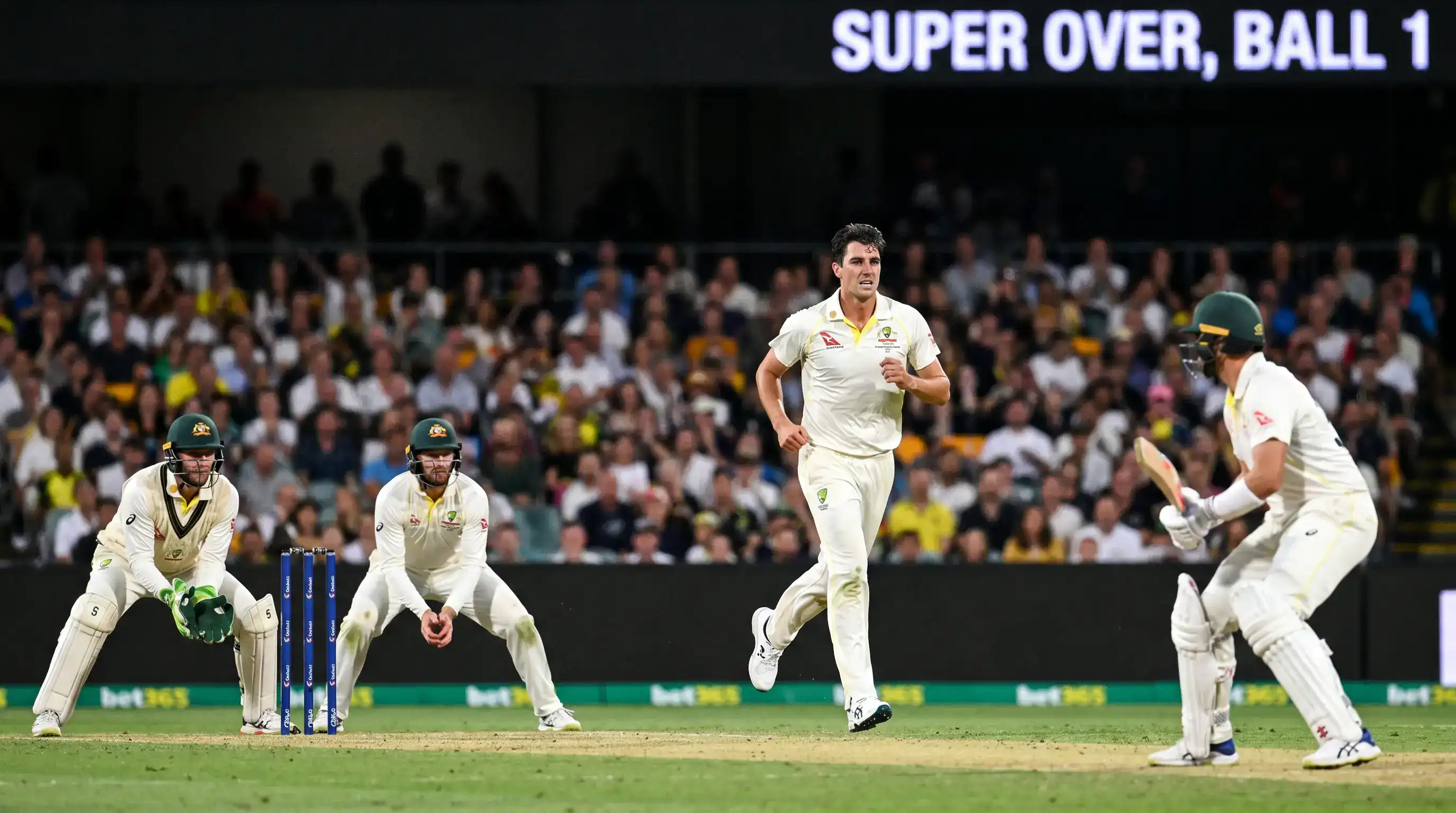
The team batting second in the main match bats first in the super over. This is the reverse of the chase logic and adds a layer of strategic interest. The side that just chased now sets the target. The side that just defended now chases.
Field restrictions are minimal. The fielding side can place fielders wherever they want, with the standard rule of no more than five fielders on the leg side and the usual constraints around behind-square fielding. Most captains pack the boundary, defending the rope rather than the singles, because preventing a six is worth more than preventing two ones.
The bowler can be anyone who bowled in the main match, though regulations have changed over the years. Currently, each side designates one bowler for their super over, and that bowler is responsible for all six legal deliveries. If the bowler is unable to continue mid-over — injury, for example — replacement rules vary by format and tournament.
What Happens If the Super Over Is Tied
This is the part that has changed most over the years and the part that produced the 2019 controversy. Under the original rules, a tied super over was resolved by the boundary count rule — the side that had hit more fours and sixes across the entire match, including the super over, won.
England won the 2019 World Cup final under this rule. New Zealand finished level on runs in the main match, level again in the super over, but England had hit more boundaries across the match. The trophy went to England. The reaction internationally was largely the same as the reaction in that Bristol pub — celebration mixed with confusion, and a growing sense that the rule was not quite right.

The ICC scrapped the boundary count rule in October 2019, only months after the World Cup final it had decided. The replacement rule is straightforward: if a super over is tied, another super over is played. And another, if that one is tied too. The process continues until one side scores more than the other, at which point the match is decided on the most recent super over alone.
The new rule is cleaner. It removes the arbitrary metric of boundaries-hit and replaces it with a continuation of the format until a winner emerges naturally. Tournament playing conditions sometimes set a limit on how many super overs can be played in a single tied match, but in practice the second or third super over almost always produces a result.
Cases That Reshaped the Rule
The 2019 World Cup final is the most famous super over in cricket history, but it is not the only one to have shaped the rules.
The 2008 World T20 in South Africa was the first international tournament to use a super over as a formal tiebreaker, with India and Pakistan finishing level in the group stage and the super over deciding it. The format was new, the tactics were untested, and the over became a template for everything that followed.
The 2019 World Cup final at Lord’s produced the boundary count controversy and the rule change that followed. The match itself was extraordinary on cricketing grounds alone — a chase that ended on the last ball with the ball ricocheting off a diving Ben Stokes for four — but the tiebreaker decision is what dragged the format into the global news cycle.
Less famously, the 2020 New Zealand-India T20I series saw two consecutive matches end in super overs, with New Zealand losing both. That sequence highlighted how slim the margins can be when the format compresses a 20-over innings into six balls. A single misfield, a single yorker that does not land, a single boundary off a half-volley — any of these can decide a match worth millions in tournament prize money.
The Hundred has also adopted the super over for tied matches, with the same six-ball structure despite the format’s five-ball-set delivery convention in regular play. The tiebreaker conforms to the international standard. The Hundred’s overall growth — over 580,000 tickets sold in 2025 and a cumulative billion-plus video views across five seasons — means tied finishes attract significant audience attention when they do happen.
How a Super Over Looks on a Live Scoreboard
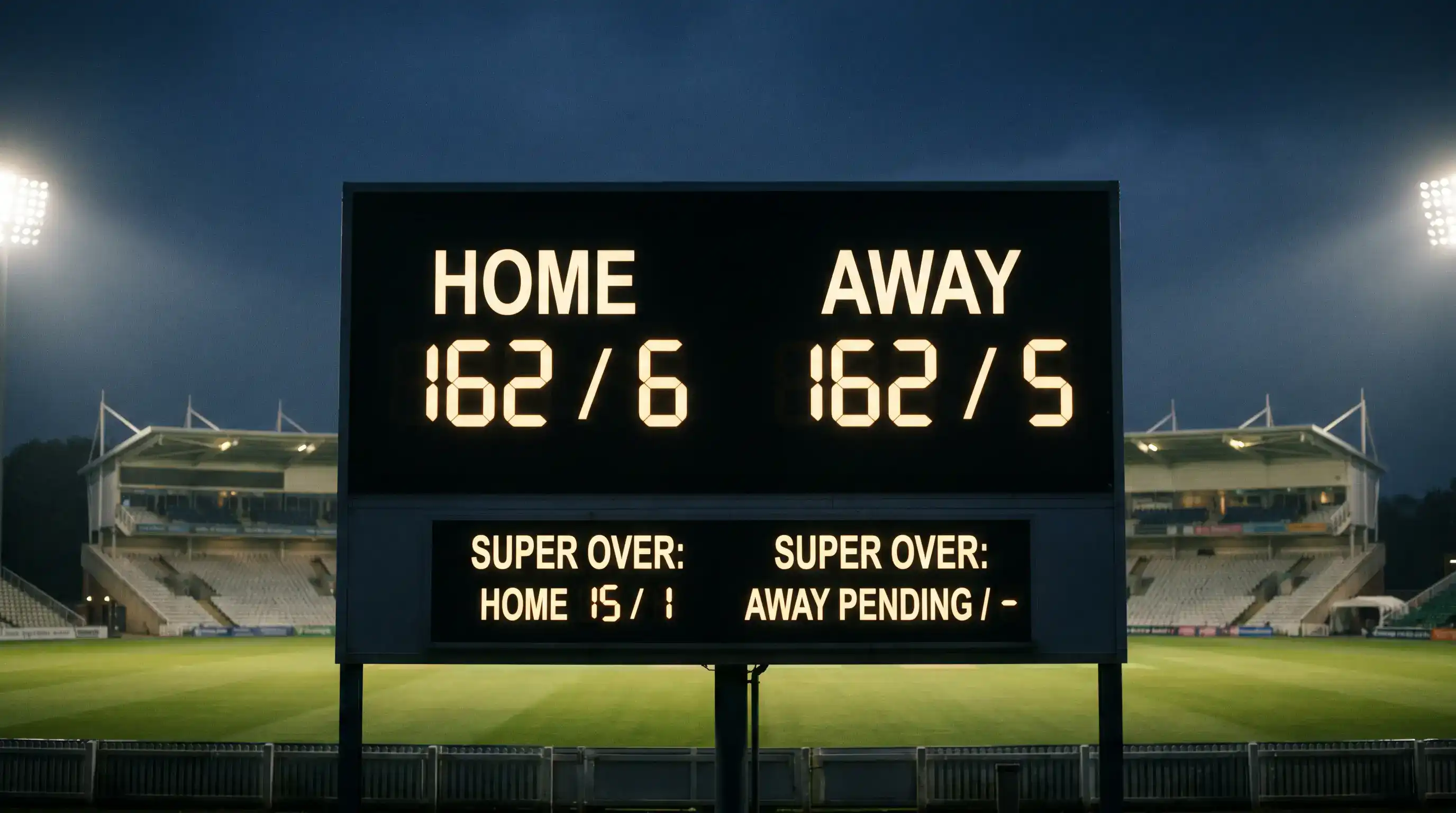
The scoreboard layout for a super over is recognisable but compressed. The main innings totals stay on display, usually with the word “Super Over” appearing below them and a fresh six-ball over being scored separately.
Each ball of the super over typically gets its own line on the live feed, with the running total updating after each delivery. The scoring shorthand is the same as the main match — boundaries shown as 4 or 6, dot balls as a small marker, wickets with the W symbol. A two-run boundary count produces a wicket maiden equivalent that ends an innings, given the two-wicket limit.
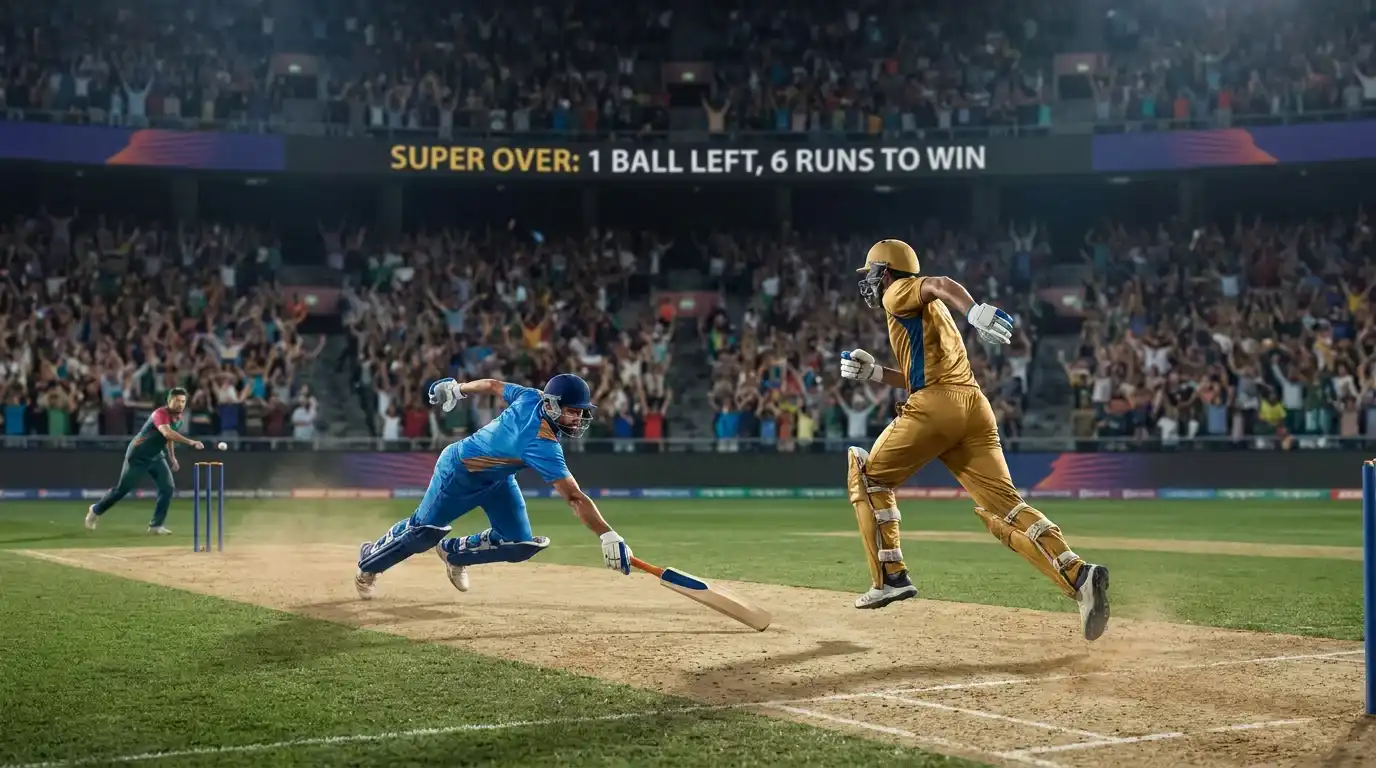
The required run rate during a super-over chase compresses into the most extreme version of the same maths used during a main-match chase. A side needing seven from three balls has an RRR of 14.00 — well above any sustainable rate. Across roughly 15 percent of all Test wickets, DRS plays a role, but in super overs DRS reviews almost never happen — there is not time, and the urgency of the format encourages players to accept the on-field decision rather than burn the seconds on a review that may or may not come back in their favour.
What I tell anyone watching their first super over is to ignore the scoreboard furniture and just watch the ball. The maths is happening too fast to follow in detail. The story is in the deliveries themselves — the yorker that gets driven over extra cover, the slower ball that gets miscued to long-on, the off-stump line that gets clipped fine for four. Six balls is enough time for any of those to decide a tournament, and frequently they do.
If you want the broader picture on how the four white-ball and red-ball formats handle ties, tiebreakers, and result conditions, there is more on that in our cricket formats compared guide.
Created by the "Stumply" editorial team.
