
Cricket Scorecard Abbreviations: A Plain-English Glossary
 Available in US
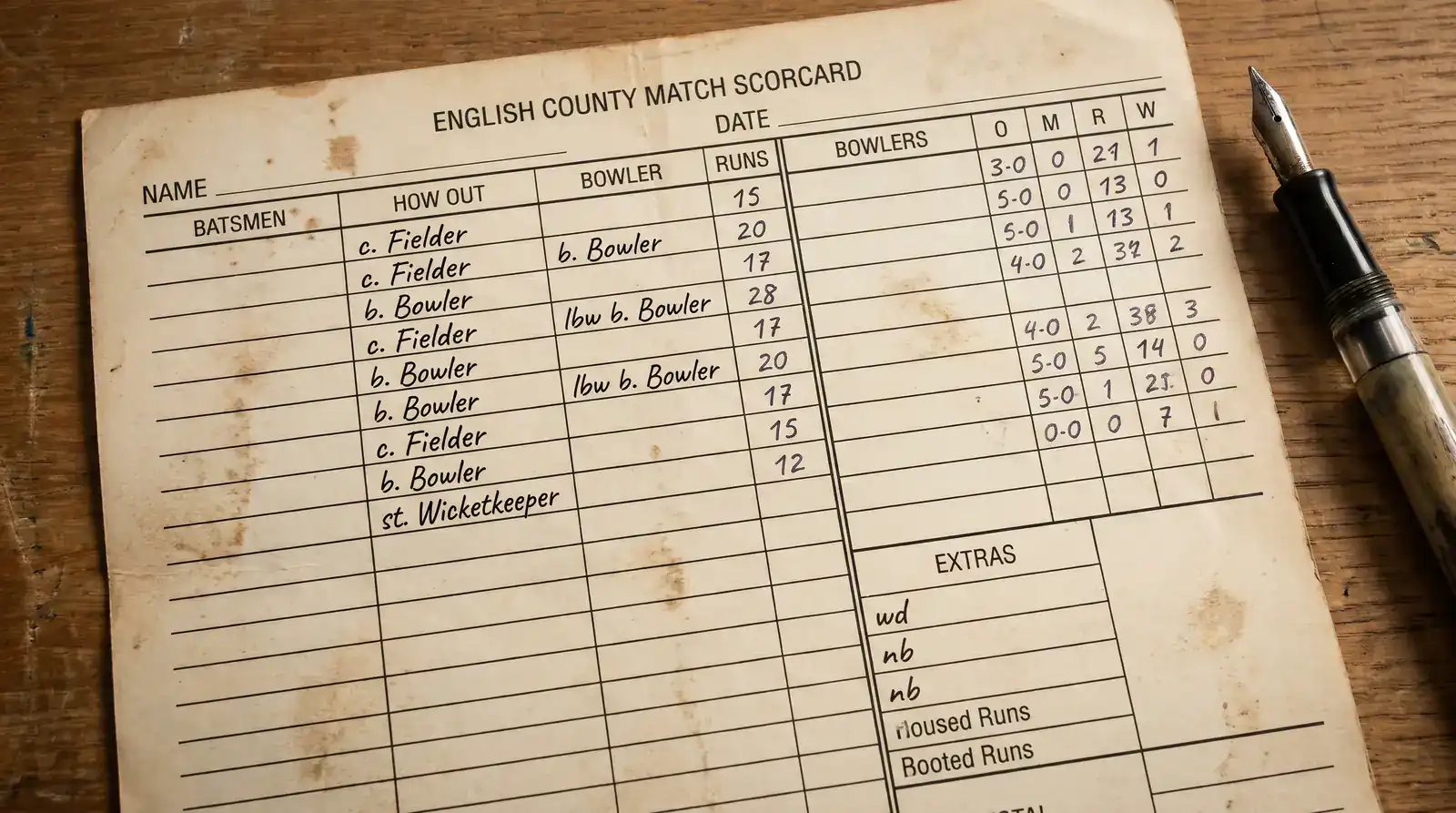
Why Scorecards Are Built from Shorthand
I once handed a county scorecard to a friend who had spent the previous summer watching baseball in the US and asked her to make sense of it. She gave it a careful look, then handed it back and said it looked like the page of a chess game written in code. She was not far off.
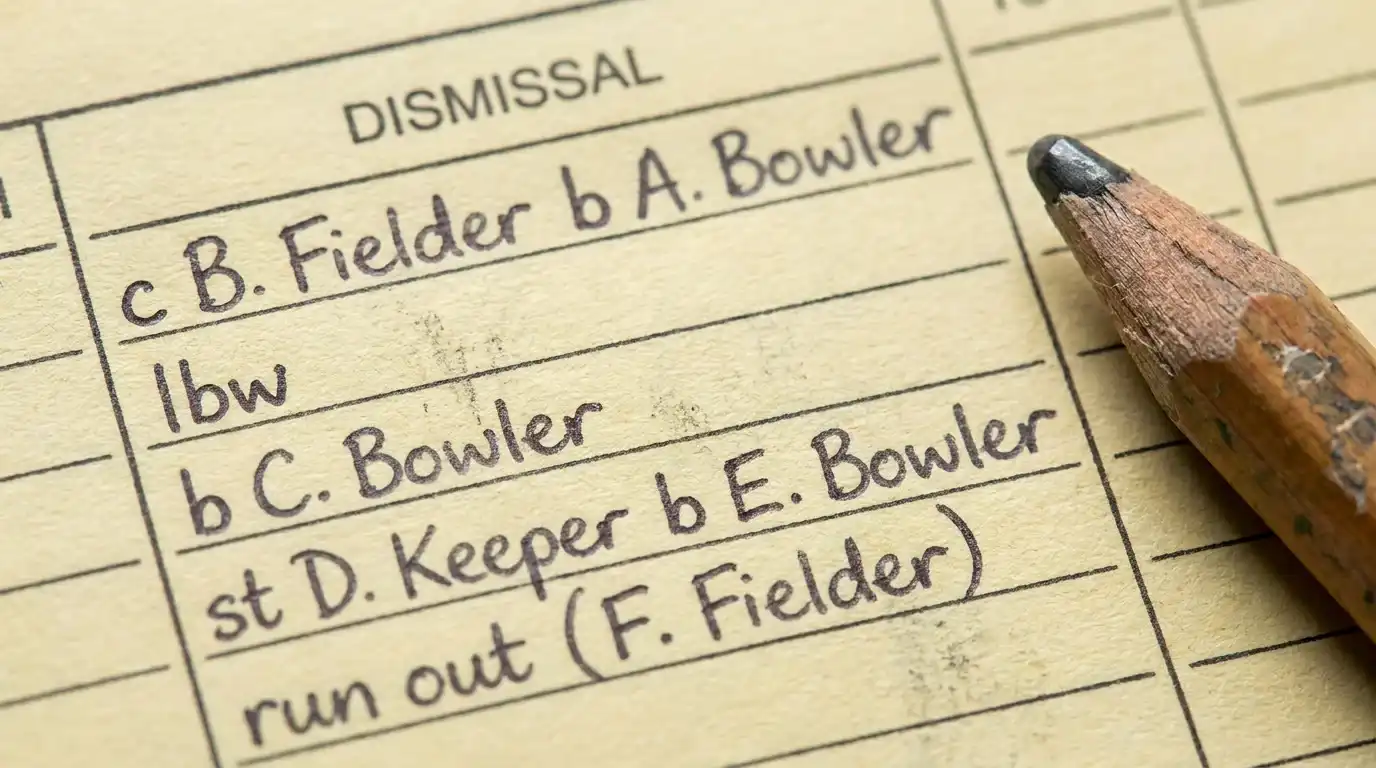
Scorecards in cricket evolved over more than a century of being filled in by hand at grounds where space was tight and a single page had to record every dismissal, every bowler’s analysis, and every minor incident across a long match. Abbreviations were not stylistic — they were necessary. A modern digital scorecard inherits all of them, partly out of tradition and partly because the shorthand is genuinely faster to read once you know it.
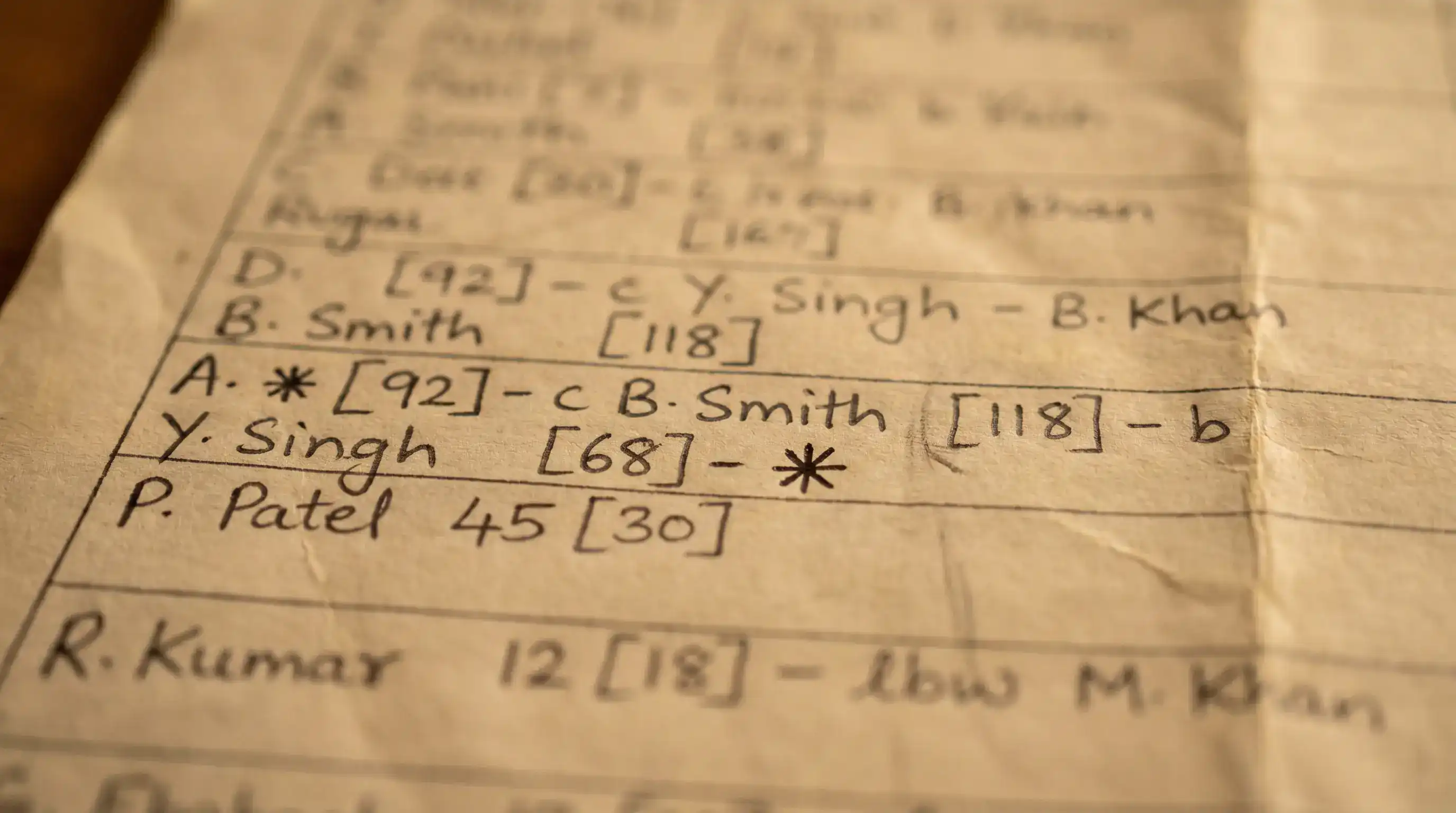
What follows is the working glossary I keep in my head when I open any cricket app or scoreboard. Once these codes click, you can read a scorecard at a glance and pick up the story of the innings without needing a single word of commentary.
Dismissal Codes: b, lbw, c, st, run-out
The single-letter codes next to a dismissed batter’s name tell you exactly how he was out. They are the densest information on the scorecard and the ones most worth memorising.
b followed by the bowler’s name means bowled — the ball hit the stumps and dislodged at least one bail. The cleanest dismissal in cricket, with no need for an umpire’s decision.
lbw followed by the bowler’s name means leg before wicket. The ball would have hit the stumps but was intercepted by the batter’s pad first. This is the dismissal most likely to involve a DRS review and the wicket zone interpretation that goes with it.
c fielder b bowler means caught — the fielder named caught the ball after it came off the bat. If the catch was taken by the wicket-keeper, the entry is often written c keeper b bowler with the keeper’s name in place of the fielder. The shorthand “c & b bowler” means caught and bowled — the bowler took the catch himself off his own bowling.
st keeper b bowler means stumped — the wicket-keeper broke the wicket while the batter was out of his crease, usually facing a spinner. Distinct from a run-out because the batter was not running.
run out fielder means the batter was dismissed attempting a run, with the fielder named responsible for the throw or the catch at the stumps. Sometimes two fielders are credited if one fielded and another broke the wicket.
hit wicket b bowler means the batter dislodged his own stumps with bat, body, or kit while playing the ball. Rare in international cricket and even rarer at grassroots level. Other modes — obstructing the field, handling the ball, timed out — appear so seldom in the modern game that scorecards rarely abbreviate them.
Symbols Around the Batter’s Row
Beyond the dismissal code, the batter’s row carries a small set of symbols that change the way the entry should be read.
An asterisk next to a name — Joe Root* — denotes the captain. The same symbol against a wicket-keeper’s name is sometimes used, though most modern scorecards spell out (wk) or (c) (wk) for the combination of captain and keeper.
“not out” next to a score means the batter was unbeaten at the close of the innings or at the moment the scorecard was pulled. A small “n.o.” in some printed formats means the same thing.
A dagger symbol — † — sometimes appears next to the wicket-keeper’s name in older scorecards. Modern scoring apps tend to use (wk) instead, which is clearer for casual viewers.
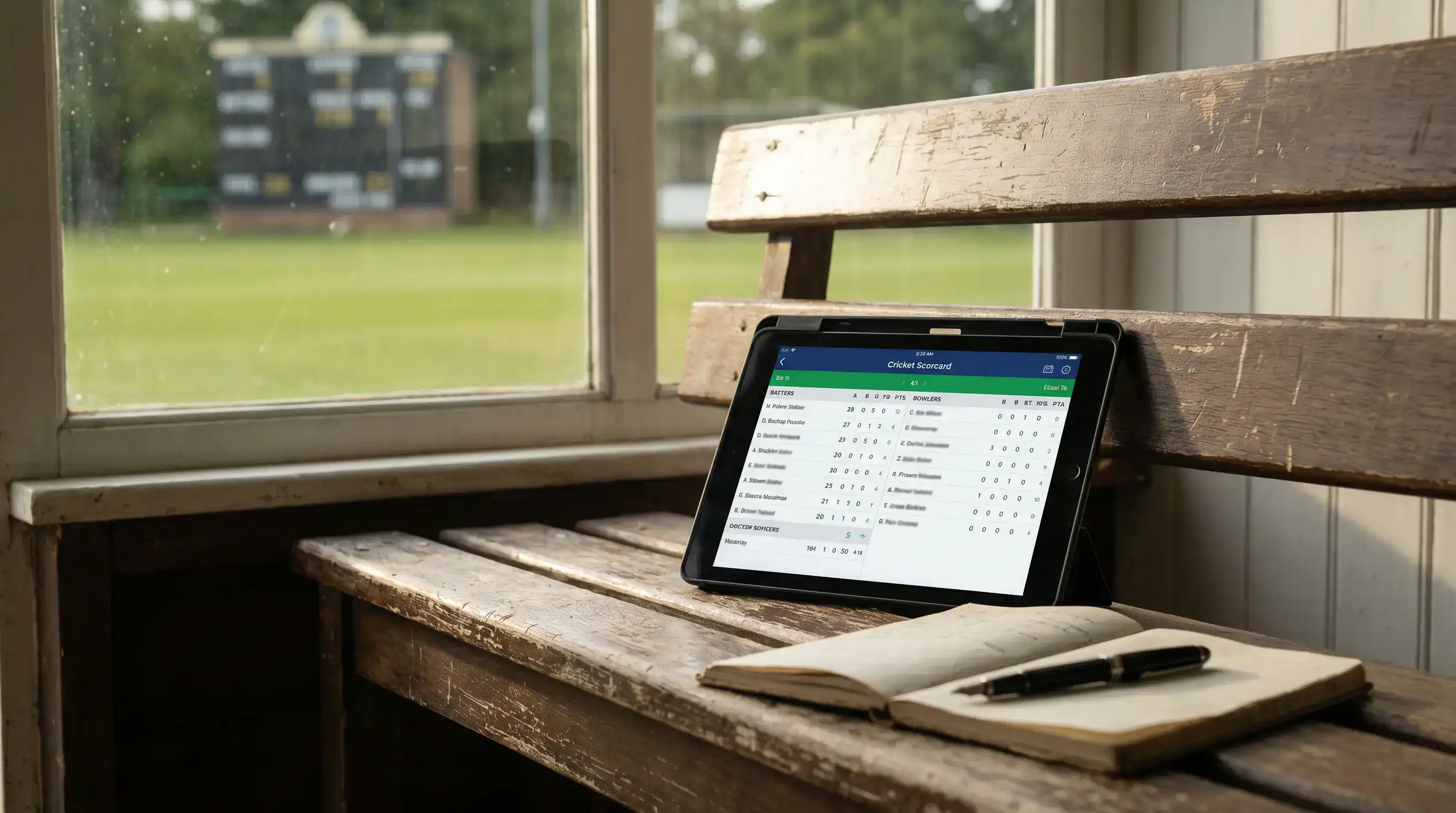
The numbers in the batter’s row usually follow this order: runs scored, balls faced, fours hit, sixes hit, and strike rate as a percentage. A line reading 47 (38, 5×4, 1×6, SR 123.68) tells you the batter made 47 from 38 balls with five boundaries and one six, scoring at a strike rate of 123.68. Once you read a few of these lines, the format becomes intuitive.
The minutes-at-the-crease figure shows up on Test scorecards and adds a useful dimension. A batter on 30 from 90 balls who has been at the crease for 130 minutes is doing different work from a batter on 30 from 90 balls who has been at the crease for 80 minutes — the first has played out a longer spell of pressure.
Symbols Around the Bowler’s Row
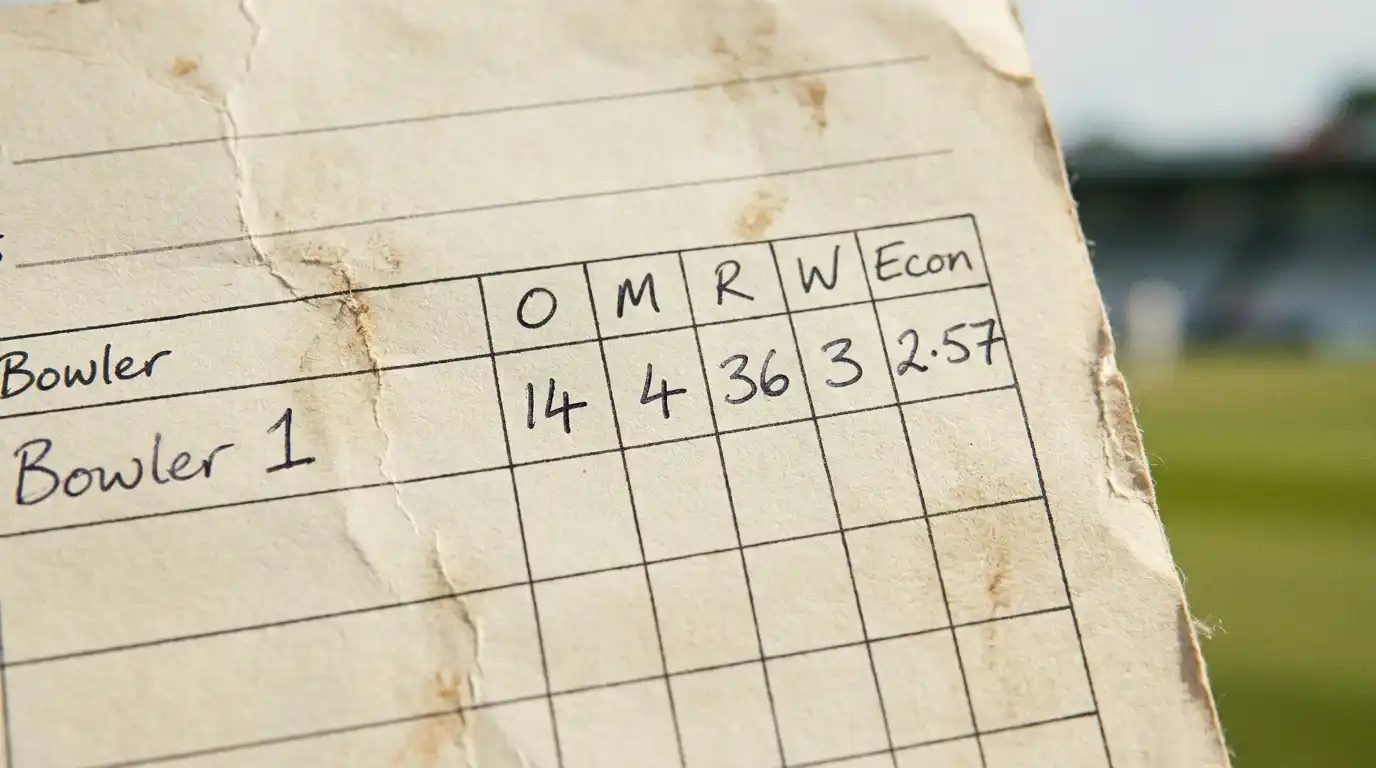
The bowler’s analysis is written in a different shorthand, typically appearing as a sequence of numbers separated by hyphens or spaces.
The standard order is overs, maidens, runs, wickets, sometimes followed by economy and average. A bowling figure of 10-2-34-3 means ten overs bowled, two of them maidens, 34 runs conceded, three wickets taken. The economy in that case would be 3.40 — runs divided by overs.

Decimal overs appear when a bowler has not completed a full over. 8.4-1-29-2 means eight full overs and four balls of a ninth, one maiden, 29 runs, two wickets. The decimal represents balls within the over, not a tenth of an over, which trips up viewers who try to read it as 8.4 overs in the mathematical sense.
Wides and no-balls credited against the bowler usually appear in the extras section rather than in the bowler’s analysis directly, though some scorecards add (w) and (nb) figures alongside the main line for completeness. The economy rate calculation includes wides and no-balls as runs against the bowler, so a bowler with a tight line bowls fewer of both.
A score of 5-for is the spoken shorthand for five wickets in an innings — the kind of milestone that gets noted with a special acknowledgement on the scoreboard at most UK grounds.
Codes for Extras: wd, nb, b, lb, p
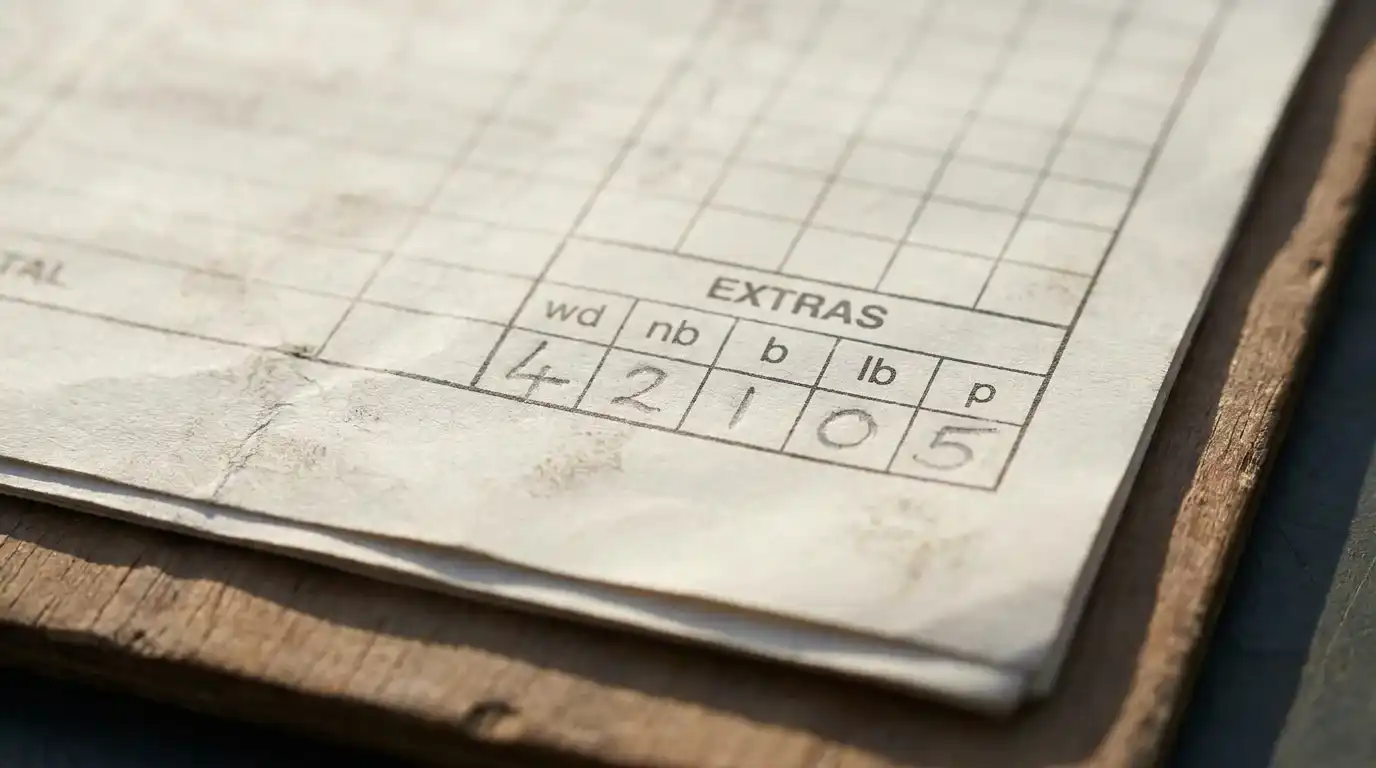
Extras are runs added to the team total that are not credited to any batter. They come in five distinct flavours, and the scoring distinction matters for both bowlers and team totals.
wd or w means a wide — a ball delivered too far from the batter’s reach. The bowler is credited with no legal delivery, must bowl another ball to complete the over, and one run is added to the team total. Multiple runs from a wide are possible if the keeper misses and the batters run, with the additional runs also classified as wides on most scorecards.
nb means a no-ball. The bowler has overstepped the front-foot line, bowled above waist height as a beamer, or otherwise violated the delivery rules. One run is added to the team total, a free hit follows in T20 and ODI cricket, and the batter cannot be dismissed by most modes off the no-ball. The runs scored off the no-ball delivery itself are added to the batter’s score, with the extra run for the no-ball going to the extras column.
b means byes — runs scored when the ball passes the batter without contact and the batting side runs anyway. Not credited to the bowler, not credited to the batter, but added to the team total.
lb means leg byes — the same idea but the ball deflected off the batter’s body or pads rather than passing untouched. The same scoring rules apply.
p means penalty runs — five runs awarded by the umpires for various offences such as ball-tampering, slow over-rates in some formats, or fielders deliberately blocking the batter’s path. These are rare on UK scorecards because the offences themselves are rare.
The extras column on a scorecard typically reads something like “Extras (b 4, lb 7, w 6, nb 2, p 0) 19” — telling you exactly where the extras came from and what they added up to. The combined total feeds directly into the team score.
If you want to see how all these abbreviations sit inside the full architecture of a scorecard — the top line, the batting card, the bowling card, the fall of wickets — there is more on that in our cricket scorecard guide.
Created by the "Stumply" editorial team.
